
Table of Contents
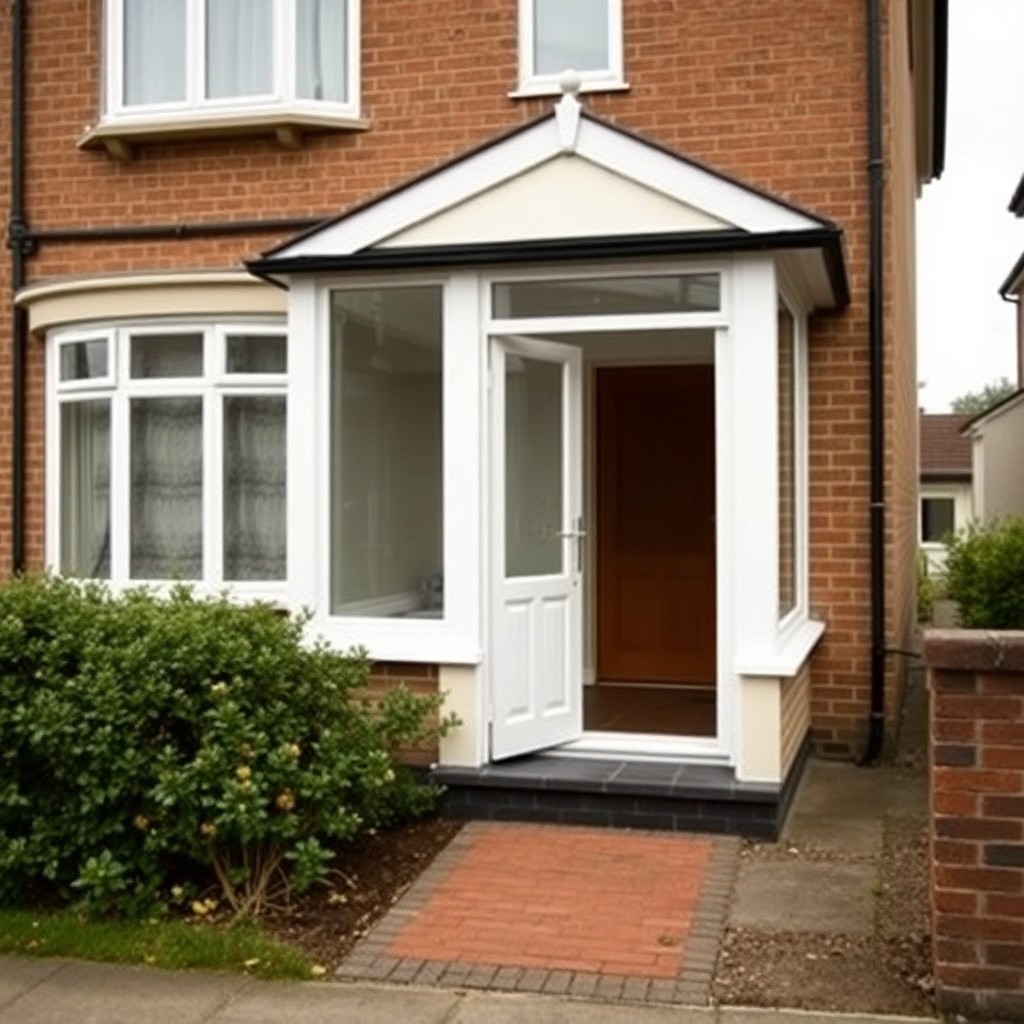
A porch sits at an interesting point in the planning system. It’s one of the smaller building projects a homeowner can undertake — a modest enclosure at the front door, typically a metre or two in depth, often glazed, providing shelter and a transitional zone between outside and in. And yet because it sits on the front of the property, visible from the street, people worry about it more than they do about much larger work happening at the back of the house.
The answer to whether do you need planning permission for a porch is, for most standard residential properties in England, reassuring: no, a porch within the permitted development size limits doesn’t require a planning application. But the rules for porches have specific conditions that are worth understanding precisely, because the limits are modest and it’s easy to inadvertently exceed them.
What Permitted Development Says About Porches
Porches have their own specific provision within the permitted development framework in England — Class D of Schedule 2, Part 1 of the Town and Country Planning (General Permitted Development) (England) Order 2015. This is separate from the rules for extensions and outbuildings, which is one reason porch planning rules are sometimes misunderstood. The porch rules are simpler and more specific than the extension rules, with fewer conditions but hard limits that apply uniformly.
The Planning Portal at www.planningportal.co.uk is the authoritative reference for permitted development rules in England and the right place to verify the current position for your specific project. For a broader understanding of how permitted development fits into the planning system as a whole, our Ultimate Guide to UK Planning Permissions covers the full framework.
The Three Rules That Determine Whether a Porch Needs Planning Permission
For a porch to fall within permitted development in England, it must satisfy all three of the following conditions simultaneously. They’re not alternatives — all three must be met.
Ground floor area must not exceed 3 square metres, measured externally. This is the most important dimension and the one most likely to determine whether the porch is within permitted development or requires planning permission. Three square metres is not very large — roughly 1.5 metres deep by 2 metres wide, or 1 metre deep by 3 metres wide. A modest glazed porch enclosure that provides enough space to step in, close the outer door, and open the inner door will typically fit within this. An entrance lobby substantial enough to double as a mudroom or storage area will typically not.
The measurement is external — taken from the outside faces of the walls, not the internal floor area. This is worth bearing in mind when designing to the limit, because wall thickness reduces the usable internal area below the external footprint measurement.
Maximum height of 3 metres. The porch must not be more than 3 metres high at any point. This applies whether the roof is flat, pitched, or any other form. Three metres is fairly generous for a single-storey porch — most porches will come in below this without difficulty. However, where a porch is designed with a pitched roof to match the house, or where the ground level drops away from the house at the front, the height needs to be checked rather than assumed.
Must be at least 2 metres from any boundary with a highway. This is the condition that most often catches people out, particularly on properties with small or no front gardens. The porch must not encroach within 2 metres of any boundary that faces a highway — a road, a pavement, a public footpath. If the front boundary of the garden is less than 2 metres from the house, the permitted development condition cannot be met and planning permission is required regardless of the size and height of the porch.
For most properties with a reasonable front garden, this condition is easily met. For terraced houses and urban properties where the front of the house sits close to the pavement — or directly on it — the 2-metre rule makes a porch within permitted development impossible. These properties need planning permission for any porch, however small.
Why Porches Have Their Own Rules
It’s worth understanding why the porch rules are structured differently from the extension rules. An extension is assessed partly by its impact on the character of the street — which is why there are rules about not extending in front of the principal elevation for a standard householder extension. A porch, by contrast, is inherently a front-of-house structure — it goes on the front door, which is almost always on the principal elevation. Rather than trying to prohibit front additions while allowing porches, the planning system deals with this by giving porches their own specific limits that are designed to keep them modest enough not to harm the street scene.
The 3 square metre limit is intentionally tight for exactly this reason. A small porch adds weather protection and a useful transitional zone without meaningfully changing the appearance of the house. A large porch — one that significantly extends the building forward and changes the relationship between the house and the street — is a different thing architecturally, and one that the planning system expects to be subject to proper scrutiny through a planning application.
When Planning Permission Is Always Required for a Porch
Beyond the size and distance conditions above, there are circumstances where planning permission is always required regardless of the dimensions.
Listed buildings. No permitted development rights apply to listed buildings. Any addition to a listed building — including a small porch — requires both planning permission and Listed Building Consent. The consent process involves the local planning authority’s conservation officer and applies a higher standard of scrutiny than ordinary planning applications. If your property is listed, the starting point is a conversation with the conservation officer before any design work begins.
Historic England’s guidance for listed building owners, including what consent is required for additions and alterations, is at historicengland.org.uk/advice/your-home/owning-historic-property.
Conservation areas. Properties in designated conservation areas retain permitted development rights for porches under the standard rules, but the local planning authority may have applied an Article 4 Direction removing those rights — sometimes specifically because of the cumulative effect of porch additions on the character of the area. In some conservation areas, even small porches that would be permitted development elsewhere require a planning application. Check with the local planning authority before proceeding.
Flats, maisonettes, and properties not classified as houses. The porch permitted development rules apply to houses — single dwelling houses — only. They don’t apply to flats or maisonettes. If your property is classified as a flat, even if it looks and functions like a house, planning permission is required for any porch regardless of size.
National Parks, AONBs, and other designated areas. Additional restrictions apply in National Parks, Areas of Outstanding Natural Beauty, World Heritage Sites, and the Broads. In these areas, porches on properties that face a highway or public open area may require planning permission even if they would be permitted development elsewhere.
Where the property’s permitted development rights have been removed. In some cases — particularly on newer housing estates where the developer’s planning permission included a condition removing permitted development rights — planning permission is required for works that would otherwise be permitted development. This will appear in the original planning permission for the development rather than in the title deeds. If you’re on a newer estate, it’s worth checking.
Building Regulations for Porches
The planning question and the Building Regulations question are separate, as they are for all home improvement work.
For most small porches — those under 30 square metres in floor area and at ground level — Building Regulations approval is not required, provided certain conditions are met. Specifically, the porch is exempt from Building Regulations if it’s at ground level, its floor area doesn’t exceed 30 square metres, and the main house wall contains an external door or window that separates the porch from the main building.
That last condition — the separation between porch and house — is practically important. If the original front door is removed so that the porch opens directly into the house without any door between them, the porch becomes part of the thermal envelope of the house and the Building Regulations exemption falls away. The original door should be retained, or a new door of equivalent standard installed, to maintain the porch’s status as a separated enclosure.
Where electrical work is included in the porch — wiring for a doorbell system, a light fitting, or a power socket — this must comply with Part P of the Building Regulations regardless of whether the porch itself requires Building Regulations approval. Part P work must be carried out by a registered competent person who can self-certify, or notified to Building Control for inspection.
The Practical Design Considerations
A porch that works within the 3 square metre permitted development limit needs to be designed carefully to be genuinely useful. Three square metres is enough to create a functional transitional space if the layout is thought through — but it requires decisions rather than assumptions.
The depth of the porch is usually the most important dimension. Deep enough to step in and allow the outer door to close behind you before the inner door opens — roughly 900mm to 1 metre of clear depth — is the functional minimum. Adding a place to put a bag or remove muddy boots requires more depth or some built-in storage within the 3 square metre envelope.
The outer door should open outward — into the porch — to avoid competing with the inner door swing for floor space. The inner door, typically the original front door or a replacement of equivalent specification, should also be considered in the layout.
Materials should be chosen to complement the existing house rather than compete with it. A porch that reads as a natural extension of the architectural character of the property — matching brick, render, or timber to the house — is far less likely to raise planning concerns even where a planning application is required, and produces a better finished result aesthetically than one that introduces incongruous materials.
Applying for Planning Permission When You Need It
Where a porch doesn’t meet the permitted development conditions — because it exceeds 3 square metres, is within 2 metres of a highway boundary, or is on a listed building or restricted property — a householder planning application is required before work starts.
The application process is managed through the Planning Portal and requires a site plan, drawings of the proposed porch, the completed application form, and the fee. From April 2025, the householder application fee in England is £258 for minor works applications. Most porch applications are straightforward — the planning officer is assessing a modest addition to the front of a house, and provided the design is sympathetic to the property and the street scene, approval is usually achievable.
Even for applications that are required, the process is typically shorter and less demanding than people expect. A pre-application enquiry to the local planning authority — often available as an informal free query — can give useful guidance on the likely approach before formal submission.
The Lawful Development Certificate
For porches that clearly fall within permitted development, a Lawful Development Certificate provides formal confirmation from the local planning authority that the work is lawful. It’s not mandatory, but it provides useful protection when selling — buyers’ solicitors will notice a porch addition and a Lawful Development Certificate answers any questions definitively.
Applications are submitted through the Planning Portal. The fee is modest. For a porch right on the boundary of the permitted development limits — exactly 3 square metres, or just over 2 metres from the highway boundary — the certificate is particularly worthwhile as documented confirmation that the measurement is correct and the work is lawful.
The Short Summary
Do you need planning permission for a porch? For most houses with a standard front garden in England, a porch within 3 square metres, no more than 3 metres high, and at least 2 metres from the highway boundary falls within permitted development and needs no planning application. Listed buildings, conservation areas, properties without adequate front garden depth, and flats are the main exceptions.
Building Regulations don’t apply to most small porches, provided the original front door is retained or replaced. Electrical work in the porch requires Part P compliance regardless.
And where planning permission is required — either because the porch exceeds the limits or because the property is restricted — the application process for a well-designed, sympathetic porch is generally straightforward.
Measure carefully, check the boundary distance, confirm the property’s planning status, and the porch question answers itself in most cases.