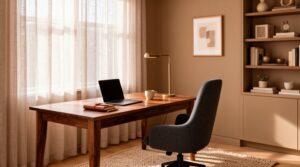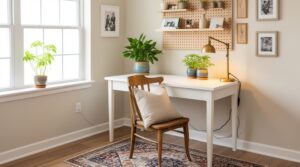
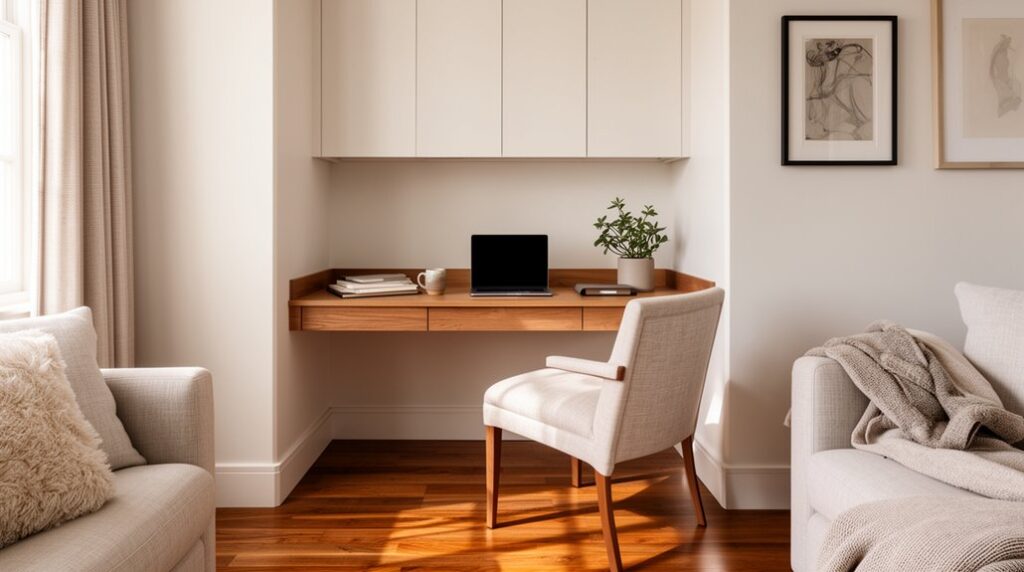
Start by choosing a quiet spot with steady natural light, minimal glare, and enough outlets for your gear. Set your desk and monitor for neutral posture, then keep clear 30–36 inch pathways so the room flows. Match furniture scale, wood tones, and finishes to what you already have, and balance warm and cool materials. Hide paper, tech, and cords in closed storage. Layer lighting, add a simple acoustic fix, and curate a calm Zoom backdrop—there’s more ahead to refine it.
Choose a Home Office Spot: Light, Noise, Outlets
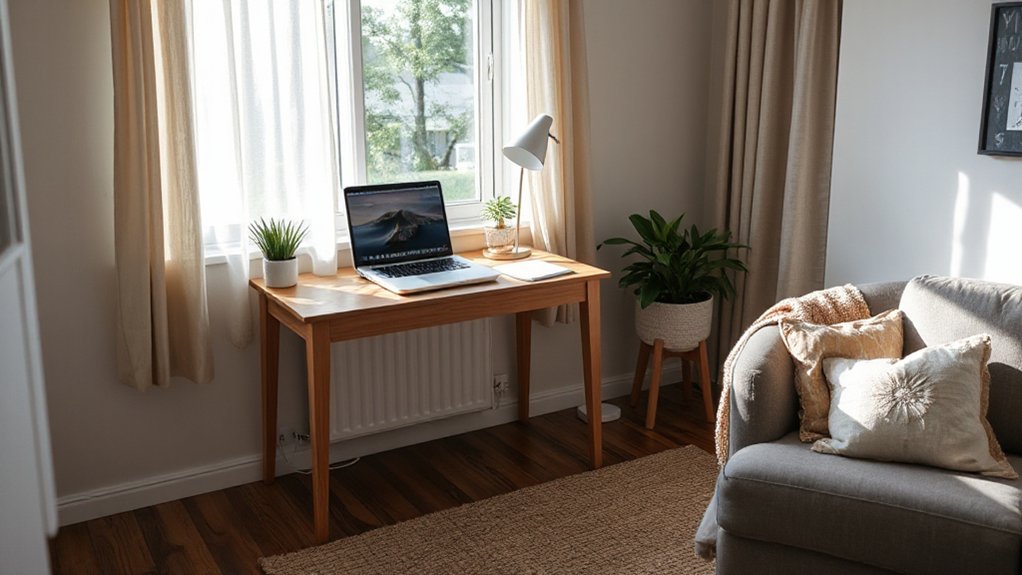
If you choose your home office spot with intention, you’ll work more comfortably and waste less time fighting your environment. Start by tracking Natural lighting through the day: place your desk near a window for steady brightness, but angle it to prevent glare on screens.
Avoid high-traffic hallways and shared media rooms where conversations and footsteps break focus. If you can’t relocate, layer simple Soundproofing techniques—thick rugs, lined curtains, a door sweep, and bookcases—to soften echo and block spillover noise.
Finally, map your power needs before you commit. Count nearby outlets, note circuit limits, and plan cord paths so chargers, lamps, and monitors stay tidy and safe without extension cords snaking across the floor.
Set Your Home Office Layout for Ergonomics and Flow
Now that you’ve picked the right spot, place your desk so your screen, chair, and light align comfortably and keep strain off your neck and wrists.
Angle your setup to use natural light without glare and keep essentials within easy reach.
Then map clear walking paths around the desk and storage so you can move through the room smoothly without weaving or bumping into obstacles.
Ergonomic Desk Positioning
Because your desk anchors everything else in the room, its position should support both your posture and your daily workflow. Place it where you can sit square to your main task zone, shoulders relaxed, elbows near 90 degrees, and wrists neutral.
Dial in keyboard placement so it’s close enough that you don’t reach, centered to your body, with forearms supported lightly.
Set monitor height so your gaze lands on the top third of the screen, keeping your neck long and chin level; adjust distance to an arm’s length to reduce eye strain.
Keep lighting to the side to cut glare and add a small task lamp for evening work.
Finish with a chair that tucks in cleanly.
Smooth Traffic Flow Paths
With your desk and screen set for a neutral posture, turn to how you move through the room from task to task. Map the most common loop: chair to printer, shelves, door, and back. Keep that loop open, with no cords or baskets catching your feet.
Aim for circulation efficiency by giving yourself a clear, consistent lane—about 30–36 inches—behind your chair and along the wall you use most. Create pathway clarity by aligning furniture edges, not angling pieces into the walking zone.
Place a slim cabinet where it won’t interrupt the route, and tuck a rolling cart under the desk until needed. Use a low-profile rug or no rug to prevent drag, and route power along baseboards for a clean visual line.
Pick Home Office Furniture That Matches Your Room
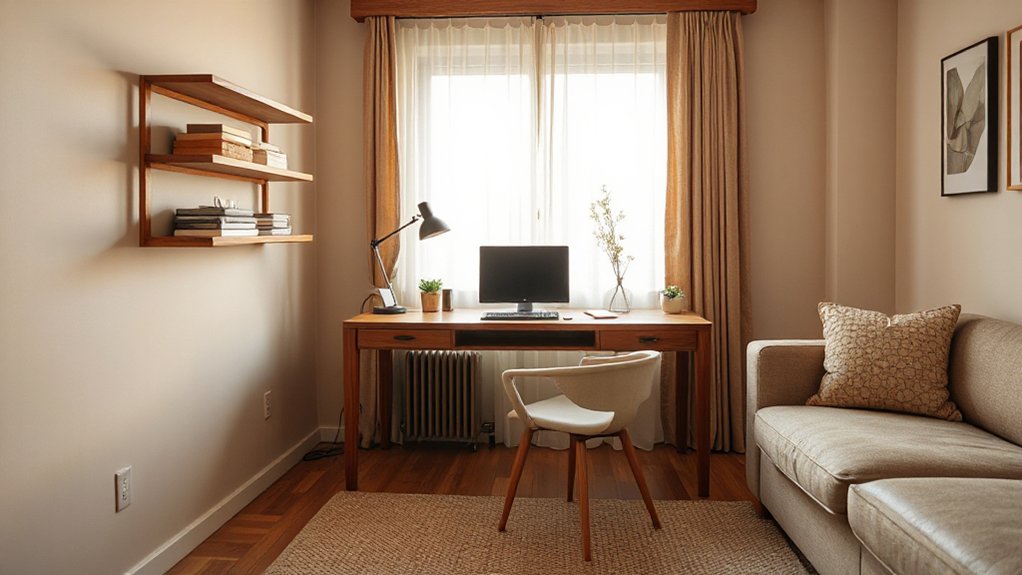
Pick furniture that looks like it belongs in your room by coordinating materials and finishes across your desk, storage, and seating.
Choose pieces with scale and proportions that fit the space, so you don’t crowd walkways or overwhelm the layout.
Then align the style with your existing decor to keep the office functional, cohesive, and visually calm.
Coordinate Materials And Finishes
Even if you mix styles, your home office will feel intentional when you coordinate materials and finishes across the space. Start by echoing one dominant surface—oak, walnut, painted MDF, or metal—on at least two pieces, like your desk and shelving, to create material harmony without looking matchy.
Then tighten finish coordination: keep sheen levels consistent, so matte, satin, or gloss doesn’t clash between desktop, cabinet fronts, and trim. Repeat your metal tone in hardware, lamp bases, and monitor arms; if you love mixed metals, choose one as primary and one as an accent.
Balance warm woods with warm metals, cool paints with cool metals. Finally, match textiles thoughtfully: a chair fabric and rug weave should share texture or undertone.
Match Scale And Proportions
Because your home office has to function day to day, you’ll get the cleanest look and best workflow when the furniture matches the room’s scale and proportions. Start by measuring wall lengths, window swings, and clear walking paths, then size your desk to leave at least 36 inches behind your chair.
In a compact room, choose a narrower desk and a slimmer task chair so you keep scale harmony and avoid crowding.
In a larger space, anchor the layout with a deeper desk or credenza, and add storage that aligns with ceiling height, not just floor space.
Keep proportion balance by pairing tall bookcases with low, wide pieces, and by matching drawer depth to what you actually file and stash daily.
Align Style With Decor
Once you’ve nailed the right scale and spacing, make sure your home office furniture also matches the room’s existing decor so it looks intentional rather than dropped in. Start by echoing the dominant style: pair a sleek desk with modern lines, or choose warm wood and turned legs for traditional rooms.
Keep finishes consistent—if the space leans brass and walnut, don’t introduce chrome and high-gloss black. Tie everything together with cohesive color schemes: pull one wall color into your chair upholstery, then repeat an accent shade in a lamp or tray.
Use Decorative accents sparingly but strategically, like matching frames, a textured rug, or a sculptural organizer. When storage looks like the rest of the room, your office reads as a natural extension, not a visual interruption.
Build Hidden Home Office Storage for Paper and Tech
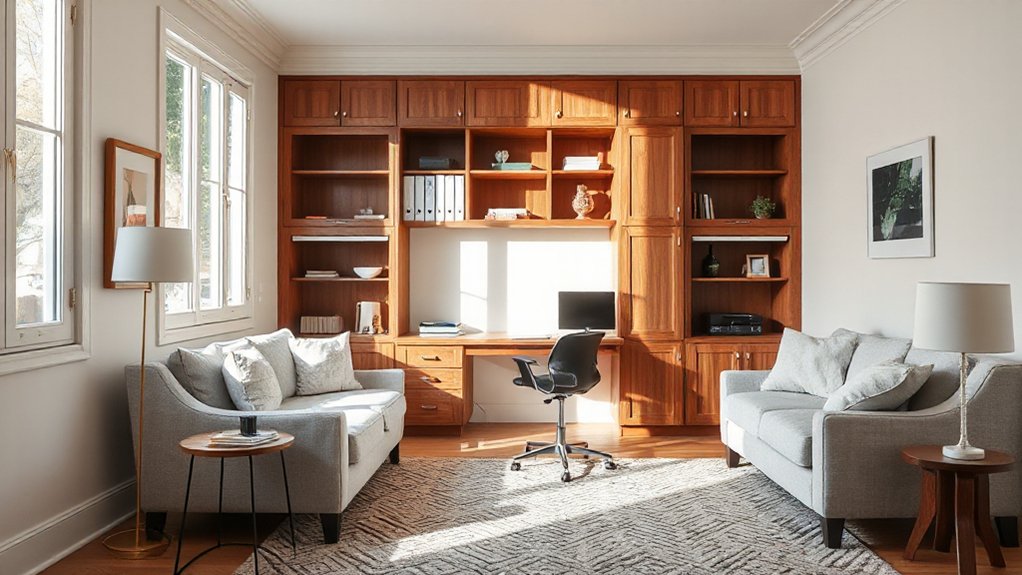
A well-planned hidden storage system keeps your home office looking calm while still giving you fast access to paper files, chargers, and devices. Build concealed storage into places you already use: a credenza with deep drawers, a bench with a lift-top, or a wall cabinet that closes flush.
Use hidden compartments for the messy essentials. Add a slim pull-out tray for a printer, a vertical file rail behind a door panel, and a lidded box drawer for receipts. Route cords through grommeted holes to a power strip mounted inside a cabinet, then park laptops on a ventilated shelf.
Finish with labeled dividers so you can grab what you need, shut everything away, and keep the room feeling intentional.
Match Home Office Lighting, Color, and Materials
With clutter tucked behind doors and drawers, the room’s look now hinges on how you balance lighting, color, and materials. Start with lighting harmony: layer ambient, task, and accent light so your desk stays bright without glare, and match bulb temperatures across fixtures to keep tones consistent.
Then lock in color coordination. Pull one or two hues from nearby rooms and repeat them in paint, upholstery, or art, while keeping your work surface a calm neutral. Use contrast sparingly: a darker chair or lamp base can anchor the zone without shouting “office.”
Finally, align materials with the home’s palette. If your space leans warm, choose oak, brass, and textured linen; for cooler rooms, use ash, blackened steel, and smooth stone.
Finish the Home Office: Cables, Acoustics, Zoom Backdrop
After you’ve dialed in lighting, color, and materials, the finish comes down to what the camera and your ears catch: tame cables so the desk reads clean, add simple acoustic control to cut echo and fatigue, and curate a Zoom backdrop that looks intentional without turning the room into a set.
Start with cable management: mount a power strip under the desk, route cords through a grommet, and bundle slack with Velcro so nothing drapes into view.
For acoustic treatment, add a rug, lined curtains, and one upholstered piece; if you need more control, hang fabric-wrapped panels where your voice reflects.
Then build your backdrop: keep it shallow, balanced, and personal—one plant, one framed print, and a tidy shelf. Hide clutter in closed storage.
Frequently Asked Questions
How Can I Create a Home Office in a Rental Without Permanent Changes?
You can create a rental-friendly home office by using temporary furniture, like a compact desk and shelving, and removable decor, like peel-and-stick art. You’ll define zones with rugs, lighting, and cable management too.
What Are the Best Ways to Make a Shared Office Space Work for Two People?
Balance boundaries, build buy-in: you’ll zone desks, schedule quiet hours, and share storage. Choose ergonomic furniture sized for each body, add layered lighting solutions, and keep cables concealed so your setup stays cohesive, functional, aesthetic.
How Do I Reduce Distractions When My Office Is in a High-Traffic Area?
Reduce distractions by zoning your desk away from pathways, adding privacy screens to block movement, and choosing soundproofing solutions like rugs, curtains, and panels. You’ll also set “do not disturb” cues and simplify your desktop.
What Budget Should I Plan for a Cohesive Built-In Look?
You’ll typically budget $1,500–$6,000 for a cohesive built-in look; let’s test the theory that “custom always costs more”—smart budget planning, modular boxes, and consistent finishes can deliver real design cohesion without overspending.
How Can I Keep My Home Office Looking Tidy With Kids or Pets Around?
You’ll keep it tidy by zoning: add Toy storage bins that slide under a bench and label them. Create Pet zones with washable mats and a bed. Route cords, use lidded trays, reset nightly.
Conclusion
When you design your home office to belong to the room, work feels lighter and the space stays calm. You’ve chosen the right spot for daylight and outlets, set an ergonomic layout, and matched furniture to what’s already there. Add hidden storage so paper and tech disappear. For example, you convert a dining corner with a slim oak desk, a lidded bench for files, warm sconces, and a linen curtain that closes on cables.