Table of Contents
You probably don’t know that the biggest motivation boost in a smart home gym often comes from “friction reduction,” not more willpower—tiny delays and ambiguity quietly kill consistency. When you add connected strength gear that counts reps, apps that auto-build weekly plans, and lighting/audio scenes that switch from warm-up to work to cooldown, you get immediate feedback and fewer decisions. The key is choosing upgrades that match your space, budget, and goals—because the wrong tech can do the opposite…
Choose Smart Upgrades by Goal, Space, Budget
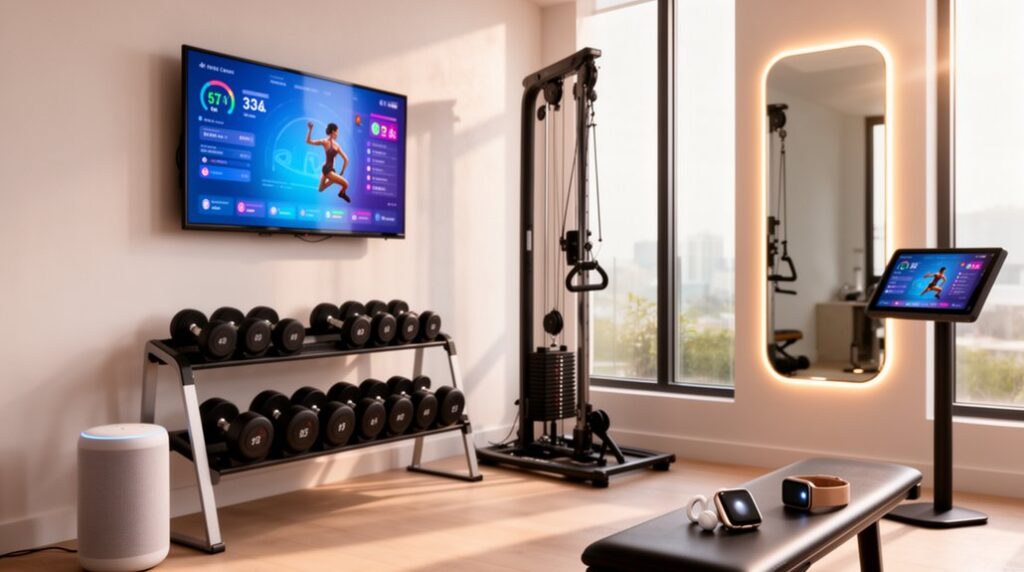
Before you buy any smart home gym gear, lock in what you’re optimizing for—strength, conditioning, mobility, or recovery—because the “best” upgrade depends on the outcome you’ll actually train for.
For strength, pick connected resistance with rep tracking and progressive overload prompts; data-backed feedback improves adherence and load selection.
For conditioning, prioritize a sensor-linked bike, rower, or jump system that targets zones using heart-rate variability and power metrics.
For mobility and recovery, choose wearables plus guided sessions that adapt volume to sleep and soreness for Personalized training.
Next, map your space: wall-mount storage, foldable benches, and compact sensors beat bulky machines.
Finally, set a budget around subscriptions and guarantee Equipment integration with your phone, watch, and apps.
Smart Mirror vs TV Screen: What’s Best?
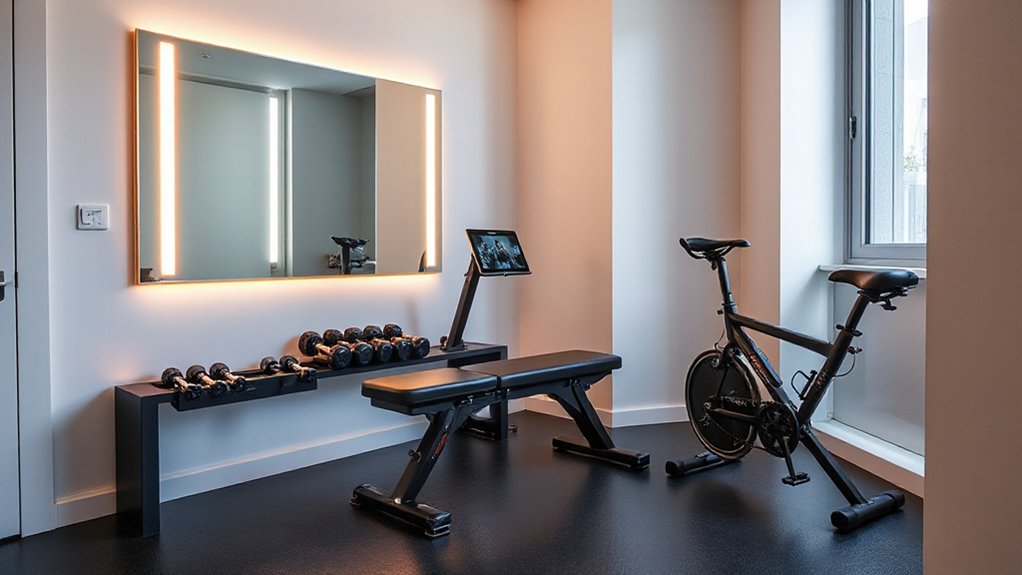
If you’re tight on space or you want a clean, studio-like look, a smart mirror can mount flush and disappear when you’re done, while a TV screen typically needs a stand or wall real estate.
On the performance side, mirrors often bundle built-in cameras, form cues, and integrated classes, whereas a TV can match or beat the experience with a good streaming setup and optional sensors.
Your best pick comes down to what you’ll actually use every week—and whether the mirror’s premium features justify the higher cost in your budget.
Space And Aesthetics
Where should your screen live when every square foot matters? A smart mirror mounts flush, so you keep floor space for your rack, mat, and ergonomic furniture. You also get a cleaner sightline: when it’s off, it reads like décor, especially with well-placed decorative lighting that reduces harsh glare and makes the room feel intentional.
A TV demands a stand or wall clearance, plus cable management and speaker placement, which can clutter tight corners. Yet a larger panel can anchor the room if you already face one direction for lifts or bike sessions.
For either option, prioritize matte finishes, slim bezels, and hidden power runs; studies on visual clutter show it can raise stress and sap focus. Design it calm, and you’ll train more consistently.
Workout Features And Cost
Although both can stream the same workouts, a smart mirror usually gives you more training-specific features per square inch—think on-screen form cues, rep tracking, heart-rate overlays, and profile-based programming—while a TV wins on raw screen size and lower upfront cost.
If you want coaching that feels interactive, the mirror’s sensors and software tighten feedback loops, so you correct form faster and stay consistent.
For a cost analysis, compare not just hardware price, but subscription tiers, add-on accessories, and how many household profiles you’ll use.
TVs pair well with cheaper apps and free YouTube training, so you can maximize workout variety without locking into one ecosystem.
Choose the mirror when data-driven guidance keeps you accountable; choose the TV when budget and flexibility drive your plan.
Use Training Apps That Build Weekly Plans
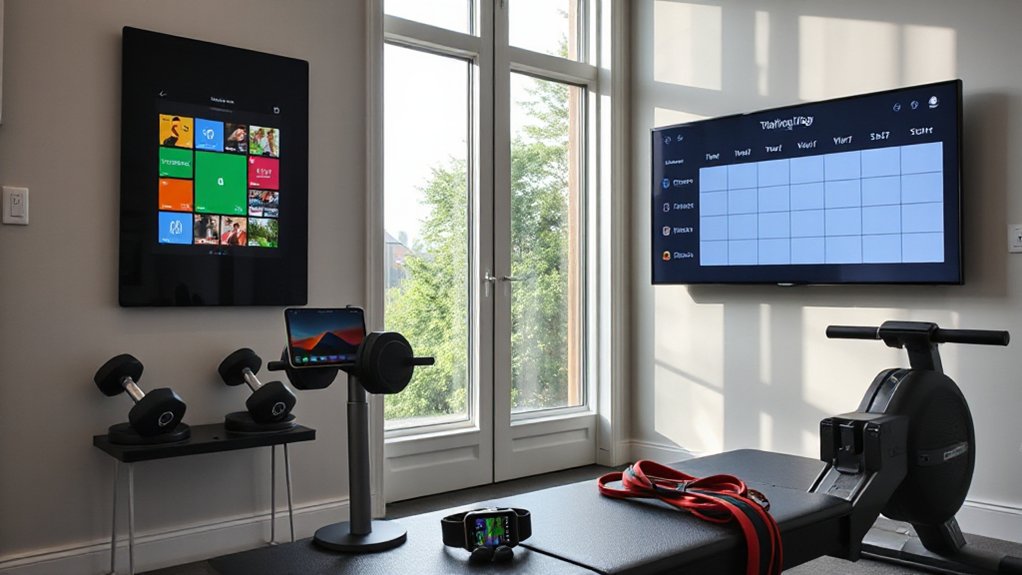
One upgrade can change everything: use a training app that generates a weekly plan based on your goals, schedule, and available equipment. You’ll get Personalized workout plans that auto-adjust when you miss a session, travel, or feel beat up, so consistency doesn’t collapse.
Choose an app that uses evidence-based progression, sets realistic weekly volume, and schedules recovery—because adherence improves when the next workout is already decided.
Look for fitness tracking integration with your smartwatch or heart-rate strap to turn effort into feedback. You can monitor trends like resting heart rate, sleep, and training load, then tweak intensity before you stall or burn out.
Add simple reminders and calendar sync, and you’ll show up more often—and train with purpose every week.
Add Smart Strength Gear That Counts Reps
Once your app has your weekly plan locked in, smart strength gear that counts reps makes execution tighter and progress easier to measure.
With Repetition tracking built into resistance bands, cable stacks, and connected dumbbells, you don’t guess—you verify. Sensors log reps, tempo, and range of motion, then flag when your last two reps slow, a reliable proxy for fatigue.
That data helps you choose load jumps that are realistic, not ego-driven, and it keeps your volume consistent across weeks. Smart rep counters also reduce “lost reps” from distractions, so every set matches your prescription.
Pair the counts with rest timers and auto-set detection, and you’ll finish faster while staying honest. You’ll see streaks, PRs, and compliance climb.
Upgrade Cardio With Guided, Adaptive Consoles
Upgrade your cardio by pairing your bike, rower, or treadmill with a guided, adaptive console that runs interactive training programs proven to boost adherence and intensity.
It’ll auto-tune resistance or incline in real time based on your cadence, heart rate, and power so you’re always training in the right zone.
You’ll also get performance metric dashboards—pace, watts, HRV trends, and intervals—that turn every session into measurable progress.
Interactive Training Programs
If you’re still relying on a basic speed-and-incline display, you’re leaving a lot of performance gains on the table. Interactive training programs turn your treadmill, bike, or rower into a structured coach by pairing interval science with real-time cues you can actually follow.
Choose consoles that sync heart rate, pace, and power, then auto-build sessions that hit specific zones for endurance, VO₂ max, or threshold work. With virtual coaching, you get on-screen prompts, form reminders, and pacing targets that keep you honest when motivation dips.
Better systems also deliver personalized feedback after each workout—flagging cadence drift, recovery trends, and missed intensity minutes—so you adjust the next session instead of guessing. Add leaderboards or scenic routes, and you’ll show up consistently, not sporadically.
Adaptive Resistance Control
Because your output changes from day to day, adaptive resistance control keeps the workout stimulus consistent by adjusting incline, wattage, or brake resistance in real time based on your heart rate, power, cadence, and recovery trends.
You stop guessing and start hitting the right zone, even when you’re tired, stressed, or coming off a hard week.
Guided consoles use algorithms similar to lab-tested auto-regulation: they nudge effort up when you’re under-target and ease off when you drift too high, helping you accumulate quality minutes at the intended intensity.
That steadier dose supports better aerobic adaptations and reduces the “all-or-nothing” spikes that can derail consistency.
Pair it with personalized training plans and you’ll progress without forcing hero workouts—just show up, follow the prompts, and let the machine meet you where you are.
Performance Metric Dashboards
Choose dashboards that auto-calibrate zones, flag threshold breaks, and summarize intervals with time-in-zone and variability scores.
You’ll get adaptive prompts like “back off 10 watts” or “raise cadence 5 rpm,” which improves adherence and cuts guesswork.
Sync to wearables, export to your training log, and review weekly progress charts.
When you can see the signal, you’ll keep showing up.
Use Wearables to Track the Metrics That Matter
When you pair a smart home gym with a modern wearable, you turn every session into measurable feedback instead of guesswork. Fitness trackers capture heart rate, HRV, sleep, and training load so you can adjust intensity before fatigue becomes injury.
Use Wearable analytics to watch trends, not single readings: rising resting heart rate, falling HRV, or poor sleep often predicts under-recovery. During intervals, stay in your target zone to build aerobic capacity efficiently; during strength work, track rep speed or exertion notes to spot plateaus.
Sync data to your dashboard and set weekly goals for minutes in zone, steps, or recovery scores. You’ll know when to push, when to deload, and why your progress is happening.
Automate Lighting Scenes for Warm-Up to Cooldown
Although most people treat lights as background, you can automate lighting scenes that actively guide your workout from warm-up to cooldown. Set a “Warm-Up” scene at 3500–4000K and medium brightness to raise alertness without glare, then shift to a “Work” scene at brighter, cooler 5000K to support focus and perceived energy.
Use Lighting automation with motion and schedule triggers so the room snaps on when you enter and steps down between sets, reducing friction and keeping you moving.
For cooldown, fade to warmer 2700–3000K with lower lux; studies link warmer, dimmer light to relaxation and better post-exercise recovery behaviors.
With consistent ambiance control, your environment becomes a cue: start, push, and finish.
Upgrade Gym Audio for Focus and Pacing
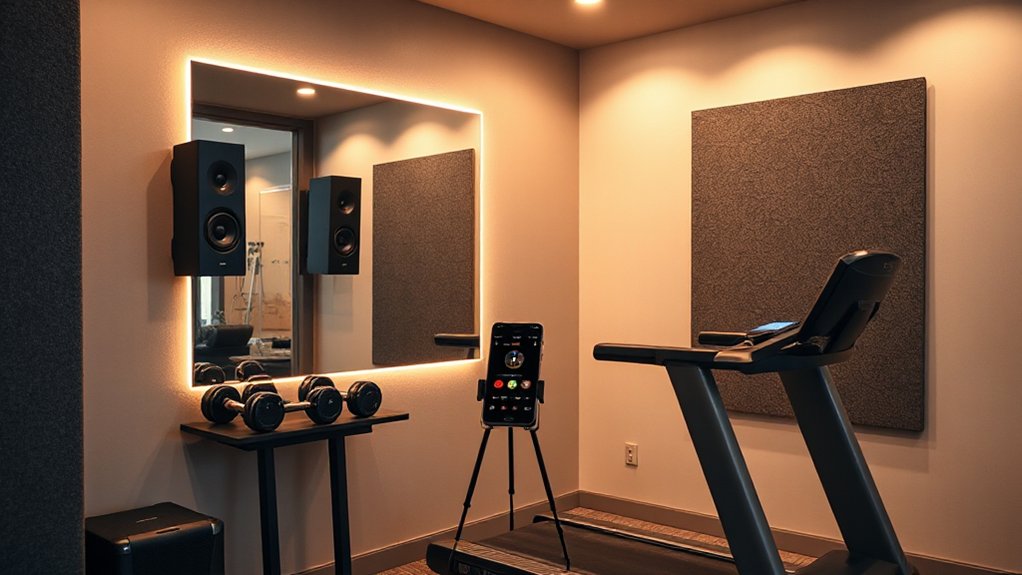
You’ll train with better focus when you upgrade to high-fidelity speakers that deliver clear mids and controlled bass, so cues and rhythm cut through fatigue.
You can lock in pacing by using tempo-synced playlists (BPM matched to your target cadence) to keep intervals consistent and reduce perceived effort.
Once your audio’s tuned, you’ll move more efficiently and hit reps and splits with less guesswork.
Choose High-Fidelity Speakers
If your workouts feel flat or your pacing drifts, upgrading to high-fidelity speakers can tighten focus and make tempo cues land with precision. High fidelity speakers deliver wider frequency response and lower distortion, so transients—kick drums, metronome clicks, coaching prompts—stay crisp even at higher volume.
That clarity reduces cognitive load; you don’t waste attention deciphering muddy audio when you should be driving form and cadence. Prioritize sound quality with a neutral tune, solid bass control, and strong stereo imaging to keep cues anchored in space.
Place speakers at ear height, angled toward your training zone, and isolate them from vibrating racks. Choose wired or low-latency wireless options so timing stays consistent during intervals and strength sets.
Use Tempo-Synced Playlists
When your playlist’s BPM matches your target cadence, your brain locks onto a steady external clock and your pacing gets easier to sustain. Research on auditory-motor entrainment shows rhythm cues tighten timing, reduce perceived effort, and help you hold form when fatigue rises.
So, build Tempo playlists for each workout zone: 120–130 BPM for steady cardio, 140–160 for intervals, and 90–110 for strength sets where control matters. Use apps that analyze BPM and auto-mix tracks, or set smart speaker routines that switch tempo as your timer changes.
Keep 3–5 “anchor” tracks you always associate with winning sessions, then rotate new songs to prevent burnout. Done right, motivational playlists become a pacing tool, not just background noise.
Add Smart Recovery Tools (Massage, Heat, Sleep)
Although smarter workouts get most of the attention, smarter recovery often drives the gains you actually keep. Add connected massage guns and compression sleeves to deliver massage therapy with consistent pressure and timed protocols, then log sessions alongside soreness ratings.
Use heat therapy tools—smart heating pads, infrared wraps, or app-controlled sauna blankets—to raise tissue temperature before mobility work and to downshift after training.
Pair them with a sleep tracker that flags poor sleep efficiency, late caffeine, or elevated overnight heart rate, so you adjust training load the next day instead of guessing.
Automate “recovery routines” in your home app: lights dim, temperature cools, white noise starts, and your next-day alarm shifts with sleep debt.
Recovery becomes measurable, repeatable, and motivating. You’ll show up fresher and progress faster.
Best Smart Home Gym Upgrades Under $100/$500/$1K
Smart recovery tech keeps you consistent, but the fastest way to make your home gym feel “smart” is to spend with intent. Under $100, grab a Bluetooth heart-rate strap and a smart plug for your fan or lights; real-time zones plus instant ambience cues improve pacing and adherence.
Under $500, add an entry-level connected bike trainer or smart adjustable kettlebell system paired with app programming; progressive overload and auto-logging reduce guesswork.
Under $1K, upgrade to a compact smart treadmill or a cable system with digital resistance and rep tracking; objective feedback drives higher effort and safer form.
These Smart home gym upgrades turn data into action, and that motivational technology keeps you showing up—even on low-energy days.
Frequently Asked Questions
How Do I Secure Smart Gym Devices on My Home Wi‑Fi Network?
Secure smart gym devices by enabling Device encryption, updating firmware, and using strong unique passwords. Apply Wi Fi segmentation with a separate IoT network, disable UPnP, and monitor router logs—you’ll cut attack risk dramatically.
Do Smart Gym Upgrades Work Offline Without Subscriptions or Internet Access?
Some do: you’ll get offline functionality for basics like timers, local sensor pairing, and cached workouts, but you’ll lose cloud analytics. Subscription necessity varies—avoid locked ecosystems, choose devices with onboard storage and Bluetooth profiles.
What’s the Best Way to Hide Cables and Manage Power Safely?
You’ll get the best results by using Cable concealment raceways, under-desk trays, and Velcro ties, then routing cords away from sweat and moving parts. For Safety wiring, use grounded surge protectors, proper load limits, and GFCI outlets.
How Can Multiple Family Members Share Profiles and Data Privately?
Like a locked diary, you’ll enable separate user accounts, turn on Family privacy controls, and use Profile sharing only via invites. You’ll sync wearables to individual logins, set permissions, and encrypt backups so data stays private.
Which Smart Gym Devices Integrate Best With Apple Health or Google Fit?
You’ll get the tightest Apple Health/Google Fit sync from Apple Watch, Fitbit, Garmin, and Oura, plus Peloton and Concept2 apps. Prioritize wearable compatibility and device automation, verify permissions, and you’ll track workouts accurately.
Conclusion
Pick upgrades that match your goal, space, and budget, then let data do the motivating. When your mirror or TV cues form, your app builds the week, your smart dumbbells count reps, and your lights and audio shift from warm-up to cooldown, you stop guessing and start progressing. Imagine you’re six weeks in: you missed two sessions, but the plan auto-adjusts, your PR pops up, and you finish strong—because your gym keeps pulling you back.