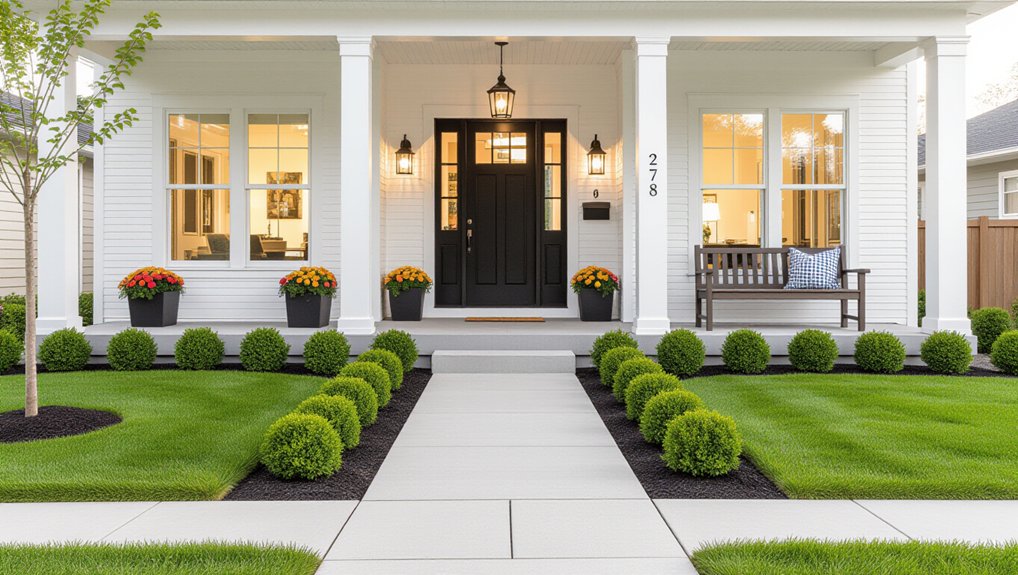
The fastest kerb-appeal wins work like a haircut: in 45 minutes, clean edges and a fresh doormat can make the whole place look sharper. You don’t need a full redesign—you need tidy sightlines, a front door color that suits your facade, and one or two well-planted pots with a thriller, filler, and spiller. Add subtle lighting and updated numbers, and the entrance starts to feel intentional… but the first move matters most.
Fast Kerb Appeal Clean-Ups (30–60 Minutes)
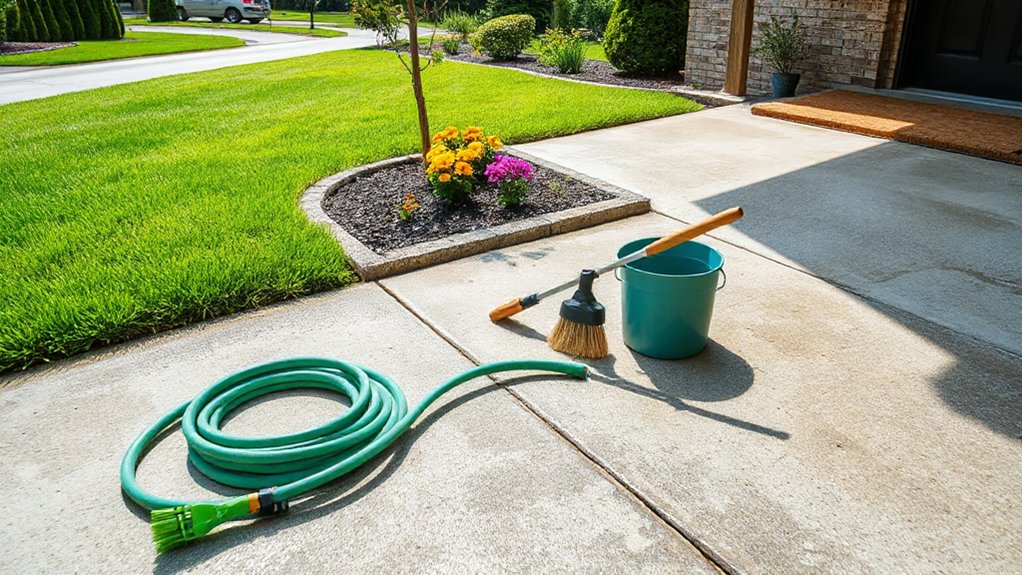
Need a quick win before guests arrive or a photo gets taken? Start with a 10-minute sweep: blow leaves off paths, rinse hardscape, and clear cobwebs around lights.
Next, edit the planting bed edges with a spade so lines read crisp from the street.
Top it off with landscape mulching—spread a thin, even layer to unify color, suppress weeds, and make shrubs look intentional.
Prune only what’s obvious: dead tips, crossing stems, and spent blooms; don’t reshuffle structure.
Finish with outdoor furniture arrangement: angle chairs toward the entry sightline, center a small table, and tuck clutter out of view.
Add one pot with a bold, upright plant to anchor the vignette. Done.
Refresh the Front Door: Paint, Hardware, Mat
Because the entry reads as a single composition from the street, invigorating your front door is one of the highest-impact kerb-appeal upgrades you can do in an afternoon. Choose a colour that echoes your landscape: deep green beside boxwood, inky blue with silver-leafed shrubs, warm clay near grasses. Prep matters—degloss, spot-prime, and use exterior enamel for a crisp sheen that shrugs off weather.
Swap tired hardware for a modern handle set and matching knocker; keep finishes consistent with nearby lighting. Add front door accessories that feel intentional: a simple wreath, slim planters flanking the jamb, and a doormat scaled to the stoop.
If you’ve got porch furniture, coordinate cushions to the door for a cohesive, welcoming vignette.
House Numbers and Mailbox That Look Updated
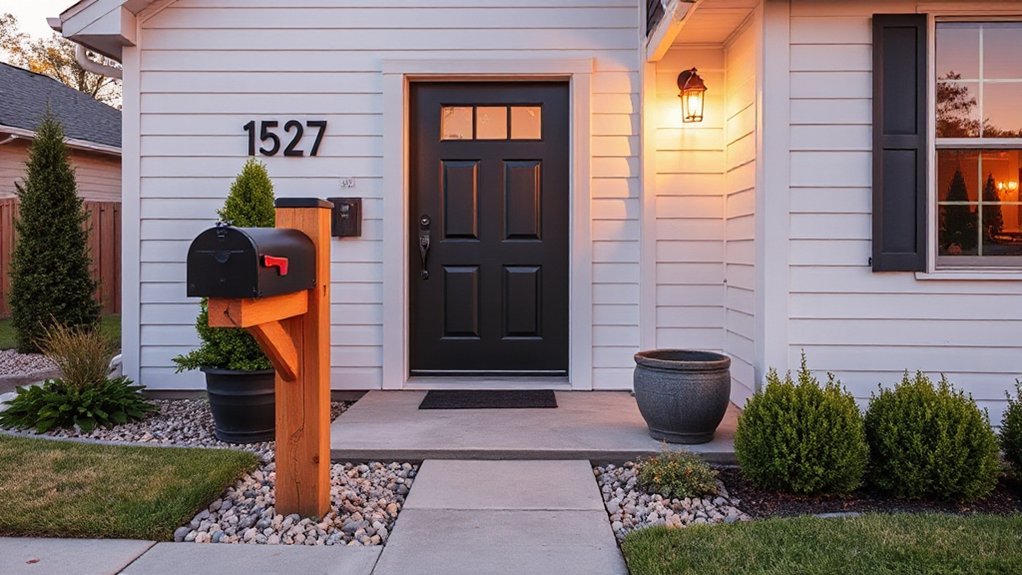
Even if your planting is dialled in, dated house numbers and a scuffed mailbox can make the whole frontage feel tired, so treat them like the “jewellery” of your entry.
Choose modern house numbers that match your home’s lines: slim black for contemporary facades, brushed brass for warm brick, or crisp white for dark cladding. Mount them on a simple timber backer to echo decking or a gate, and align them with mullions or porch posts for instant order.
Then upgrade to a stylish mailbox with clean seams and a colour that repeats elsewhere—door hardware, fence caps, even your pot rims. Keep placement clear of spiky shrubs, and prune surrounding foliage so the details read from the street.
Simple Outdoor Lighting for Safety and Style
You can boost kerb appeal and nighttime confidence with simple lighting that suits your site and planting scheme.
Line your walkway with low-glare pathway lights for clear guidance. Then tuck solar fixtures near beds and containers to add warm ambience without extra wiring.
Add motion-sensor lights at entries and side gates, and you’ll sharpen security while keeping the overall look clean and intentional.
Pathway Lights For Guidance
When dusk settles over your front garden, pathway lights do more than mark a route—they shape the way the whole landscape reads from the street. Set fixtures to trace the natural line of your path, not the property boundary, so the entry feels intentional and calm.
Aim for low, even pools of light that prevent glare and keep planting textures legible. Tuck lights just outside shrub drip lines, so box, lavender, and grasses cast soft shadows instead of blocking beams.
Stagger spacing on curves to avoid dark pockets, and place a brighter point near steps for safe footing. If you’re using a solar pathway system, check daytime exposure and keep panels clear of leaf litter.
Done right, you get guiding illumination that flatters hardscape edges and makes your door feel closer.
Solar Fixtures For Ambience
As the sun drops, solar fixtures add a warm, low-voltage glow that softens hard edges and lets your planting do the talking. Tuck them at the base of clipped hedges, under small trees, or beside sculptural pots to build layered outdoor ambience without wiring hassles.
Choose warm-white LEDs to flatter foliage: silver leaves shimmer, glossy evergreens gain depth, and grasses catch light at their tips. Aim for low, shielded heads so you graze walls and edging, not eyes.
Space fixtures evenly along borders, then cluster a few near a feature—an olive, a fountain, a statement boulder—to create a focal pool of light. Keep panels clear of mulch and shade, and match finishes to your hardware for a cohesive, intentional frontage overall.
Motion Sensors For Security
If twilight’s atmosphere matters, motion-sensor lighting still earns its place by making your entry feel intentional and secure. Use it where you actually move: the front walk, driveway edge, side gate, and bin zone. Aim beams down and across paving so glare doesn’t wash out your facade or your planting.
Choose warm LEDs (2700–3000K) to flatter brick, timber, and foliage, and to keep night-friendly vibes near pollinator beds. Place fixtures above head height, then adjust sensitivity so motion sensors trigger for a person, not every swaying ornamental grass. Add a short hold time so you can access the door without a blackout.
When lights pop on cleanly, you improve outdoor security while sharpening your home’s lines and landscaping structure.
Crisp Path Lines and Garden Edging
You sharpen kerb appeal fast when you define crisp path borders that guide the eye and keep mulch and gravel off your paving.
You’ll get the best fit by choosing edging materials that match your site—steel for sleek lines, stone for weight and texture, or brick for classic warmth.
Then you cut and install clean edge lines with consistent depth and tight curves, so plants read as intentional and the path stays neat year-round.
Defining Crisp Path Borders
Whether your front walk is gravel, pavers, or poured concrete, crisp path borders instantly sharpen the whole scene by separating hardscape from planting beds with intention. Recut the edge in a clean, continuous line that echoes your home’s geometry, then keep curves broad and readable from the street.
Check alignment from multiple viewpoints, and aim for landscape symmetry where the site calls for formality—mirror bed widths, repeat turning points, and keep the path’s “shoulders” consistent. Pull back sprawling perennials, lift low branches, and thin groundcovers so the border reads as a deliberate frame, not a tangle.
Finish by tucking in a narrow ribbon of natural mulch just inside the planting side to unify soil color, suppress weeds, and highlight the path line without stealing attention.
Choosing Edging Materials
Once the border line reads clean, the edging material decides how sharp it stays through rain, frost, and routine maintenance. Choose materials that match your site conditions: heavy clay and mower traffic demand something rigid; light, sandy soil can handle softer progressions.
For a sleek, contemporary look, metal edging gives you thin, crisp lines that don’t visually compete with planting. Pair it with architectural grasses or clipped box for maximum definition.
If you want a warmer, cottage feel, set decorative stones alongside thyme, sedum, or low hebes; their texture hides minor shifts and suits informal beds.
Timber suits naturalistic gardens but weathers fastest, so balance it with tough groundcovers.
Concrete or brick reads formal and supports repeated footfall near entries.
Installing Clean Edge Lines
Edging material sets the look, but clean edge lines make it read intentional from the street. Snap a chalk line for paths, then cut a crisp trench with a half-moon edger or spade.
Keep curves broad and repeatable so they echo your home’s geometry and don’t fight tight planting pockets.
Set edging to a consistent reveal, check level, and backfill firmly so it won’t heave.
Pull mulch back from the line, then top-dress evenly for a sharp shadow gap.
Where lawn meets beds, slice a V-edge and maintain it every few weeks; it’s one of those landscaping tips that instantly upgrades scale.
Finish by aligning outdoor furniture with the path axis so the whole front yard feels composed.
Low-Maintenance Front Plants and Pot Ideas
How do you boost kerb appeal without signing up for weekly pruning and constant watering? Start with Container gardening: it lets you control soil, drainage, and placement, so your entry always looks intentional. Choose one tall “thriller” (dwarf conifer or cordyline), ring it with a tidy “filler” (lavender, santolina), and trail with creeping thyme or dichondra for a finished edge.
For reliable impact, lean on drought tolerant plants that hold shape and colour: agave, euphorbia, hebes, lomandra, and sedum. Repeat the same pot style in two or three sizes to create rhythm, then group in odd numbers by the door for instant structure.
Use light-coloured gravel mulch to reduce evaporation and keep the surface crisp, even after rain.
Frequently Asked Questions
How Can I Improve Kerb Appeal on a Renter-Friendly Budget?
Boost kerb appeal on a renter-friendly budget by adding potted natives, tidy edging, and peel-and-stick house numbers. Use landscaping tips like mulch refreshes, then install solar outdoor lighting along pathways for crisp, design-forward nighttime definition.
Do I Need Council Approval for Changing My Fence or Front Facade?
You might, yes—check your council first. Fence regulations and facade permits vary by zone. Before you plant borders or refresh cladding, confirm heights, materials, and heritage overlays, so your frontage blooms without compliance headaches.
Which Outdoor Improvements Add the Most Value Before Selling?
You’ll add the most value by rejuvenating landscaping, repainting trim, and defining functional zones. Install garden lighting to spotlight trees, add outdoor seating to stage lifestyle, and upgrade paths and edging for crisp, modern lines.
How Can I Boost Kerb Appeal in Winter With Minimal Upkeep?
Boost kerb appeal in winter by keeping paths clear, pruning for clean lines, and adding evergreen structure. Use landscaping tips like mulched beds and tidy edging. Refresh seasonal decorations with warm lighting, planters, wreaths.
What’s the Best Way to Hide Bins and Utilities From Street View?
Like a stage curtain, you’ll hide bins and utilities by screening them with a slatted timber enclosure and evergreen climbers. Add garden lighting to soften edges; align placement with driveway resurfacing lines for a clean, cohesive façade.
Conclusion
Funny how “doing nothing” to your front yard takes just an hour. You’ll rake the mess you stopped seeing, slice crisp edges like you planned them that way, and top it with mulch that reads instantly intentional. Then you’ll give your door a bold coat, swap in clean hardware, and set a sharp mat. Updated numbers, a smarter mailbox, and low-glare lighting quietly modernize everything. Finish with pots: thriller, filler, spiller—suddenly, you’re “effortless.”