
Table of Contents
A garage conversion sits in an interesting position in the hierarchy of home improvement projects. It’s often one of the most cost-effective ways to add usable living space — you’re working within an existing structure, without extending the footprint, without the disruption of a major build. And on the planning question, it’s also one of the more straightforward: for most attached and integral garages on standard residential properties in England, the answer is no, you don’t need planning permission.
But the exceptions matter, and the requirement for Building Regulations approval — which applies regardless of whether planning permission is needed — is non-negotiable. Understanding both properly before starting work is what separates a project that completes cleanly from one that causes problems down the line, particularly when the property comes to be sold.
Why Most Garage Conversions Don’t Need Planning Permission
The planning logic is fairly simple. Converting an existing garage into a habitable room — a bedroom, a home office, a playroom, a utility room — doesn’t change the external footprint of the building, doesn’t add new volume, and in most cases doesn’t materially alter the external appearance in a way that affects the street scene. It’s an internal change of use and some associated works.
Under the permitted development framework in England, internal conversions of this kind generally don’t require a planning application. The building exists; you’re changing what happens inside it. Provided the conversion doesn’t involve changes that take it outside the conditions of permitted development — enlarging the structure, significantly altering the front elevation in a way that affects the principal elevation, creating a separate dwelling — no application is required.
The Planning Portal at www.planningportal.co.uk is the authoritative reference for permitted development rules in England and the right place to check the specifics for your property and proposed works. Our own Ultimate Guide to UK Planning Permissions also covers the broader planning framework if you want more context on how permitted development sits within the system as a whole.
The Conditions That Determine the Planning Position
Permitted development for garage conversions isn’t without conditions, and each one needs to be satisfied for the no-application route to apply.
The garage must be part of the main dwelling. Integral garages — built into the footprint of the house — and attached garages — structurally connected to the house — are the most clearly within permitted development for conversion. Detached garages are a separate consideration: converting a detached garage to habitable use is more likely to require planning permission, particularly because creating a self-contained habitable space separate from the main house raises questions about whether it’s functioning as a separate dwelling.
No enlargement of the building. The conversion must not increase the volume or footprint of the existing structure. If the plan involves extending the garage as part of the conversion — adding square metres, raising the roof height, extending the walls — that element requires planning permission as an extension, even if the basic conversion itself doesn’t.
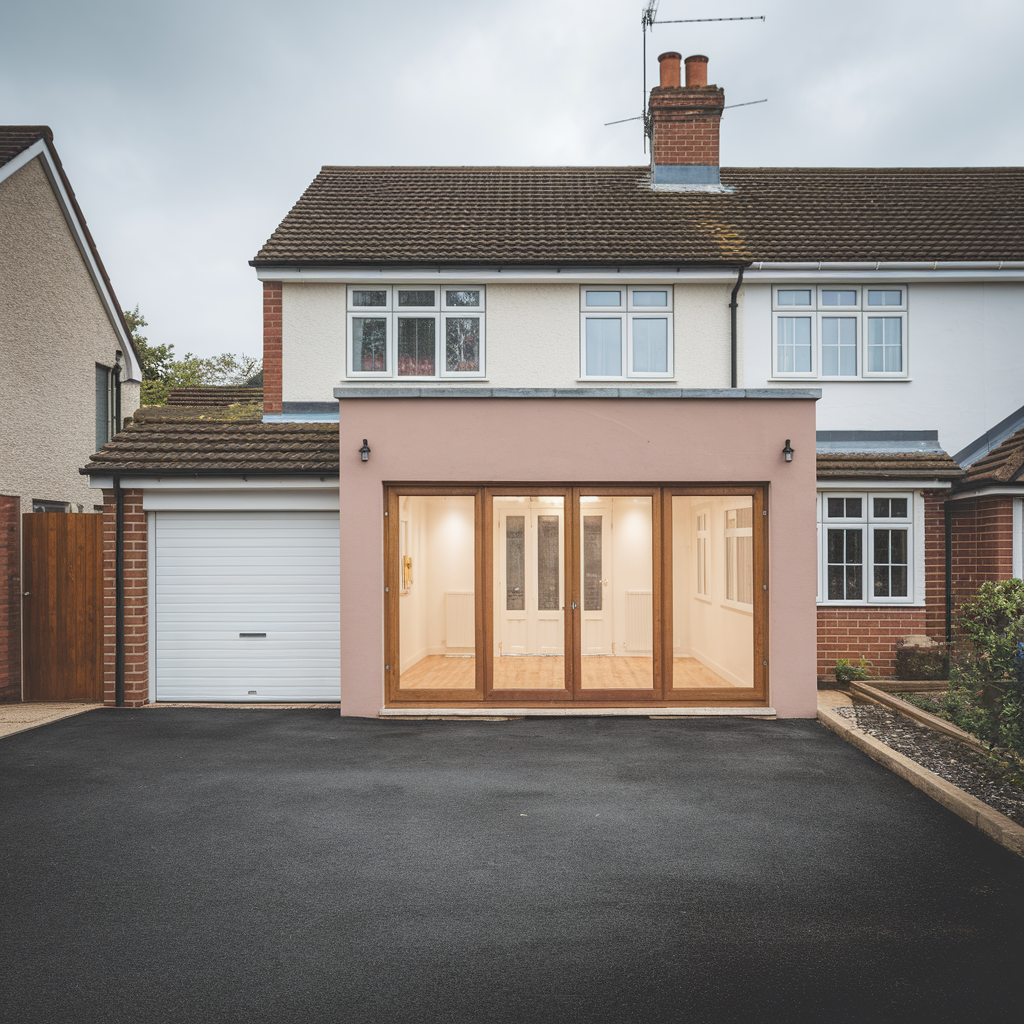
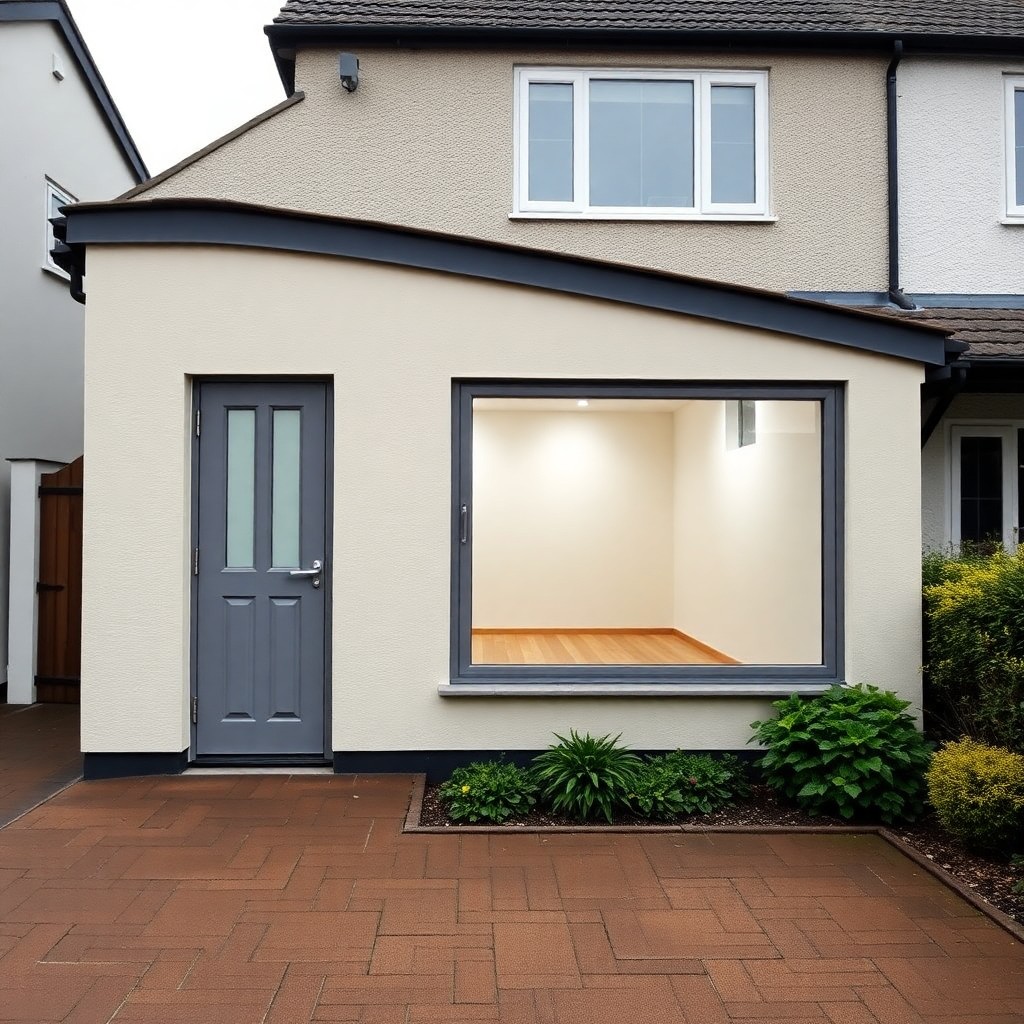
External alterations and the principal elevation. Replacing a garage door with a wall and window is standard practice in a garage conversion and is generally considered acceptable as works associated with the conversion — it doesn’t typically require a separate planning application. However, where the garage fronts the principal elevation of the house — the front face of the house that faces the street — the change in appearance from a garage door to a window and wall is more likely to be considered a material alteration that requires householder planning permission. On most properties the garage is set to the side, but where it’s directly integrated into the front elevation, the planning position deserves specific attention.
Not a separate dwelling. The converted space must remain part of the main house — ancillary to the main dwelling, accessed from within the house or as an adjunct to it. Converting a garage into a self-contained annexe with its own separate entrance, kitchen, bathroom, and sleeping accommodation — effectively a separate flat or house — is a material change of use that requires planning permission regardless of whether the structure is existing. The distinction between a room connected to the main house and a self-contained unit is one that local planning authorities apply actively.
When Planning Permission Is Required
There are several circumstances in which planning permission for a garage conversion is always required, regardless of the conditions above.
Listed buildings. If the property is listed at any grade, permitted development rights don’t apply. Any works to a listed building — including internal conversion of an attached or integral garage — require both planning permission and Listed Building Consent. The consent process involves the local authority’s conservation officer and applies a higher standard of assessment than ordinary planning applications. Historic England’s guidance for owners of listed properties is at historicengland.org.uk/advice/your-home/owning-historic-property.
Conservation areas. Properties within conservation areas retain permitted development rights for most internal works, but the conversion of a garage that involves changes to the front elevation — particularly one that fronts a highway — is more likely to require planning permission in a conservation area than in an unrestricted area. Local planning authorities in conservation areas may also have applied Article 4 Directions removing permitted development rights more broadly. Checking with the local planning authority before assuming permitted development applies is particularly important in conservation areas.
New housing estates with planning conditions. Many new-build houses were granted planning permission subject to conditions specifically requiring that the garage is retained as a garage and not converted. This is particularly common on estates where the planning authority required a minimum number of off-street parking spaces per dwelling. Where such a condition exists, converting the garage requires either a formal planning application to vary the condition or an application to discharge it. This requirement appears in the original planning permission for the development, not in the title deeds — it’s often missed, which is why it’s one of the most common sources of problems in garage conversion projects on new estates.
If you’re on an estate built in the last twenty or thirty years, check the original planning permission and its conditions before proceeding. Your local planning authority’s online planning register will hold the records for the original development consent.
Article 4 Directions. Some local planning authorities have applied Article 4 Directions removing permitted development rights for garage conversions in specific areas, typically in response to concerns about the loss of off-street parking capacity. Where an Article 4 Direction applies, planning permission is required even for internal conversions that would otherwise be permitted development. Check with your local planning authority if you’re in any doubt.
Flats and maisonettes. Permitted development rights apply to houses. They don’t apply to flats or maisonettes. If your property is classified as a flat — even if it looks and functions like a house — permitted development rights don’t apply and any garage conversion requires planning permission.
The Parking Question
Even where planning permission is not required under permitted development, the loss of a parking space is something local planning authorities take seriously and can sometimes use as a material consideration in support of requiring a planning application.
In areas of high parking pressure — urban streets with limited on-street capacity, estates where parking is already strained — converting a garage eliminates off-street parking that the area may depend on. Some authorities have been more active in seeking to restrict garage conversions through Article 4 Directions or through conditions on new development specifically because of this.
Where planning permission is required, the loss of parking will be a consideration in the assessment. It doesn’t automatically result in refusal, but it needs to be addressed — either by demonstrating that parking is adequately available on-street, or by creating replacement off-street parking elsewhere on the plot.
Building Regulations: Always Required
This is the non-negotiable part that applies regardless of the planning position. Every garage conversion that creates habitable space requires Building Regulations approval in England. There are no exceptions.
The reason is straightforward: a garage is not built to habitable standards, and converting it to a room that people live, sleep, or work in requires upgrades across multiple categories that Building Regulations cover.
Structure. The floor of a typical garage is a concrete slab not designed for habitable use — it will need a damp-proof membrane, insulation, and a finished floor surface. The walls may need upgrading for thermal performance. The roof, if the garage is integral, may form part of the house’s thermal envelope and need bringing up to current insulation standards.
Thermal performance. Converting a garage to habitable use means the walls, floor, and ceiling must meet current Building Regulations standards for insulation. The U-values required by Approved Document L are specific and need to be achieved — not approximated. This is one of the more technically demanding aspects of garage conversion work because the existing structure often needs significant insulation to reach current standards.
Ventilation. Habitable rooms require ventilation — both background ventilation through trickle vents or equivalent, and adequate openable area for purge ventilation. This needs to be designed into the conversion from the outset, not added as an afterthought.
Fire safety. The converted garage, as a new habitable room, forms part of the fire safety picture for the whole property. Depending on the layout, this may require fire doors, smoke alarms, and other provisions. An integral garage that opens directly onto a staircase or escape route is a specific area of concern.
Electrics. Any new electrical installation must comply with Part P of the Building Regulations, either through a registered competent person who can self-certify or through notification to Building Control.
Building Regulations approval is obtained either through a Full Plans application — where drawings and specifications are submitted and checked before work starts — or a Building Notice, where inspection happens during the work. Full Plans is almost always preferable for garage conversions because it provides certainty about the specification before any materials are purchased or work begins.
The Lawful Development Certificate
For garage conversions that proceed under permitted development, obtaining a Lawful Development Certificate from the local planning authority is strongly advisable even though it’s not legally required.
The certificate provides formal, documented confirmation that the conversion is lawful. When the property is sold, buyers’ solicitors routinely raise questions about alterations to the property, and a garage conversion — particularly one that has changed the appearance of the front elevation — will be noticed. A Lawful Development Certificate answers those questions definitively and removes the uncertainty that can delay or disrupt a sale.
Applications are made through the Planning Portal. Processing takes around six to eight weeks. The cost is modest relative to the value of the protection it provides, particularly given that a garage conversion typically adds meaningful value to the property and represents a significant investment in the works themselves.
A Note on Value and Practicality
The case for a garage conversion as a project is strong. It adds usable square footage within the existing footprint, at a lower cost per square metre than an extension, with less disruption than a full building project. A well-specified conversion — insulated properly, ventilated correctly, finished to a habitable standard — produces a room that’s indistinguishable from any other room in the house.
The planning and regulatory framework for garage conversions is, for most people, straightforward. Permitted development covers the majority of projects. Building Regulations apply in all cases and need to be respected properly, not worked around. And a Lawful Development Certificate, while not mandatory, is the piece of documentation that makes the whole project clean and defensible when the time comes to sell.
Get those three things right — check the planning position carefully, comply fully with Building Regulations, and get the certificate — and a garage conversion is one of the lower-risk, higher-reward home improvement projects available.