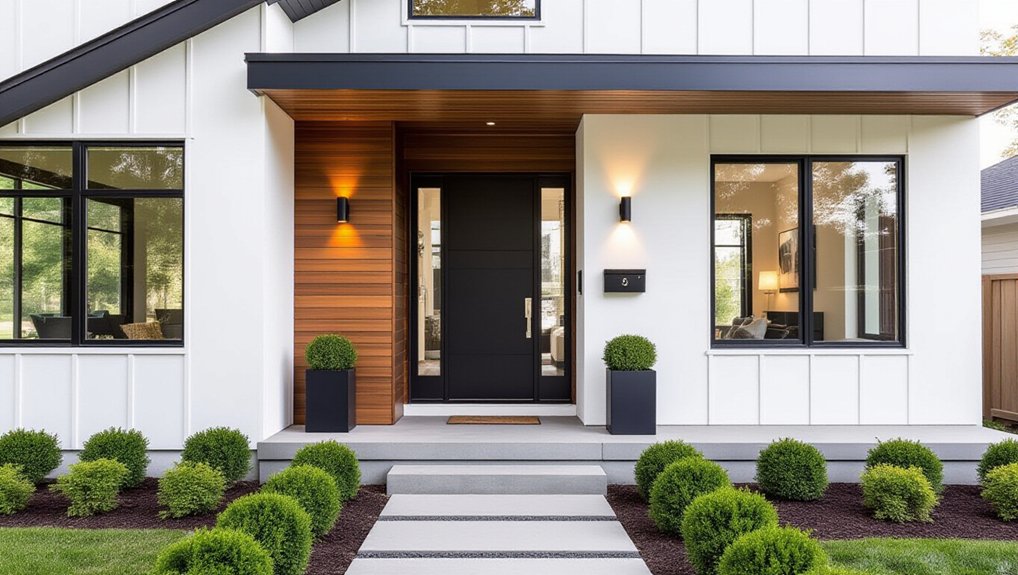
You can make your home look newer in a single weekend by swapping a few high-impact details. Start with one upgrade you can finish fast, like modern house numbers, a matte mailbox, or a new porch light, and shut off power at the breaker before touching any wiring. Test paint swatches in sun and shade, then sharpen curb lines with edging and fresh mulch. The tricky part is choosing what to change first so everything matches…
Pick 3 Modern Exterior Upgrades for One Weekend
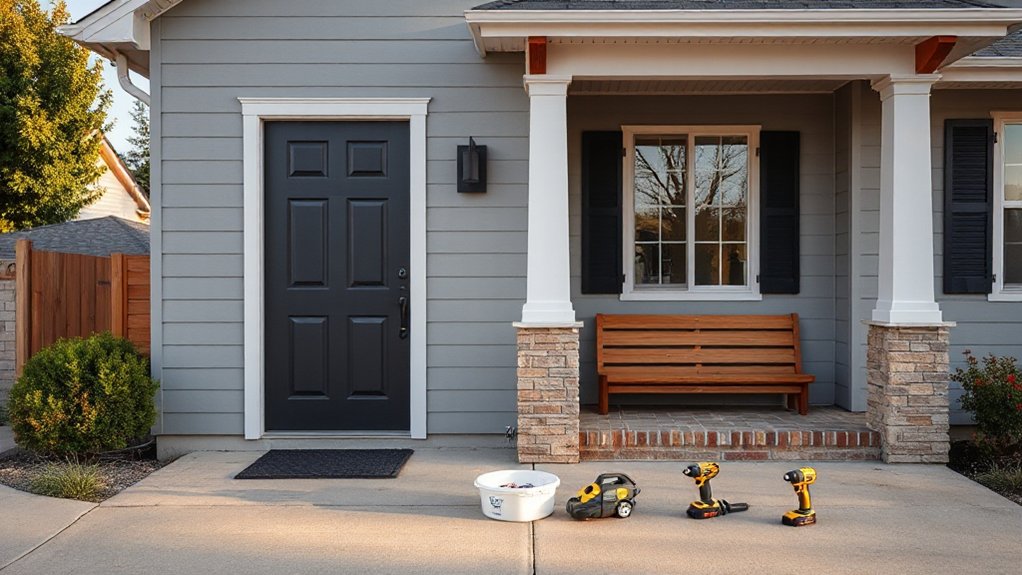
If you’ve only got a weekend, choose three high-impact upgrades you can finish without specialised tools: update your front-door hardware, refresh exterior lighting, and sharpen kerb lines with new house numbers or a mailbox.
Start with the lockset: match backset measurements, tighten screws, and test the deadbolt throw so it doesn’t bind.
Next, swap dated fixtures for weather-rated LEDs; shut off power at the breaker, confirm with a non-contact tester, and seal the mounting plate to keep water out.
Add landscape lighting using low-voltage kits: bury cable 6 inches deep, avoid splices, and aim beams away from windows and walkways.
Finish with clean porch decor and high-contrast numbers, fastened into studs or masonry anchors.
Choose Modern Exterior Colors, Sheen, and Trim Lines
You’ll modernise your exterior fastest by choosing a contemporary palette—think warm whites, charcoals, muted greens, and a single bold accent—after you test large swatches in sun and shade.
Match the job to the right sheen: flat or low-sheen hides siding flaws, satin cleans easier on trim and doors, and you’ll follow ladder and respirator safety when sanding or spraying.
Finish by sharpening your trim lines with clean caulk joints, straight tape runs, and crisp edge cuts so the whole façade looks intentional and new.
Contemporary Color Palette Selection
Wondering which exterior colors actually look modern instead of merely “new”? Start with a restrained base: warm white, greige, charcoal, or muted sage. Then plan Color contrast deliberately—pair a dark body with light trim, or flip it for a crisp outline. Keep accent accents limited to one or two spots, like the front door and shutters, so the facade doesn’t look busy.
Before you buy gallons, test large swatches on different sides of the house and check them at morning and dusk; surrounding trees and brick shift undertones. Match your palette to fixed elements (roofing, stone, hardscaping) so everything reads intentional.
When working on ladders for sample boards, set them on level ground and keep three-point contact.
Optimal Sheen And Finish
How shiny should your exterior paint be to look modern rather than mismatched? Start by matching sheen to surface condition and exposure. Flat hides siding flaws but stains easier; satin or low-lustre reads current and cleans well. Use semi-gloss sparingly on high-touch areas like doors for a crisp, updated look without glare. Check manufacturer specs for Sheen levels and confirm the same product line across walls and accents to avoid color shift.
Prioritize Finish durability: choose exterior acrylic rated for UV, mildew, and temperature swings.
Prep safely—wash, scrape loose paint, and spot-prime bare wood; wear eye protection and a respirator when sanding old coatings.
Test a sample board in sun and shade before committing.
Crisp Trim Line Updates
Although fresh paint modernises a facade fast, crisp trim lines make the update look intentional—so choose a simple, high-contrast palette (light body with bright white or charcoal trim) and keep sheen consistent (satin/low-lustre on siding, semi-gloss on doors and window sashes) to avoid a patchwork effect.
Before you cut in, clean chalky edges, scrape loose paint, and sand to a sharp boundary so your trim line stays straight. Mask with painter’s tape rated for exterior use, press it down with a putty knife, and remove it while paint’s still tacky to prevent tearing.
For paint edging, use an angled sash brush, load only the first third of bristles, and pull long strokes toward corners. Work from a stable ladder, maintain three points of contact, and don’t overreach.
Replace Modern Exterior Hardware (Door, Mailbox, Rails)
If your exterior still wears dated knobs, a rusting mailbox, or flimsy railings, swapping in modern hardware delivers an immediate facelift without major construction. Choose finishes that match your home’s palette; matte black or brushed nickel pairs well with Vintage fixtures and traditional textures like brick or cedar.
Measure backset and bore size before buying a new handle set, and rekey locks for security. When replacing a mailbox, confirm post depth and local height rules, then use galvanized fasteners to prevent corrosion.
Upgrade rails with code-compliant spacing and a sturdy graspable profile; anchor into framing, not trim. Wear gloves and eye protection, shut off power to any doorbell wiring, and seal new holes with exterior caulk to stop water intrusion.
Add Modern Exterior Lighting and Place It Correctly
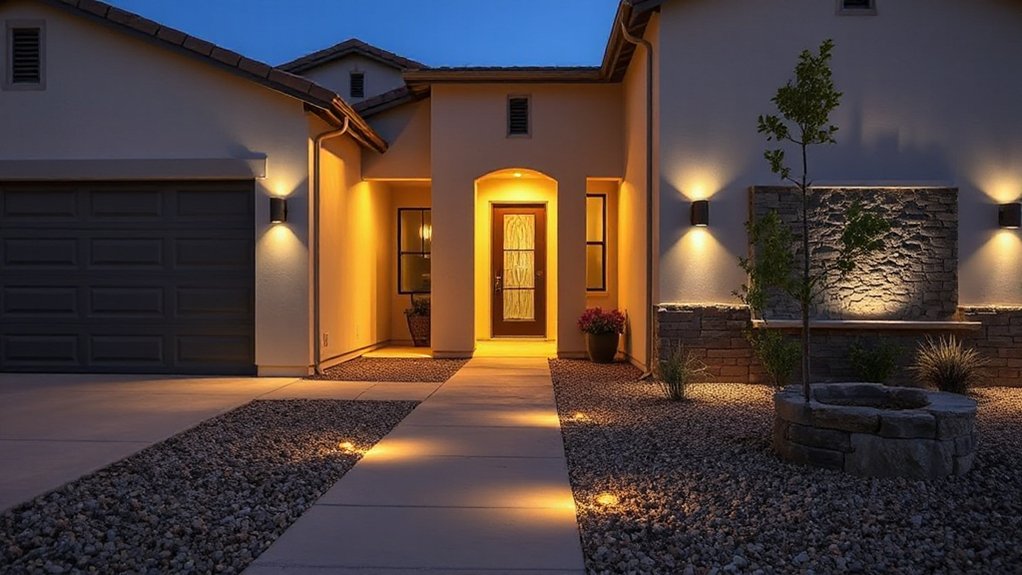
Because exterior lighting affects both safety and curb appeal, upgrading to modern fixtures—and placing them at the right height and spacing—makes a bigger impact than swapping a single porch light.
Mount entry sconces so the center sits about 60–66 inches above the porch floor, and size them to fill roughly one-third the door height. Place two fixtures 6–8 feet apart for balanced light and fewer shadows.
Add LED landscape lighting to highlight steps and changes in grade, and use low-glare, shielded heads aimed downward to protect night vision.
For pathway illumination, space lights 6–10 feet apart, staggering sides for even coverage.
Choose wet-rated fixtures, seal penetrations, and connect to a photocell or timer with a GFCI-protected circuit.
Modernise Curb Appeal With Edging, Mulch, and Planters
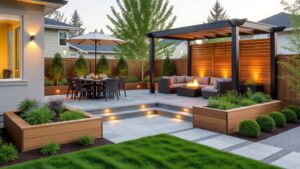
Even small landscaping tweaks can make your exterior look cleaner and more modern when you define edges, refresh mulch, and group planters with intention. Start by edging lawn lines and garden pathways with steel, stone, or a crisp spade cut; keep curves smooth and consistent. Wear gloves and eye protection, and call before you dig if you’ll set edging deeper than a few inches.
Next, top up mulch to a 2–3 inch layer for uniform colour and weed control, but keep it a few inches off siding and tree trunks to prevent rot.
Finally, cluster planters in odd numbers near the entry or outdoor seating, mixing heights and matching finishes for a cohesive look. Use stable, level bases to prevent tipping.
Install Modern House Numbers and a Name Plaque
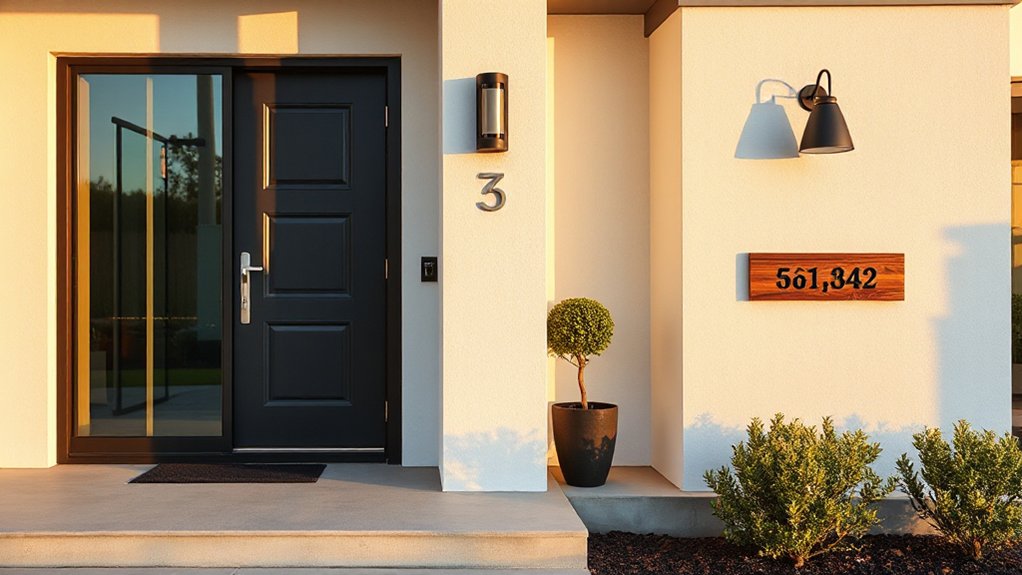
Swap dated digits for sleek, modern house numbers in a clean font and durable finish (powder-coated metal or acrylic) that’s easy to read from the street, day or night. Mount them securely with corrosion-resistant hardware and check for level before you drill, wearing eye protection and verifying you won’t hit wiring or masonry anchors.
Place your name plaque near the main entry or mailbox at eye level. Keep it well-lit and unobstructed by plants, and confirm it doesn’t block door swing or walkways.
Choose Sleek Number Styles
If you want a quick exterior upgrade that looks intentional, start with modern house numbers and a clean name plaque. Pick a number style that matches your home’s lines: thin, sans-serif for contemporary; bold, squared-off for mid-century; simple serif for traditional. Prioritise legibility from the street by choosing 4–6 inch numbers and strong contrast against the wall colour.
Nail your font selection before you buy: avoid overly stylised scripts and tight spacing that blur at distance. Choose durable materials like powder-coated aluminium, stainless steel, or UV-stable acrylic, and confirm they’re rated for outdoor exposure.
Use corrosion-resistant screws or stand-off mounts, and wear eye protection when drilling. Before final install, tape numbers in place and view them from the curb to confirm clarity.
Name Plaque Placement Tips
Once you’ve chosen a clean number style, place your name plaque where visitors naturally look—near the main entry and in the same visual zone as the numbers. Keep it 48–60 inches above grade and aligned with the door trim or a vertical siding line so it reads quickly from the street.
If your walkway design bends, test visibility from the approach angle before drilling. Mount to a solid backing (masonry anchors or a stud) and seal holes to prevent water intrusion.
Avoid spots behind shrubs, downspouts, or storm doors. Add garden lighting that grazes the plaque without glare; warm LEDs help delivery drivers confirm your address at night. Maintain at least 2 inches of clearance from fixtures for heat and easy cleaning too.
Pick Weatherproof Exterior Finishes That Won’t Fade or Rust
Because sun, rain, and salt air punish exterior surfaces fast, you’ll get a longer-lasting refresh by choosing finishes that are built to resist UV fading, moisture, and corrosion.
Start with prep: scrub mildew, rinse well, and let surfaces dry fully so adhesion doesn’t fail.
On timber and fibre cement, use a quality primer plus Weather resistant coatings rated for exterior UV and mould resistance.
For metal railings, sand to bright steel, wipe with solvent, then apply a zinc-rich primer and a topcoat made for marine or coastal exposure.
Swap fasteners, handles, and house numbers for stainless or powder-coated rust proof fixtures.
Wear gloves, eye protection, and a respirator when sanding or spraying, and follow cure times before reattaching hardware.
Frequently Asked Questions
How Much Do Exterior Updates Typically Increase a Home’s Resale Value?
You’ll typically boost resale value about 2–7% with exterior updates. Prioritize landscaping upgrades and exterior lighting for strong ROI. Keep work code-compliant, use weather-rated fixtures, and fix drainage, rot, and safety hazards first.
Do I Need HOA Approval or Permits for Exterior Changes?
In many communities, you’ll need HOA approval or permits—nearly 30% of homeowners face fines for unapproved work. Check bylaws and your city’s rules before Landscape lighting or Mailbox upgrades, and call 811 to avoid hazards.
What’s the Best Way to Modernise a Historic Home Without Ruining Character?
You’ll modernise best by prioritising Historic preservation and Architectural harmony: repair originals, add reversible upgrades, match proportions and materials, and hide modern systems. Document changes, consult preservation guidelines, and use licensed pros for structural/electrical work.
When Is the Best Season to Tackle Exterior DIY Projects?
Tackle most exterior DIY in late spring or early fall, when temperatures stay mild. Use seasonal planning and weather considerations: avoid heavy rain, high wind, extreme heat. You’ll prep surfaces safely and paint cures reliably.
How Can I Modernise My Exterior on a Tight Budget Under $500?
You can modernise under $500 by painting the front door, swapping hardware, adding simple landscaping ideas, and installing solar outdoor lighting. You’ll boost curb appeal fast—wear gloves, use a stable ladder, and call 811 before digging.
Conclusion
You don’t need a full renovation to make your exterior feel new—you just need a focused plan and a steady hand. Pick three upgrades and finish them cleanly, like tightening the last stitch in a tailored jacket. Test paint in sun and shade, choose weatherproof finishes, and mount lighting and house numbers where they’re visible and watertight. Wear eye protection, use a stable ladder, and seal every fastener. Your curb appeal will glow.