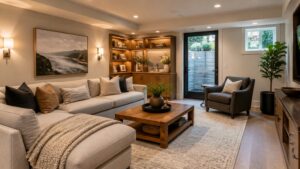
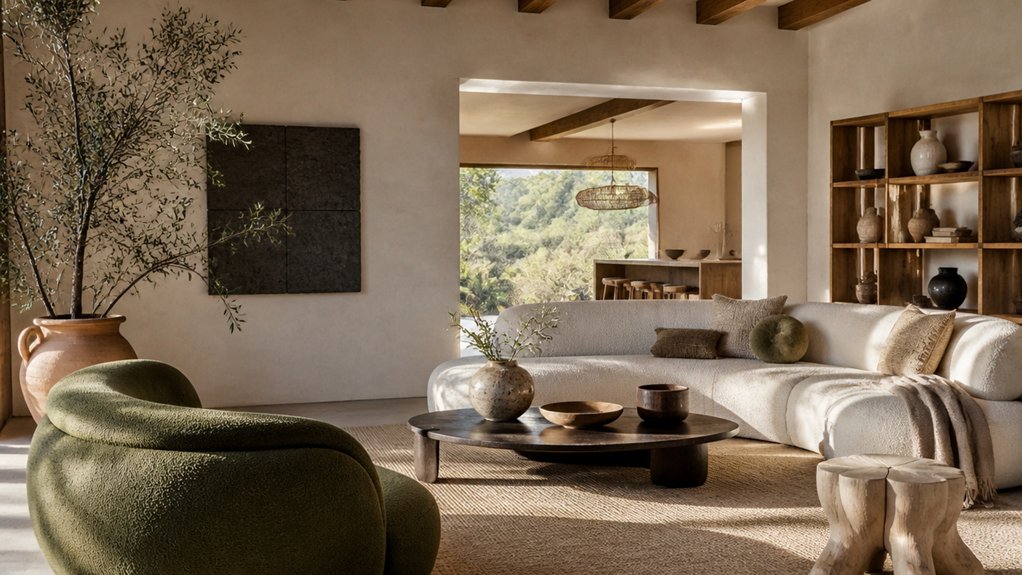
Your home may be ready for a thoughtful refresh rather than a complete overhaul. This year’s interior design trends help you bring in natural materials, earthy colors, and flexible layouts without sacrificing comfort or function. You can also use personal statement pieces and layered textures to make rooms feel more considered and inviting. A few well-chosen changes can shift the mood of your space—and the most effective place to begin may surprise you.
Key Takeaways
- Warm natural materials like oak, honed stone, linen, and wool bring depth and comfort to modern interiors.
- Earthy colors—including terracotta, olive, and clay—add warmth when balanced with pale surfaces and restrained palettes.
- Multipurpose rooms combine functions with flexible furniture, such as wall-mounted desks, sleeper sofas, and storage ottomans.
- Personal statement pieces, from vintage maps to sculptural lamps, add character while serving a clear purpose.
- Layered textures pair soft fabrics with wood, metal, or stone to create inviting, cohesive spaces.
Use Warm, Natural Materials
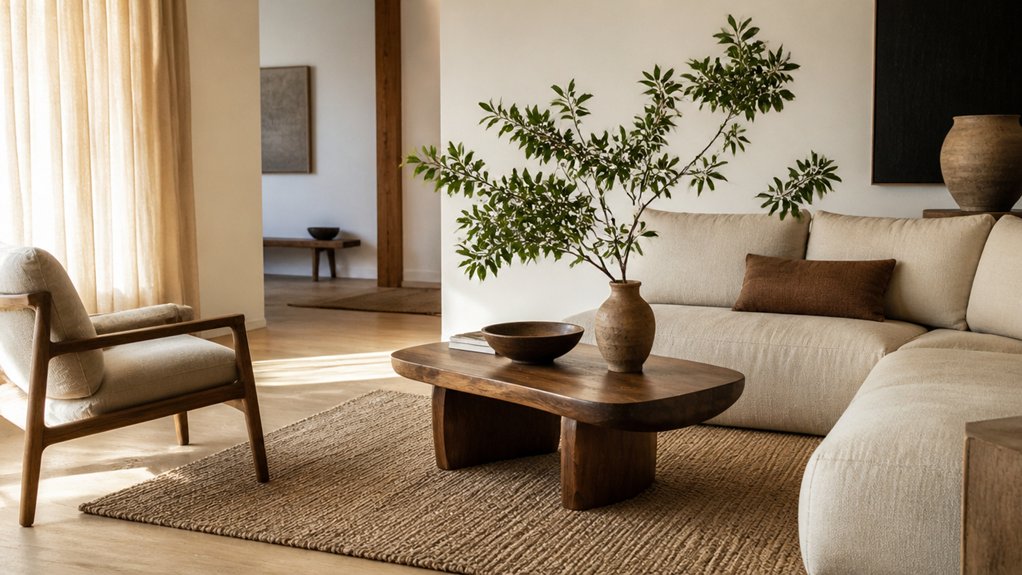
Warm, natural materials are bringing depth and comfort to modern homes. You can introduce this trend through wood, stone, linen, wool, and other tactile surfaces that make rooms feel welcoming without adding clutter. Choose natural finishes that reveal a material’s grain or texture, such as matte oak cabinetry, honed stone counters, or an unvarnished dining table. Layer soft textures with a wool rug, linen curtains, or a woven throw to create contrast and improve everyday comfort. Look for furniture with organic shapes, including rounded edges and gently curved profiles, to soften a room’s hard lines. Prioritize durable, responsibly sourced materials, and repeat a few finishes across connected spaces for cohesion. These choices add lasting character and make your home feel more grounded and inviting.
Bring Earthy Colors Into Modern Rooms
Earthy colors can make modern rooms feel grounded without sacrificing a clean, contemporary look. Start with a restrained base of warm white, sand, or soft taupe, then layer in terracotta, olive, or clay through paint, upholstery, and accessories. These earthy palettes add depth while keeping a room calm and cohesive.
Choose one dominant shade and repeat it in a few places, such as a cushion, artwork, and ceramic vase. This repetition helps your scheme feel intentional rather than busy. Balance richer tones with pale surfaces and natural materials, including wood, linen, or stone, so color remains the focus without overwhelming the space. Test paint samples in daylight and evening light before committing; earthy hues can shift noticeably as lighting changes. Keep trim and larger furnishings simple to preserve a crisp, modern finish.
Design Rooms That Do Double Duty
Make every square foot work harder by designing rooms that serve more than one purpose. A guest room can double as your home office when you choose a wall-mounted desk and a comfortable sleeper sofa. In a living room, add storage ottomans that provide seating and keep blankets out of sight. These choices improve space efficiency without making your home feel crowded.
Plan each room around the activities you actually do, then select furniture that supports them. Use folding tables, nesting pieces, or built-in shelves to adapt layouts quickly. Keep walkways clear so each function remains easy to access. To boost light efficiency, position work areas near windows and use adjustable lamps where daylight falls short. A flexible room should feel intentional, not improvised. With thoughtful zoning and practical furnishings, you can make daily routines smoother while using less floor space.
Pick Statement Pieces That Tell Your Story
Flexible rooms work best when their furnishings reflect the people who use them. Choose a statement piece that connects with your interests, history, or routines, then give it a clear role in the room. A vintage map might recall your travels; a sculptural lamp could reflect your appreciation for design. These storytelling motifs make a space feel considered without turning it into a display case.
Before buying, check the piece’s scale, function, and placement. In a multipurpose room, a distinctive chair can define a reading corner while remaining useful elsewhere. You don’t need to match every object to a single theme. Instead, let a few meaningful choices express your personal narratives, and balance them with practical furnishings. Edit carefully: one well-chosen focal point often says more than a crowded collection.
Layer Textures for a Cozier Home
Texture brings warmth to a room without requiring a major redesign. Start with a consistent palette, then combine materials that feel distinct: pair a nubby wool throw with smooth cotton, or place a linen cushion beside supple leather. This approach to texture layering adds depth while keeping your space cohesive.
Use tactile fabrics where you’ll notice them most, such as on sofas, bedding, and window treatments. Balance soft surfaces with harder finishes—wood, metal, or stone—to prevent a room from feeling flat or overly plush. Vary scale, too: a chunky knit looks more inviting beside fine-weave upholstery than alongside several similarly bulky pieces.
As you build layers, consider daily care and durability. Choose washable covers for high-use seating, and test samples in your room’s light before committing. Each texture should serve comfort, function, or visual interest.
Frequently Asked Questions
How Can I Make a Small Home Feel More Spacious?
Make your small space feel larger by choosing a light color palette, maximizing natural light, and keeping pathways clear. Use multifunctional furniture, add mirrors, and store belongings vertically to create openness without sacrificing comfort or function.
Which Smart-Home Features Are Worth Investing In?
Think of your home as a helpful genie: Smart lighting and Voice control deliver everyday convenience, while smart thermostats and security sensors offer measurable savings and protection. Choose compatible devices you’ll actually use, not flashy extras.
How Can I Improve Natural Lighting in a Room?
You can boost natural light with simple brightness strategies: keep windows clean, use mirrors opposite them, and choose sheer window treatments. Paint walls light colors, trim overgrown outdoor foliage, and arrange furniture away from windows.
What Sustainable Upgrades Can Reduce Household Energy Use?
You can cut household energy use by adding sustainable insulation, sealing drafts, and choosing energy efficient appliances. Install a programmable thermostat, switch to LEDs, and monitor your usage to identify waste and prioritize upgrades.
How Often Should I Refresh My Home’s Interior Design?
Refresh your home’s interior every three to five years, but don’t overlook smaller shifts: a seasonal palette can renew rooms annually. Your refresh cadence should follow wear, changing needs, and the subtle dissatisfaction you notice.
Conclusion
The most successful interiors aren’t built around trends alone; they balance comfort, function, and personal meaning. Start with natural materials, add earthy color, and choose flexible furniture that earns its space. Then finish with pieces and textures that feel like you. One useful reminder: people spend about 90% of their time indoors, according to the U.S. Environmental Protection Agency. That makes thoughtful design more than a visual upgrade—it’s a practical way to make everyday life feel better.