Picture a clean paver walk leading past crisp-edged beds and layered planting to a well-lit front door. You’re not just improving looks; you’re reducing perceived risk and future maintenance, two factors buyers price in. When you fix drainage, define paths, and choose durable hardscape with native perennials, you signal quality and control. The question is which upgrades return the most value per dollar in your specific yard…
Garden Improvements That Boost Curb Appeal
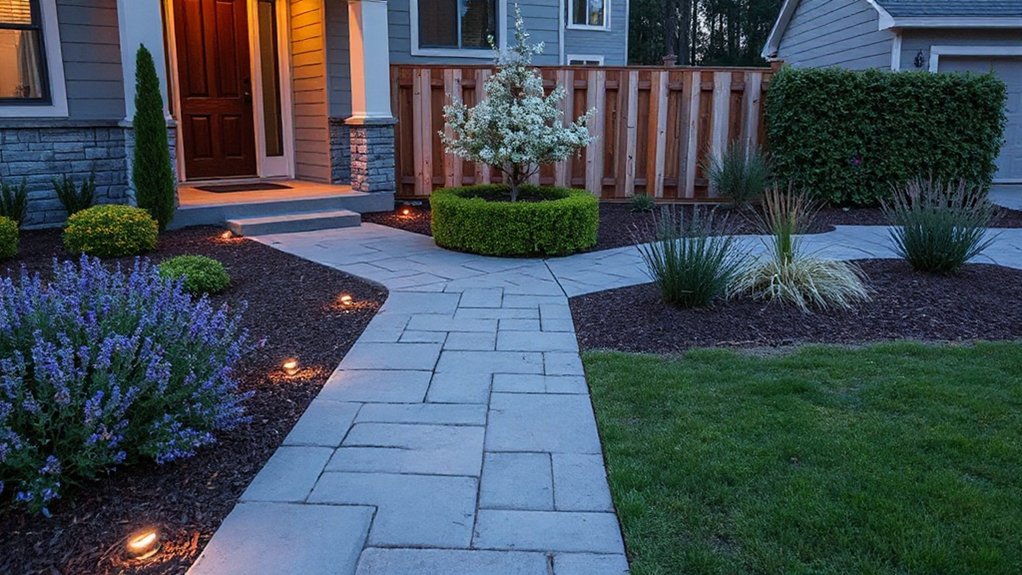
Although curb appeal feels subjective, a few targeted garden upgrades consistently increase perceived home value and shorten time on market. You’ll get the highest ROI by improving first-impression sightlines: define a clean entry path, add layered planting at the front boundary, and keep beds sharply edged.
Replace patchy annuals with structured, low-maintenance perennials so your exterior reads “move-in ready” during showings. Wildflower meadows can boost perceived sustainability and reduce upkeep, but you should frame them with mown borders to signal intentional design.
Add one focal-point element—Decorative sculptures or a statement planter—near the entry to anchor photos and listings. Finally, upgrade lighting with warm, shielded fixtures; better evening visibility increases buyer confidence and perceived security.
Garden Improvements That Fix Drainage and Lawns
Strong curb appeal gets buyers to the door, but soggy lawns and puddling near the foundation can quickly undermine perceived value because they signal ongoing maintenance and potential water intrusion risk. Fix drainage first: regrade to move water away, extend downspouts, and add swales or dry wells for rainwater management. These upgrades reduce erosion, basement dampness, and landscaping replacement costs, which appraisers often treat as risk discounts.
Then repair turf performance. You’ll get better root depth and fewer bare patches by correcting compaction with soil aeration and topdressing with sand/compost to improve infiltration. Overseed with region-appropriate grass and tune irrigation to avoid runoff.
A consistently firm, green lawn photographs well, supports inspections, and signals lower future upkeep—factors that can strengthen offers and reduce credits.
Garden Improvements: Crisp Paths and Clean Edging
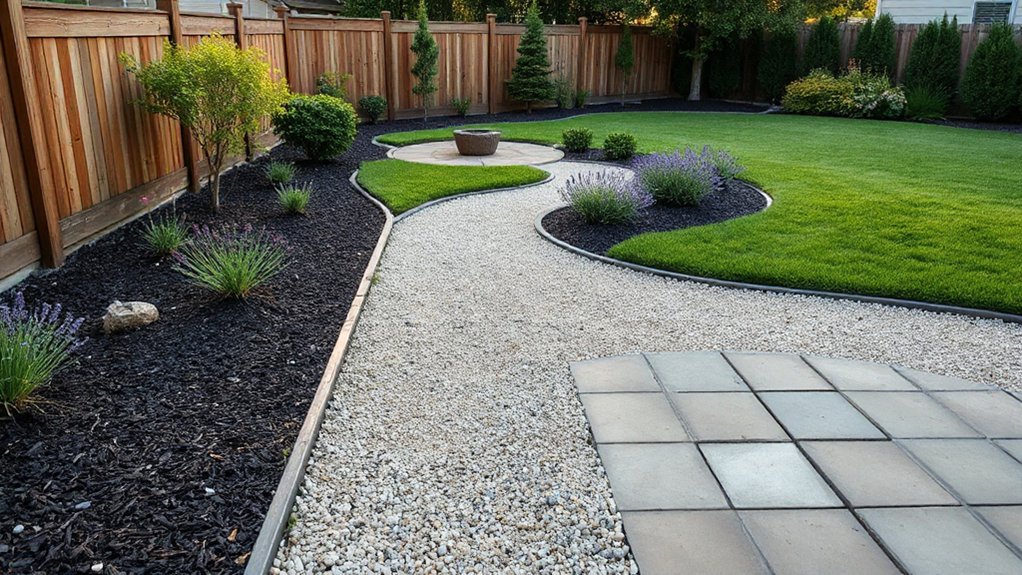
You’ll get more usable garden space when you choose durable path materials—compacted gravel, pavers, or poured concrete—that hold grade, shed water, and cut annual rework.
You’ll also reduce bed creep and trimming time by installing sharp edge borders like steel, aluminum, or concrete that maintain a consistent line season after season.
Together, these upgrades improve access, cleanliness, and resale perception while lowering ongoing maintenance hours.
Durable Path Materials
When your paths handle foot traffic, rain runoff, and routine maintenance without shifting, the whole garden reads cleaner and stays safer. You’ll reduce trip hazards and cut repair cycles, which buyers notice during walk-throughs and inspections.
Prioritize paving durability by choosing compacted aggregate bases, proper drainage slope, and dense materials rated for freeze-thaw.
Concrete pavers and natural stone typically outperform loose gravel on stability and weed suppression, while permeable pavers can lower surface pooling and erosion risk.
For material longevity, verify thickness, compressive strength ratings, and warranty terms; thicker units and higher PSI generally resist cracking and settling better. Use polymeric sand or rigid jointing where appropriate to limit washout and maintenance.
Durable paths signal lower ongoing costs, supporting stronger perceived property value.
Sharp Edge Borders
How do sharp edge borders change the value signal of a garden? They make your landscape read as maintained, which buyers often convert into lower perceived future costs. Appraisers don’t itemize edging, but market comps reflect curb appeal: listing analytics routinely show faster days-on-market when photos present clean lines and defined beds.
You increase that effect when you apply consistent edging techniques along paths, beds, and lawns. Steel, brick, or stone edges hold geometry, reduce turf creep, and cut trimming time, supporting a “low-maintenance” claim in marketing. Keep radii smooth, align joints, and maintain a uniform reveal; inconsistent lines signal DIY risk.
If you pair sharp borders with durable path materials, you create visual hierarchy and improve lot-use efficiency, which can lift perceived outdoor utility in showings.
Garden Improvements: Low-Maintenance Plants That Last
Although a lush garden can look high-effort, the biggest long-term gains usually come from plant choices that hold structure and color with minimal inputs. You’ll protect resale appeal by reducing visible wear from heat, watering bans, and skipped maintenance.
Prioritize perennial frameworks: drought tolerant shrubs (lavender, rosemary, compact pittosporum) keep form year-round and typically need less irrigation once established. Add succulent arrangements in gravel or raised beds to deliver texture without weekly pruning; they also lower replacement rates versus annuals.
Choose region-matched natives to cut water use and improve survival rates, which appraisers and buyers read as “move-in ready” landscaping.
Group plants by water needs, mulch deeply, and install slow-drip lines so your yard stays uniform during inspections and listings, without constant intervention.
Garden Improvements: Patios and Decking Buyers Use
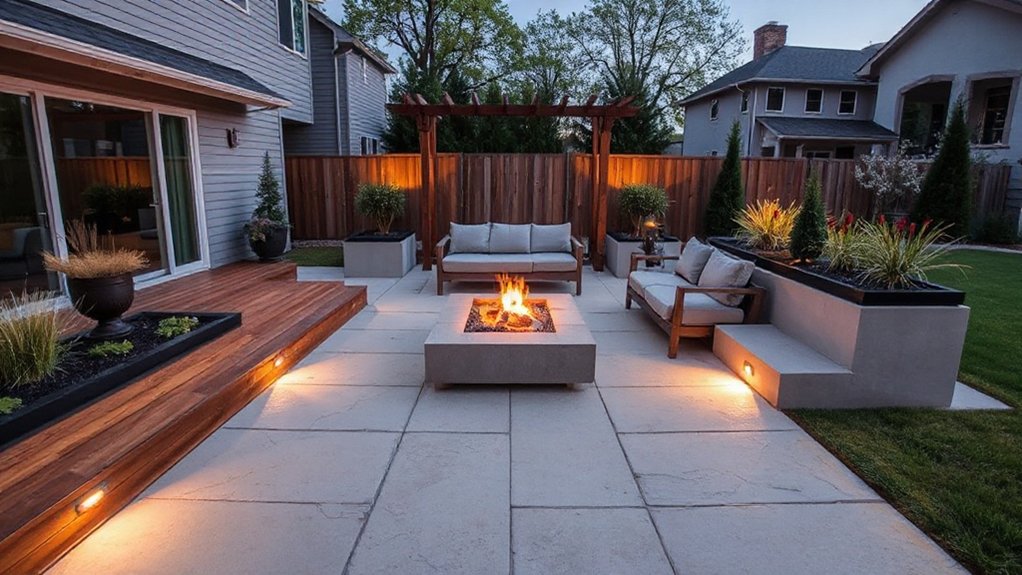
Low-maintenance planting keeps your yard looking consistent, but buyers usually decide whether they’ll actually use the outdoor space based on the hardscape.
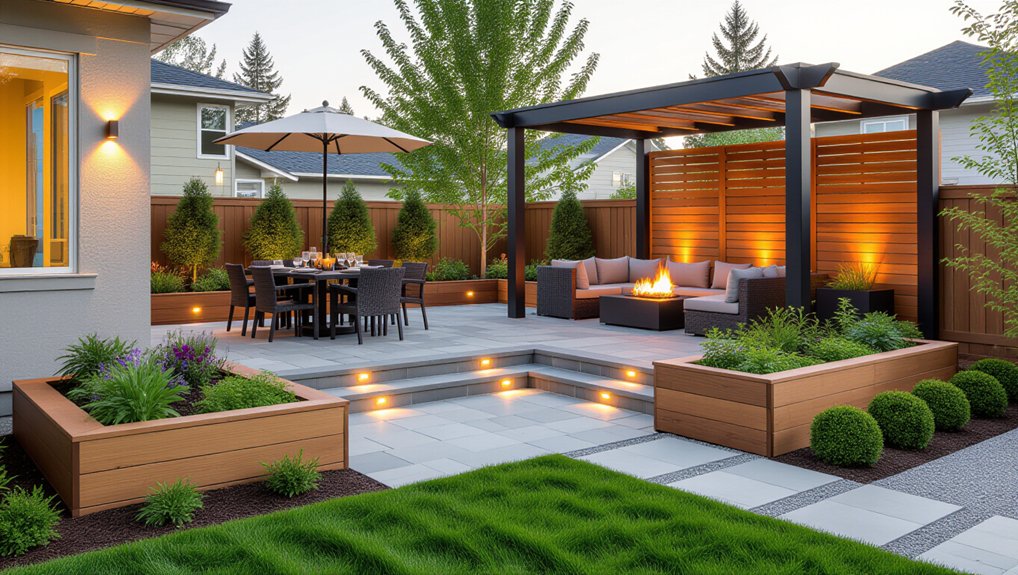
A well-built patio or deck creates measurable “functional square footage,” which appraisers and agents often cite as a saleability driver, especially in small lots.
You’ll get the best valuation impact when you match materials to local comps: composite decking can signal durability, while pavers read as premium if they’re level and properly edged.
Keep layouts simple: a dining zone plus circulation typically outperforms oversized, awkward platforms.
Stage with outdoor furniture sized to the space to help buyers price the lifestyle.
If you add garden improvements: water features, choose compact, low-splash units that won’t shrink usable seating area.
Garden Improvements: Lighting for Safety and Space
Because buyers tour after work and often assess security on arrival, exterior lighting can lift perceived safety and make a small yard read larger, which can support stronger offers in comparison-based pricing. You’ll add the most value by lighting paths, steps, gates, and door approaches, since appraisers and agents can point to reduced trip risk and improved usability at dusk.
Use warm, shielded fixtures to cut glare and keep neighbors onside; harsh light can read “problem property.” Place low-level bollards or step lights to define edges, then uplight one tree or wall to create depth cues that visually extend boundaries.
Solar lighting works well for long runs and avoids trenching costs, but you should choose higher-lumen units with winter-rated panels. Prioritize outdoor safety and consistent coverage, not gimmicks.
Frequently Asked Questions
How Much Do Garden Improvements Increase Home Value in My Area?
In your area, garden improvements typically raise home value 5–12%, depending on comps and buyer demand. You’ll estimate ROI by comparing Landscaping costs against sale premiums; optimize Plant selection to match local preferences.
Do I Need Planning Permission for Decks, Patios, or Major Landscaping?
Measure twice, cut once: you might need permission, depending on size, height, drainage, and boundaries. Check Deck regulations and Planting restrictions locally. Skipping approvals can trigger fines, removal, and resale devaluation during valuation checks.
Which Garden Upgrades Give the Best Return on Investment When Selling?
You’ll get the best ROI from low-maintenance landscaping, clean hardscaping, and outdoor lighting, aligning with current Landscaping trends. Add modest Water features only if upkeep’s minimal. Prioritise kerb appeal, drainage, and usable seating zones.
How Long Do Value-Adding Garden Renovations Typically Take to Complete?
You’ll typically finish value-adding garden renovations in 1–6 weeks, depending on scope. Garden lighting often takes 1–3 days; Water features take 1–2 weeks. You’ll speed valuation gains by minimizing permitting and contractor downtime.
What Garden Improvements Should I Avoid Because Buyers Dislike Them?
Like a red flag at inspection, you should avoid Unpopular plant choices and Overgrown hedges; they signal higher upkeep and constrain space. Don’t add quirky ponds, costly hardscapes, or artificial turf, as they can cut offers.
Conclusion
When you upgrade your garden, you’re not just planting color—you’re pricing in appeal. Crisp paths and clean edging create order where buyers expect quality, while layered, low-maintenance natives deliver beauty without future labor. Fixing drainage turns soggy corners into usable lawn, reducing risk and increasing confidence. Add a patio or deck for lifestyle value, then use lighting to pair safety with atmosphere. These contrasts—soft plantings, hard surfaces—convert spend into measurable marketability.