
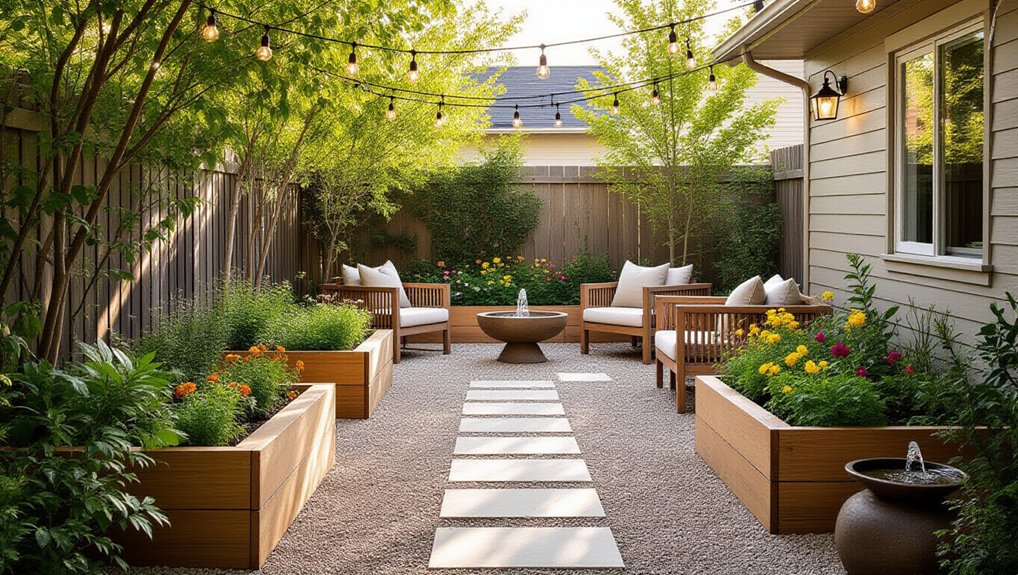
You don’t need a full redesign or a big budget to make your yard look intentional. Start by power-washing hardscape to reset color and texture, then layer warm LED path lighting to improve safety and depth at night. Tighten up beds with clean edging and a fresh mulch line, and thin any crowded shrubs so your focal points register. Once you’ve handled those fast wins, the next step is choosing upgrades that guide movement and create a defined seating zone…
Quick Outdoor Upgrades You Can Do Today
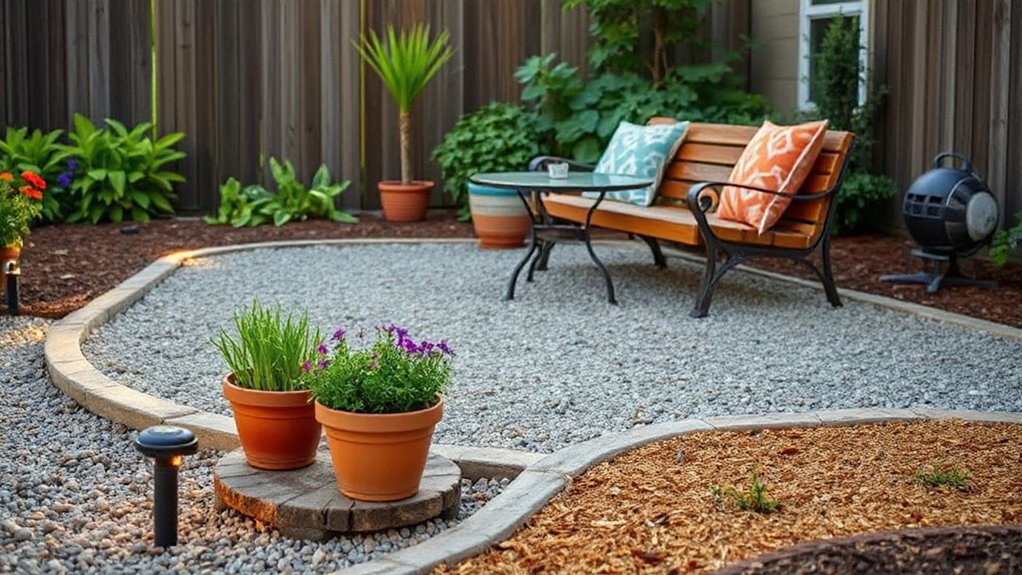
If you want an instant lift without a full redesign, start with a few high-impact changes you can complete in an afternoon: power-wash hardscapes to reset the site’s “base layer,” swap in warm, low-glare LED path lights to define circulation lines, and edge beds to sharpen geometry and clean up progressions between turf, mulch, and paving.
Recut bedlines with a half-moon edger and top-dress with 2″ of mulch to stabilize moisture and color. Add a single, scaled focal point of garden decor—an urn, boulder, or corten panel—aligned to a primary sightline from the door.
Tune planting structure by thinning overcrowded shrubs, then underplant with repeating groundcover modules for continuity.
Consolidate tools and cushions into weather-sealed outdoor storage to reduce visual noise and protect materials.
Replace wobbly pavers and regrade low spots for positive drainage.
Outdoor Lighting for Safer, Cozier Nights
Because lighting changes how you read a site after dark, start by layering illumination for both safety and atmosphere: use low-level path lights to trace circulation routes, step lights or tread-mounted LEDs to remove trip hazards on stairs, and shielded downlights to wash entries without glare.
Then tune color temperature to the program: 2700–3000K keeps patios warm, while 3000–3500K improves visual acuity at gates and parking pads. Aim fixtures to control spill and preserve neighbors’ darkness; choose cutoff optics and set beam angles to match path width.
Add pathway lanterns as vertical markers at turns and thresholds, spacing them evenly for rhythm. For social zones, hang solar string lights under pergola lines to define ceiling height without overlighting.
Put key circuits on timers or photocells.
Refresh Garden Planters and Beds Fast
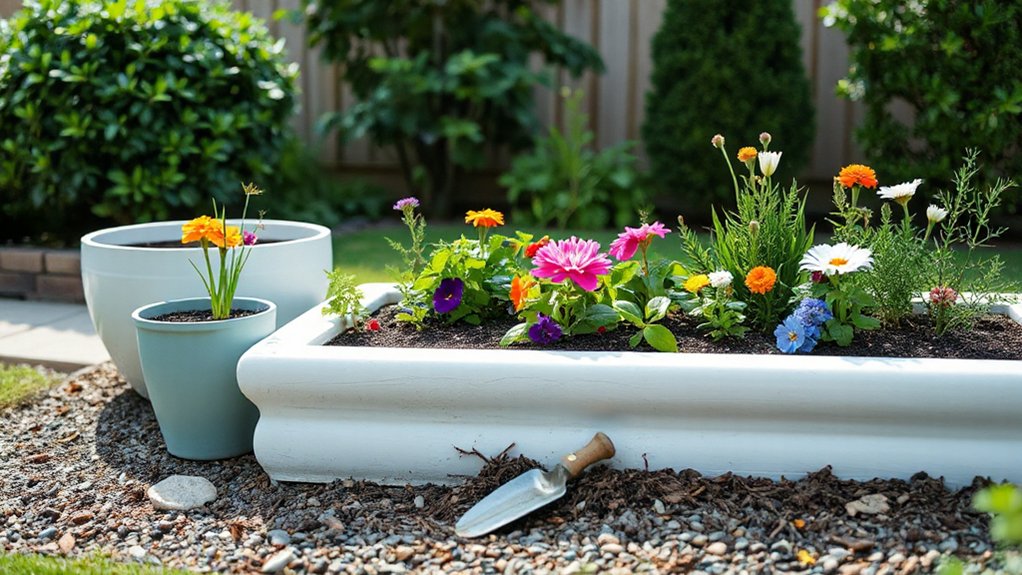
Once your lighting clarifies circulation and highlights key edges at night, tired planters and beds start to stand out in daylight—so tighten them up fast with a few targeted moves.
Start with container selection: match pot scale to the adjacent façade, and upgrade to frost-rated, UV-stable materials with consistent finishes. Reset drainage with clean holes, a mesh screen, and a coarse base layer where appropriate.
Pull spent annuals, then top-dress beds with 1–2 inches of compost and a 2-inch mulch cap, keeping it off crowns.
Use planting techniques that read clean: repeat one anchor plant, layer mid-height fillers, and edge with a tight, low species for crisp lines.
Prune to reveal structure, then irrigate deeply to settle roots.
Define Paths and Edges for a Finished Yard
Even when your planting looks dialed in, undefined circulation makes the yard feel unfinished, so lock in your routes and boundaries with hard, readable lines.
Start by mapping desire paths from gate to door, shed, and compost, then set widths: 36–48 inches for primary runs, 24–30 for secondary.
Choose walkway materials that match soil and slope—compacted decomposed granite for permeability, pavers on a screeded base for crisp geometry, or mulch for low-traffic service routes.
Establish a consistent edge datum: steel, aluminum, or stone garden edging keeps gravel contained, prevents turf creep, and sharpens bed curves.
Maintain 1–2% cross-slope for drainage, and install a compacted base and geotextile where fines migrate.
Finish progressions with clean joints and aligned courses.
Create a Cozy Patio Seating Nook
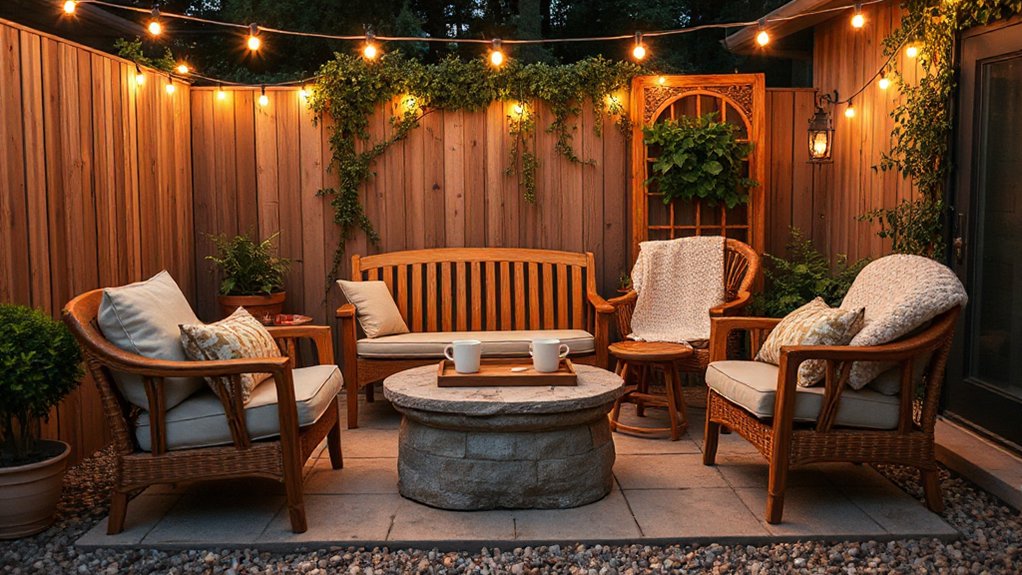
With your paths and edges set, carve out a destination space where those routes can land and pause. Stake a 10’×10′ zone on stable subgrade, then install compacted gravel or pavers with a 1–2% slope away from the house for drainage.
Define the nook with a low wall, planter, or trellis to block wind and frame views.
Place garden furniture to support circulation: keep 30–36 inches clear behind chairs and align seating to the focal point—fire bowl, water feature, or garden bed.
Add outdoor textiles for comfort and acoustics: solution-dyed cushions, a UV-stable rug, and weather-rated throws.
Finish with layered lighting at 2700K and a side table for function.
Frequently Asked Questions
How Can I Stop Weeds Without Using Chemical Herbicides?
Stop weeds without chemicals by smothering them with cardboard and 3–4 inches of mulch, then edge beds tightly. For Organic weed control, hand-pull after rain. Apply Composting tips: add finished compost to thicken soil.
Which Outdoor Upgrades Add the Most Value When Selling a Home?
Boost buyer bids with bold, balanced backyard builds: add a deck/patio, Outdoor lighting for safety and ambiance, and cohesive Garden furniture. You’ll score value with low-maintenance landscaping, defined edges, and clear circulation.
What Are Low-Water Landscaping Options for Drought-Prone Climates?
Choose native plants, xeriscape groundcovers, and drip irrigation to cut demand. Specify permeable hardscape, deep mulch, and hydrozoning. You can integrate rain gardens to capture runoff, and use gravel bands for crisp, low-maintenance edges.
How Do I Keep Mosquitoes Away From Patios Naturally?
Keep mosquitoes off your patio by blocking, drying, and repelling: install tight screens, eliminate standing water, run a targeted fan. Use Natural repellents like citronella and lemon-eucalyptus. Add Plant barriers—lavender, basil, marigolds—along edges.
When Is the Best Season to Redesign My Garden Layout?
Redesign in early spring or early fall when soil’s workable and plants handle transplanting. You’ll map circulation, stage garden furniture zones, and rewire outdoor lighting efficiently, with clear sightlines, drainage checks, and minimal heat stress.
Conclusion
You don’t need a full redesign to change how your yard works—you need precision. Power-wash rough pavers, then soften them with warm LEDs; cut back crowded shrubs, then stitch the gaps with groundcover. Clean lines beat clutter: crisp edging, fresh mulch, and planters with a single bold focal point. Lay a clear path with proper base and drainage, then end it with a compact seating nook—hard structure, soft comfort, simple upgrades, lasting impact.