Table of Contents
By coincidence, you can upgrade your home workout space the same day you swap out tired flooring and replace with modern flooring concepts. You’ll move better when the surface matches your training: dense rubber for drops and sprints, foam for joint-friendly flows, and vinyl for sweat, wipe-downs, and quieter steps. You’ll also reduce slips with texture and protect the subfloor with the right thickness and underlayment—but the biggest difference comes from knowing what to choose first…
Home Gym Flooring Checklist by Workout Type
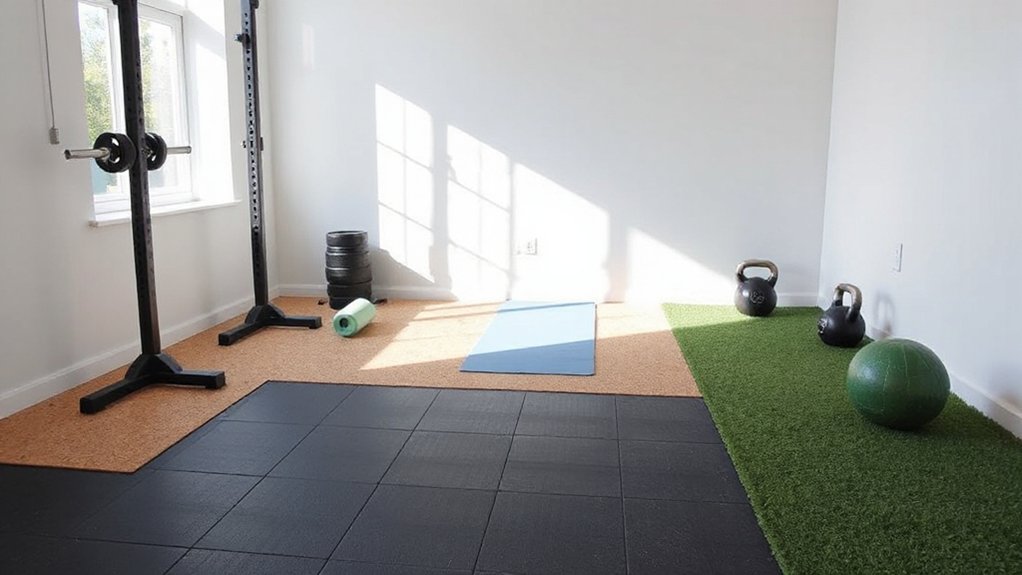
If you match your flooring to how you train, you’ll get better traction, safer landings, and less noise and wear on your subfloor.
For yoga and mobility, choose a slightly cushioned, grippy surface that won’t cold-soak your joints; cork or sealed natural linoleum made with Eco friendly materials works well.
For cardio machines, prioritize low compression set and vibration control, plus a moisture-resistant top layer so sweat won’t seep into seams.
For dance or shadowboxing, pick a resilient surface with controlled slide to protect knees and ankles, and add edge progressions to prevent trips.
For stretching and floor work, verify easy-clean finishes and hypoallergenic backing.
Smart flooring with sensor tiles can track foot pressure and alert you to asymmetry.
Rubber Home Gym Flooring for Weights and HIIT
Why does rubber dominate home gyms built for heavy lifts and fast HIIT circuits? You get dense shock absorption that protects joints while limiting barbell bounce and equipment drift.
Choose 3/8-inch for general training, 1/2-inch for frequent drops, and go thicker under racks to reduce subfloor stress and noise.
For traction, look for textured, vulcanized surfaces that stay grippy when you sweat, and pair them with beveled edges to cut trip risk.
Prioritize low-odor, low-VOC rubber if your gym shares air with living spaces.
For durability considerations, check durometer, wear layer, and seams; tighter interlocks resist creep.
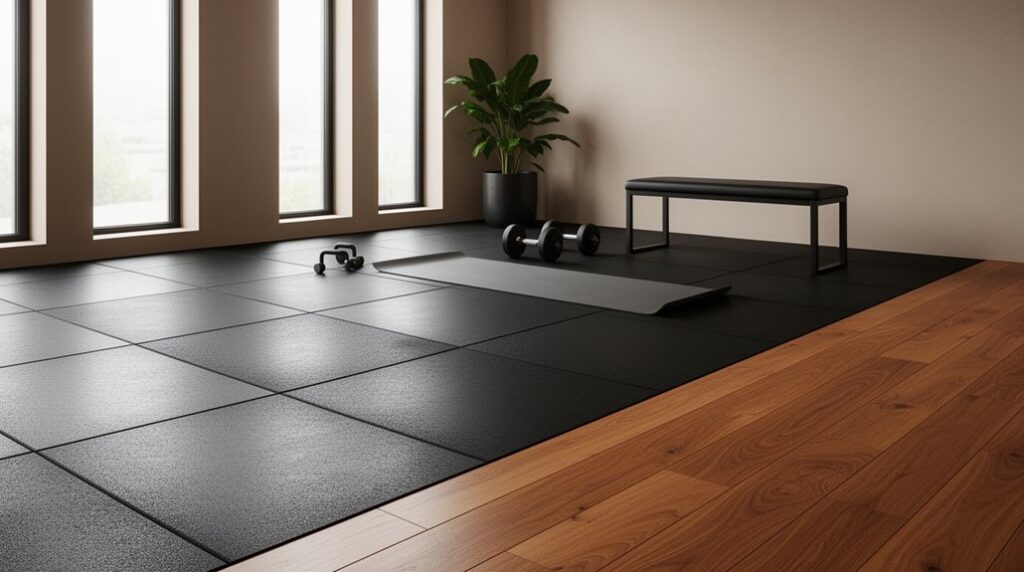
Aesthetic options include speckled rolls, tile patterns, and clean matte black finishes.
Foam Home Gym Flooring for Yoga and Mobility
Although rubber wins for impact-heavy training, foam shines when your sessions prioritize joint-friendly cushioning, quiet movement, and confident footing during yoga flows and mobility work. You’ll feel immediate relief in wrists, knees, and hips because foam padding spreads pressure and softens progressions between poses.
Choose closed-cell EVA or cross-linked polyethylene tiles to resist compression set and keep edges from curling under pivots. For safety, pick a lightly textured surface that grips bare feet without abrading skin, and confirm the material is low-odor and phthalate-free.
Use interlocking seams that sit flush to prevent toe catches, and pair the floor with yoga mats for extra hygiene and traction during sweaty holds. Keep thickness moderate—about 3/8 to 1/2 inch—so you stay stable in balance work.
Vinyl Home Gym Flooring for Sweat and Noise Control
When your workouts get sweaty, you’ll appreciate vinyl’s non-porous, sweat-resistant surface that wipes clean fast and helps you maintain secure footing.
Choose textured wear layers and sealed seams so moisture doesn’t seep underneath and create slip hazards or odors.
For a quieter room, you can pick vinyl with integrated noise-dampening backing that softens impact and cuts vibration through the floor.
Sweat-Resistant Vinyl Surfaces
How do you keep a home gym floor comfortable underfoot while sweat, drops, and foot traffic keep piling on? Choose sweat-resistant vinyl that pairs a resilient wear layer with sealed seams, so moisture resistance works from the surface down.
You’ll get a slightly cushioned feel that reduces joint stress during HIIT, lunges, and long mobility sessions, while maintaining stable footing for lifts.
Look for textured, slip-mitigating finishes that stay grippy when damp, and prioritize easy-clean coatings that resist staining from electrolytes and cleaners.
If you’re setting up near a garage or basement entry, pick vinyl rated for temperature swings and occasional splash exposure.
Finally, match performance to style: modern plank or concrete-look aesthetic options let you keep the space motivating without sacrificing safety.
Noise-Dampening Vinyl Layers
Sweat-resistant vinyl keeps your gym floor sealed and sure-footed, but you’ll also want noise-dampening layers that cut impact and vibration from jumps, dropped dumbbells, and treadmills. Choose vinyl planks or rolls with an attached underlayment, or pair them with dense rubber-cork pads to protect joints and reduce fatigue during long sets.
For apartments or shared walls, add soundproof barriers: a high-mass membrane or closed-cell foam that stops low-frequency thuds from traveling through subfloors. Look for acoustic insulation rated for IIC and STC, and keep seams taped so energy doesn’t leak through gaps.
Maintain safety by selecting slip-rated wear layers and beveled edges to prevent toe catches. You’ll train harder, recover better, and keep the peace nightly.
Engineered Wood Home Gym Flooring for Style Plus Durability
Although a home gym demands impact control and stability, engineered wood can deliver a polished look without sacrificing durability if you spec it correctly. Choose a thick wear layer and a high-density core to resist denting from racks and kettlebells. Insist on a matte, slip-conscious finish to keep footwork secure during intervals.
For ergonomic comfort, pair it with targeted rubber tiles or lifting platforms in drop zones while keeping wood in movement areas for smoother pivots and joint-friendly rebound. Prioritize low-VOC adhesives and certified veneers for Eco friendly options, and align plank width and tone with current aesthetic design trends.
Maintain safe passages with beveled thresholds, and keep humidity steady to prevent cupping, squeaks, or gaps.
Laminate Home Gym Flooring That Cleans Up Fast
Engineered wood brings polish to a training space, but if you want an even faster cleanup routine, laminate home gym flooring earns its spot with a tough wear layer and a nonporous surface that won’t trap chalk dust, sweat, or pet hair.
You’ll keep your zone hygienic with simple cleaning routines: dry-mop after lifting, then damp-wipe with a pH-neutral cleaner. Because laminate resists moisture on the surface, you won’t grind grit into the finish, which helps your feet feel stable during lunges and pivots.
Prioritize textured, slip-aware embossing so socks don’t slide when you’re bracing. Look for higher AC ratings for better dent protection under benches and racks.
Strong stain resistance also means protein shakes and rubber scuffs wipe clean fast.
Install Home Gym Flooring: Thickness, Underlayment, and Subfloor Safety
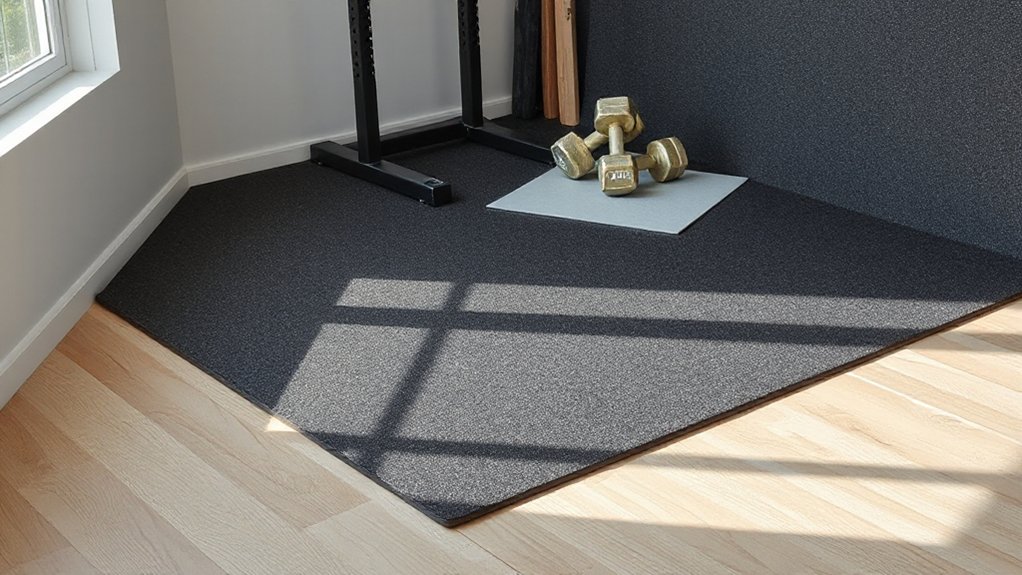
Before you lock in a surface, match your home gym flooring install to the loads you’ll drop, the underfoot feel you want, and the subfloor you’re protecting. For strength work, choose 3/8–1/2-inch rubber; for heavy deadlifts, add platform panels or go 3/4-inch.
If you do HIIT or mobility, prioritize slight rebound and beveled edges to reduce trip risk.
Use an underlayment when you need noise and vibration damping, but don’t trap water—pair it with moisture control barriers over concrete.
On plywood, seal seams and avoid adhesive that tears fibers during removal. Leave expansion gaps at walls, and check door swing clearance.
Finish with tight seams for easier flooring maintenance and fewer ankle-catching ridges. Inspect regularly for curl and shifting.
Frequently Asked Questions
How Can I Prevent New Gym Flooring From Off-Gassing Odors?
Ventilate aggressively, run HEPA/carbon air purifiers for better air quality, and let tiles acclimate outdoors. Choose low-VOC materials, wash surfaces, and add odor absorption with baking soda or charcoal. Keep humidity low, avoid heat.
What Flooring Options Are Safest for Homes With Pets and Claws?
Worried you’ll sacrifice comfort for durability? You won’t. Choose Pet friendly surfaces like sealed cork, luxury vinyl plank, or rubber tiles—Claw resistant materials that add grip, cushion joints, and clean easily without trapping dander.
Can Home Gym Flooring Be Installed Over Radiant Heated Floors?
Yes, you can install home gym flooring over radiant heated floors if you confirm radiant heating specs and flooring compatibility. Choose low-VOC rubber or engineered foam, keep thickness moderate, and follow manufacturer temperature limits to prevent warping.
How Do I Choose Flooring Colors to Make a Small Gym Look Bigger?
You’ll make a small gym look bigger by choosing light, cool-toned floors; 72% of people perceive pale surfaces as larger. Use Color coordination with walls, minimize contrast for Visual expansion; pick matte, slip-resistant materials.
What’s the Most Eco-Friendly Home Gym Flooring Material Available?
You’ll usually get the most eco-friendly option with recycled rubber flooring, since you’re using Sustainable materials and strong Recycling options. It cushions joints, resists slips, dampens noise, and handles sweat and heavy equipment safely.
Conclusion
You’ve got everything you need to give your home gym a “quiet upgrade” underfoot. Match your flooring to your training—rubber for heavy days, foam for joint-friendly flows, vinyl for sweat and sound, and engineered wood or laminate when you want performance with polish. Prioritize proper thickness, a stable underlayment, and a level subfloor so slips, shocks, and noise stay politely out of the picture. Train harder, recover better, and keep your space sharp.