Table of Contents
If your spare room’s been quietly “underutilized,” you can turn it into a modern home gym with a few measured choices. Start by mapping door swings, outlets, vents, and a 36-inch path so you don’t waste square footage. Then match compact equipment to your goals and budget, add durable flooring, bright lighting, and adequate airflow, and keep storage on the walls. The key is the layout order, and it’s not what most people start with…
Plan Your Home Gym Layout by Room Size
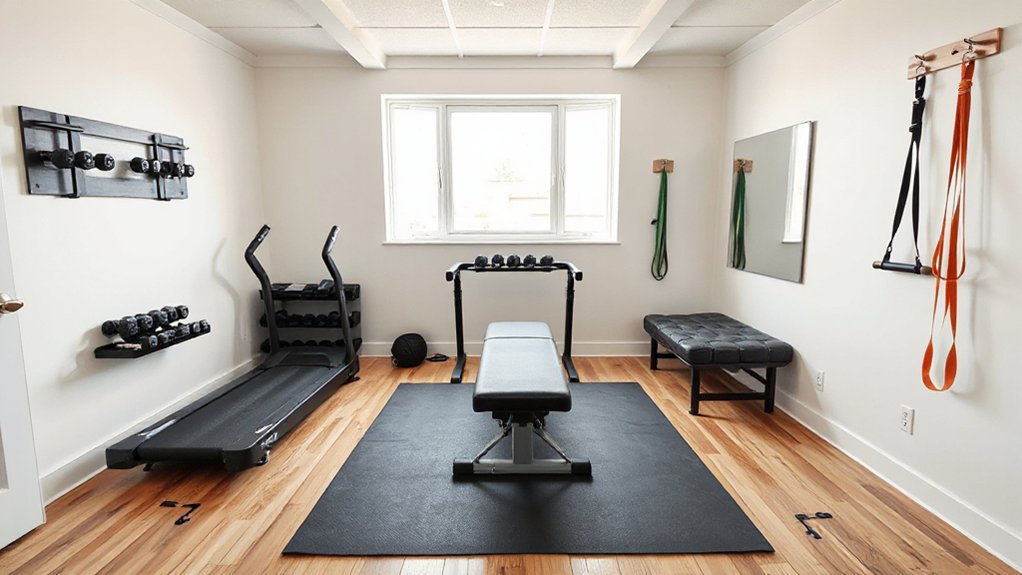
Before you buy equipment, measure your spare room and map a layout that matches its footprint—because room size dictates what you can place safely, how you’ll move, and what training you’ll actually do consistently.
Mark door swings, vents, and outlets, then leave a clear 36-inch path for safe progression.
For strength work, reserve a rectangular “work zone” with at least 6–7 feet of ceiling clearance for presses and overhead movements.
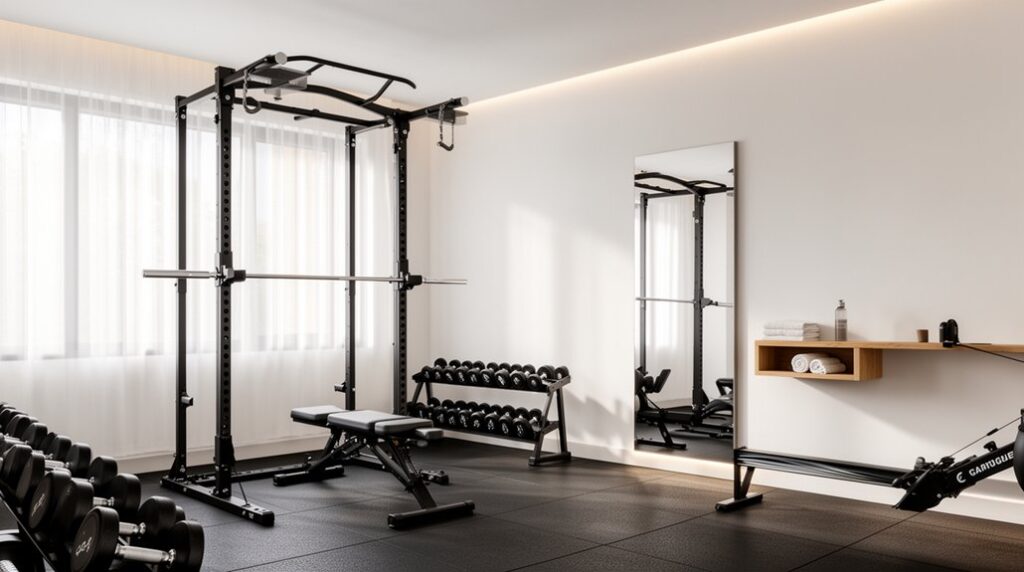
In tight rooms, push storage vertical: wall-mounted racks, foldable benches, and a mirror to expand sightlines and cue form.
Place cardio near a window or fan to improve heat dissipation and perceived effort.
Use ambient lighting to reduce glare and eye strain, and add Decorative wall art as visual anchors that keep the space inviting without stealing floor area.
Define Your Workout Goals and Budget First
Once you’ve mapped the room’s flow and work zones, lock in what you want the gym to do for you—and how much you’re willing to spend—so every square foot and purchase serves a clear outcome.
Define 1–2 primary goals (fat loss, strength, mobility, rehab) and a time target (e.g., 3x/week, 30 minutes), because adherence drives results more than novelty.
Translate goals into measurable markers: weekly sessions, step count, pain-free range, or reps at a given load. If you’re unsure, book a short Personal training assessment to set baselines and screen limitations.
Then choose workout routines that match your schedule and recovery, not aspirational volume.
Set a realistic budget tier (starter, mid, premium) plus 10–15% for setup and maintenance, and commit to it.
Pick Space-Saving Home Gym Equipment (Strength/Cardio)
Although a spare room can feel tight fast, you can cover most strength and cardio needs with a short list of compact, high‑return tools.
Start with adjustable dumbbells or a kettlebell pair; they support presses, rows, hinges, squats, and carries with progressive overload.
Add a set of loop bands and a door‑anchor for pulldowns, face pulls, and assisted pull‑ups without a big footprint.
For bodyweight strength, choose a foldable bench or a wall‑mounted pull‑up bar if your space allows.
For cardio, pick a jump rope and a compact equipment option like a fold‑flat rowing machine or under‑desk treadmill; both deliver efficient, low‑impact intervals.
Prioritize multipurpose gear and quick setup so you’ll use it consistently.
Set Flooring, Lighting, and Ventilation for Comfort
When you control the room’s surfaces and air, you’ll move better, recover faster, and actually want to train there.
Start with flooring: use dense rubber tiles or a rolled mat to reduce joint impact, dampen noise, and protect subflooring; keep edges flush to prevent trips. If you lift, place a thicker drop zone under the rack or platform area to limit vibration.
Next, dial in lighting: bright, glare-free Ambient lighting improves technique checks and reduces eye strain; aim for even ceiling coverage and add a task light near your training area if shadows persist.
Finally, prioritize ventilation: consistent Air circulation helps manage heat, humidity, and odors, supporting longer sessions—use a quiet fan and crack a window when possible.
Add Storage, Mirrors, and Simple Workout Tech
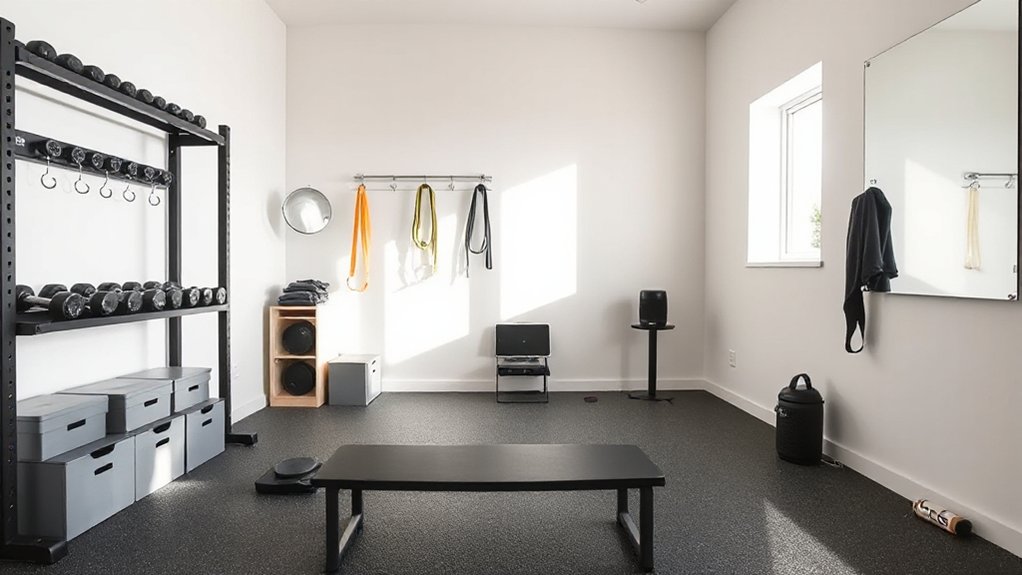
Because clutter steals floor space and focus, you’ll get more usable training area by adding smart storage, a well-placed mirror, and just enough workout tech to track progress.
Start with storage solutions that keep essentials off the floor: wall-mounted shelves for bands, a vertical dumbbell rack, and a lidded bin for small gear. Aim for “one-touch” access so you’ll actually put things away between sets.
For mirror placement, mount a full-length mirror where you can see your whole body during squats and presses, but keep it out of direct window glare to reduce visual fatigue.
Add simple tech: a timer app for intervals, a heart-rate strap for intensity, and a basic scale or tape to track changes. Keep it minimal, consistent.
Frequently Asked Questions
How Do I Soundproof My Home Gym to Reduce Noise for Neighbors?
You’ll cut neighbor noise by layering soundproofing options: dense rubber flooring, underlayment, and sealed doors. Add noise reduction techniques: wall insulation, acoustic panels, and vibration isolators for equipment. Keep speakers low, schedule loud lifts midday.
Do I Need Permits or Landlord Approval to Convert a Spare Room?
You’ll often need landlord approval if you rent; permits depend on structural, electrical, or plumbing changes. If you stick to Budget friendly flooring and plug-in Lighting options, you typically won’t need permits—confirm locally.
How Can I Protect Walls and Doors From Equipment Dents and Scuffs?
Protect walls and doors by placing Wall padding at impact zones, adding Door protectors, and using rubber flooring. You’ll reduce scuffs by anchoring racks, keeping clearance, and adding felt pads under attachments.
What Insurance Coverage Should I Consider for a Home Gym Setup?
Like Achilles guarding his heel, you’ll want Insurance options: confirm homeowners/renters covers gym gear via endorsements, add liability coverage for guest injuries, and consider umbrella limits. You should document serials, follow safety codes to reduce claims.
How Do I Maintain and Sanitize Gym Equipment to Prevent Odors and Germs?
Follow Cleaning routines: wipe touchpoints after each use with EPA-registered disinfectant, dry to prevent rust. Weekly deep-clean mats, handles, and upholstery. Schedule Equipment maintenance: lube moving parts, tighten bolts, wash towels, ventilate to cut odors.
Conclusion
You don’t need a huge room or a luxury budget to build a modern home gym—you need a smart plan. Measure, keep a clear 36-inch path, and choose adjustable, foldable gear that delivers full-body training per square foot. Worried it’ll feel cramped or cluttered? Wall-mounted storage, mirrors, and a compact cardio option keep the floor open and your form honest. Add durable flooring, bright lighting, and ventilation, and you’ll actually use it.