
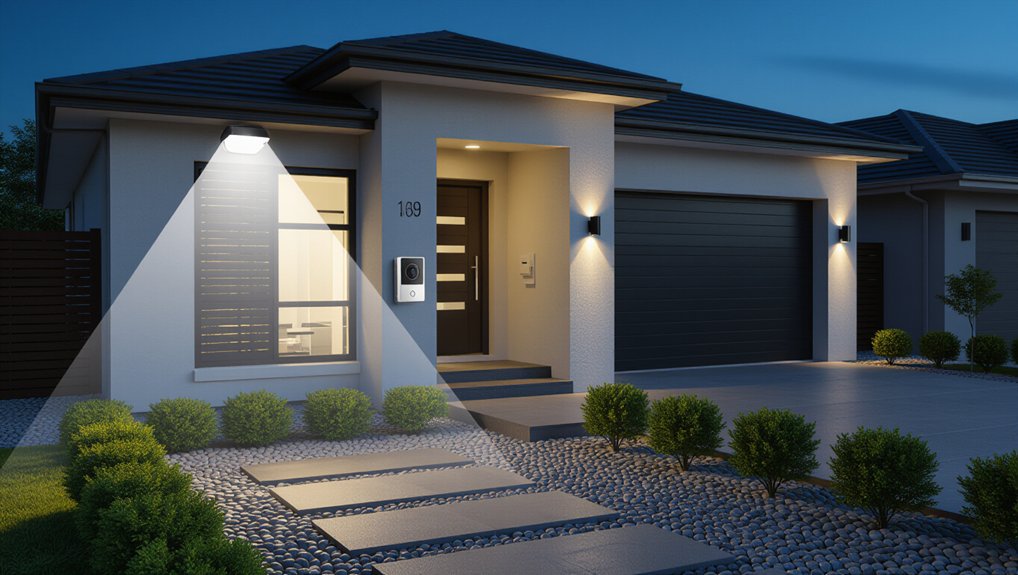
Most break-ins don’t start with fancy tools—they start with your blind spots outside. You can cut your risk fast by tightening lighting and sightlines, reinforcing doors, gates, and garages, and placing cameras where they actually capture faces and entry routes. Add motion lights and sensors to shrink response time, then tie it all to phone alerts you’ll notice. The key is knowing which upgrades matter first—and where your setup is weakest.
Improve Outdoor Lighting and Sightlines
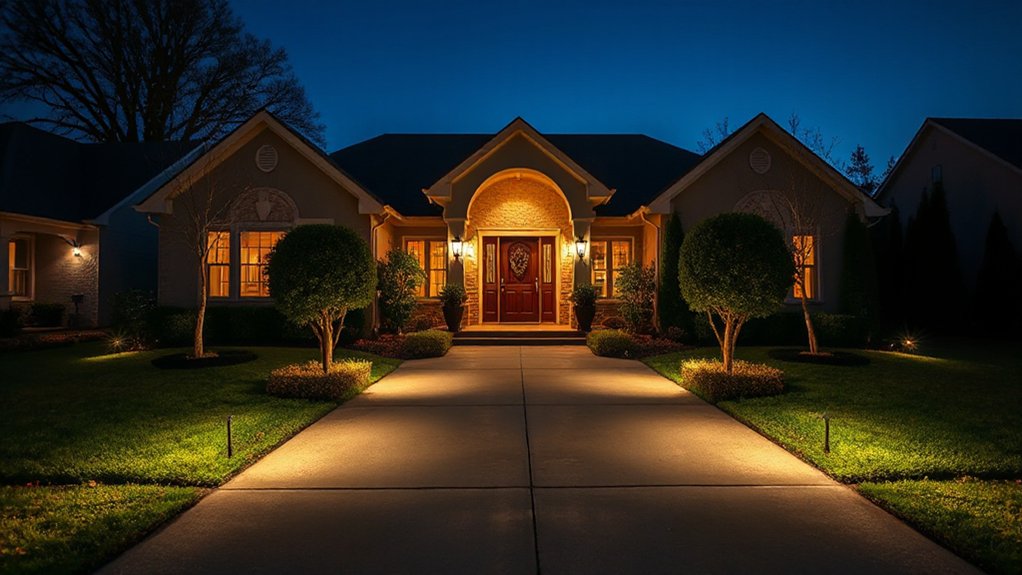
If you can’t see what’s happening outside your property, you can’t stop it. Start by eliminating blind spots: trim shrubs below window height, raise tree canopies, and keep fences and walkways clear to improve landscape visibility.
Replace burnt-out bulbs immediately and standardize on bright, neutral LEDs for consistent coverage.
Layer lighting where risk concentrates: entries, driveways, side yards, and paths to the backyard. Use motion-activated fixtures to surprise prowlers and conserve energy, but add dusk-to-dawn ambient lights so cameras and neighbors can identify faces.
Aim lights downward and shield them to reduce glare and shadows that create hiding places. Balance security with lighting aesthetics by choosing fixtures that match your home while maintaining target illumination levels.
Harden Exterior Doors, Gates, and Garages
Because most break-ins start with the simplest point of entry, you should treat exterior doors, gates, and garage access as your first line of physical resistance. Start by upgrading to solid-core or metal exterior doors and install Reinforced door frames with long screws into wall studs to resist kick-ins.
Use Secure lock systems: a deadbolt with a 1-inch throw, hardened strike plates, and keyed locks on all gates. Don’t ignore side doors or sliding doors; add anti-lift devices and pin locks where applicable.
For garages, secure the service door like your front door, disable emergency release access from outside, and shield windows to reduce tool-and-code theft. Keep gates aligned, hinges protected, and latches unreachable from outside.
Place Outdoor Security Cameras for Best Coverage
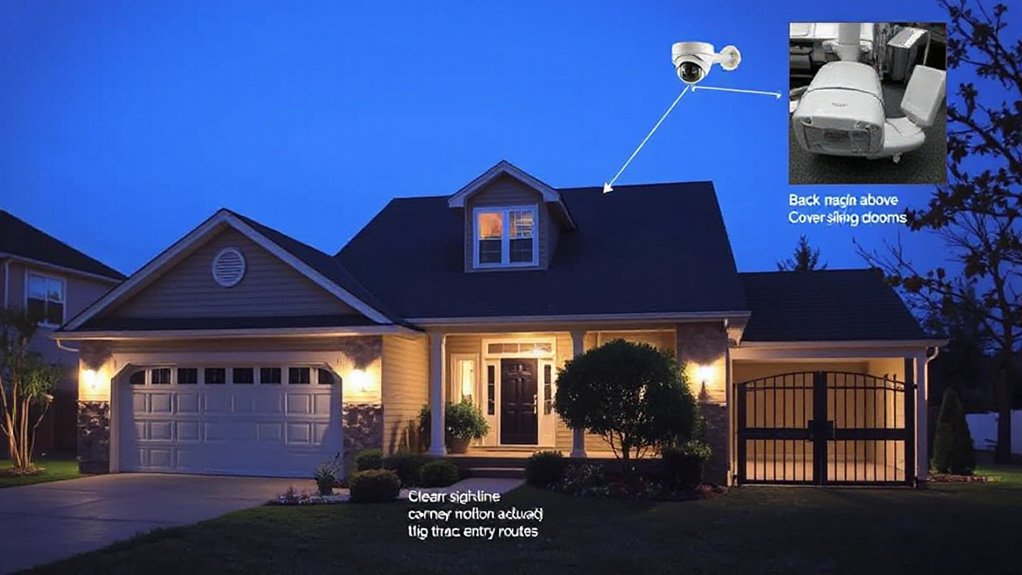
Strong doors and locks slow an intruder down, but cameras help you spot suspicious activity before someone tests those entry points.
Start with Camera placement strategies: cover every approach to the home, not just the front porch. Mount cameras high enough to reduce tampering, angled to capture faces at gates, driveways, and garage doors. Avoid pointing directly at bright streetlights or reflective surfaces that can wash out evidence. Overlap fields of view so a person can’t move between blind spots, and confirm your recorder captures usable detail at night.
Do a camera types comparison: choose turrets for close-range identification, bullets for longer sightlines, and doorbell cameras for front-step events. Verify weather ratings, wiring routes, and secure storage for footage.
Add Motion Lights and Sensors to Cut Response Time
While cameras record what happens, motion-activated lights and sensors push you from “review later” to “respond now” by exposing movement the moment it starts. That immediate illumination removes hiding spots, startles prowlers, and gives you critical seconds to assess risk.
Install lights at entry doors, garage corners, side gates, and dark paths—anywhere an intruder could approach unseen. Aim fixtures downward to prevent glare and false triggers from traffic. Pair bright LED floods with Motion sensors set to detect human-sized movement and adjust sensitivity to ignore pets.
Test at night and tune the detection zone so it covers your property line, not your neighbor’s. Add battery backup so storms don’t erase coverage. Faster visibility reduces Response time and limits how long threats linger near your home.
Connect Your Outdoor Security for Reliable Phone Alerts
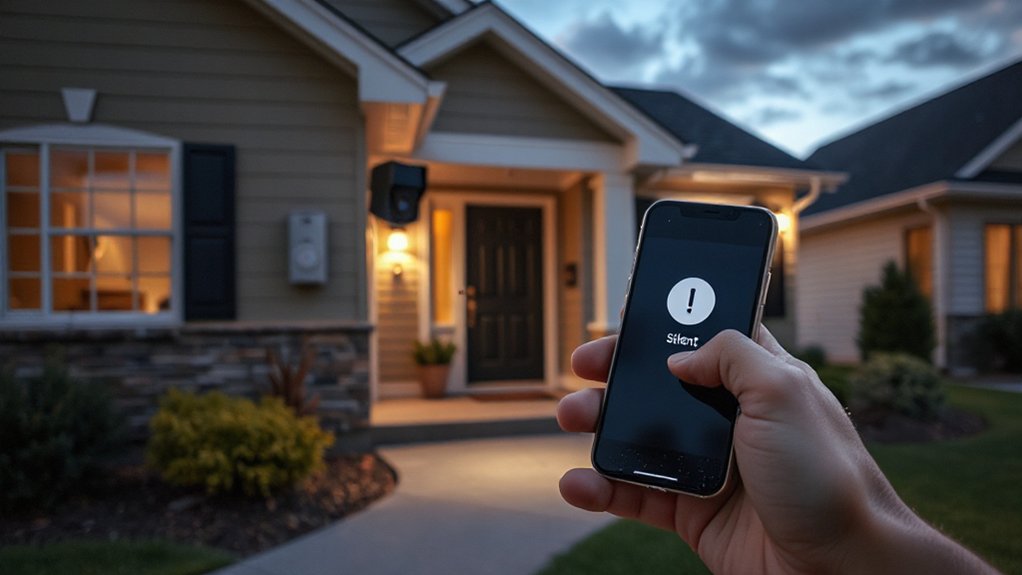
When you connect your outdoor cameras, lights, and sensors to a single app, you get phone alerts fast enough to act before a situation escalates. You reduce blind spots because every trigger creates time-stamped mobile notifications you can verify with live video.
Configure Wireless alerts for critical events only: person detection, driveway entry, and door or gate contact changes. Set quiet hours for low-risk motion, but keep high-risk zones active.
Use geofencing so alerts switch modes when you leave or return, and add multiple recipients so a neighbor can respond if you can’t.
Test signal strength at the farthest device and add a mesh node or wired bridge to avoid dropped alerts. Keep batteries fresh and firmware updated.
Frequently Asked Questions
What Insurance Discounts Are Available for Installing Outdoor Security Systems?
You can often get insurance discounts for monitored alarms, outdoor cameras, motion lighting, smart locks, and burglary-rated devices. Ask your insurer about Insurance savings and security incentives, require installation proof, and confirm equipment meets underwriting standards.
Do Outdoor Security Upgrades Require HOA Approval or Local Permits?
Yes—like walking a legal tightrope, you often need HOA approval and sometimes city permits. Check HOA regulations for cameras, lighting, fencing. Verify local permit requirements for wiring, structural changes, or gates to avoid fines.
How Can I Secure Sheds, Pool Equipment, and Other Detached Structures?
Secure detached structures by upgrading locks, adding Shed alarm systems, and installing motion lighting. Reinforce doors, hinge screws, and hasps, then apply Fence reinforcement to limit access. You’ll reduce theft, tampering, and opportunistic break-ins.
What Privacy Laws Apply to Recording Neighbors or Public Sidewalks?
You’ll face Privacy regulations and recording restrictions: check consent laws, avoid audio in two-party states, aim cameras at your property, limit sidewalk coverage, post notice, store footage securely, and stop if you capture windows or private areas.
How Often Should Outdoor Locks, Cameras, and Sensors Be Inspected or Replaced?
Inspect outdoor locks, cameras, and sensors monthly, and after storms; test weekly if risks run high. Replace batteries every 3–6 months, hardware every 5–10 years. Prioritize Lock maintenance and schedule annual Camera calibration.
Conclusion
Skip outdoor security, and you’re trusting luck; layer it, and you’re managing risk. You can leave dark corners, or you can light sightlines and remove hiding spots. You can rely on flimsy locks, or you can harden doors, gates, and garages. You can guess what happened, or you can cover key angles with cameras. Add motion lights and sensors, then connect alerts to your phone—fast notice beats late discovery, every time.