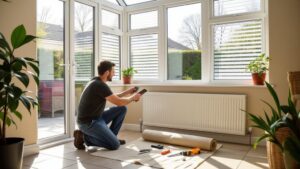
FBI data shows most burglaries still involve forced entry through a door or window. You can cut your risk fast with a quick exterior walk-through and a few targeted upgrades. Start where an intruder would: doors, frames, and nearby windows. Add a deadbolt, longer strike-plate screws, and motion lighting in blind spots. Then tighten up landscaping and outbuildings—because the weakest point usually isn’t where you expect it…
What to Fix First: Quick Exterior Security Wins
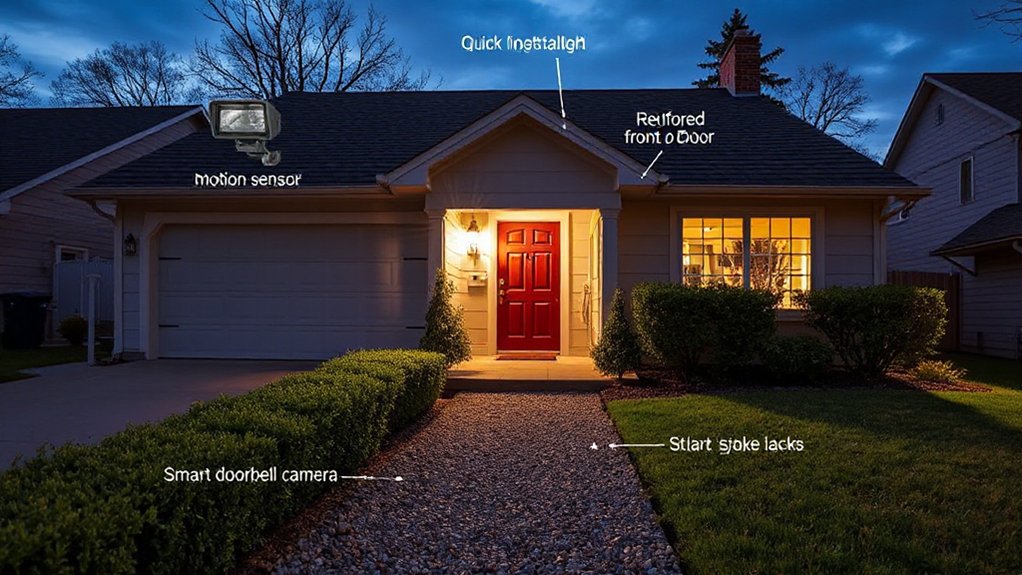
If you’re not sure where to start, tackle the exterior first because it’s where most break-ins begin and where small upgrades cut risk fast. Replace hollow-core or weak entry doors, then add a quality deadbolt with 1-inch throw and 3-inch screws in the strike plate.
Reinforce sliding doors with a pin lock and a security bar in the track. Upgrade exterior lighting to motion-activated LEDs at entry points and the driveway, aiming beams away from neighbors and toward approach paths.
Add visible, tamper-resistant house numbers for faster emergency response. For windows, install pin locks and apply clear security film on ground-floor panes.
Use landscaping design to remove hiding spots: trim shrubs below window height and raise tree canopies. Keep exterior aesthetics tidy so neglect doesn’t signal easy access.
Do a 10-Minute Exterior Security Walk-Through
Before you buy anything, take 10 minutes and walk the outside of your home like you’re trying to get in unnoticed. Start at the street: note sightlines from sidewalks, parked cars, and shrubs. Check nighttime visibility by spotting dead bulbs, dark corners, and glare that hides faces.
Look for hiding spots near windows, gates, and side yards, and trim or relocate cover. Scan for easy access points like low fences, stacked bins, or ladders left out. Verify house numbers are visible for responders.
Use Smart technology to test motion lights, camera views, and alert zones, and confirm Wi‑Fi reaches exterior devices. Finally, compare notes with your Neighborhood watch: ask what they’ve seen and share your weak points discreetly.
Harden Exterior Doors: Locks, Strikes, Hinges
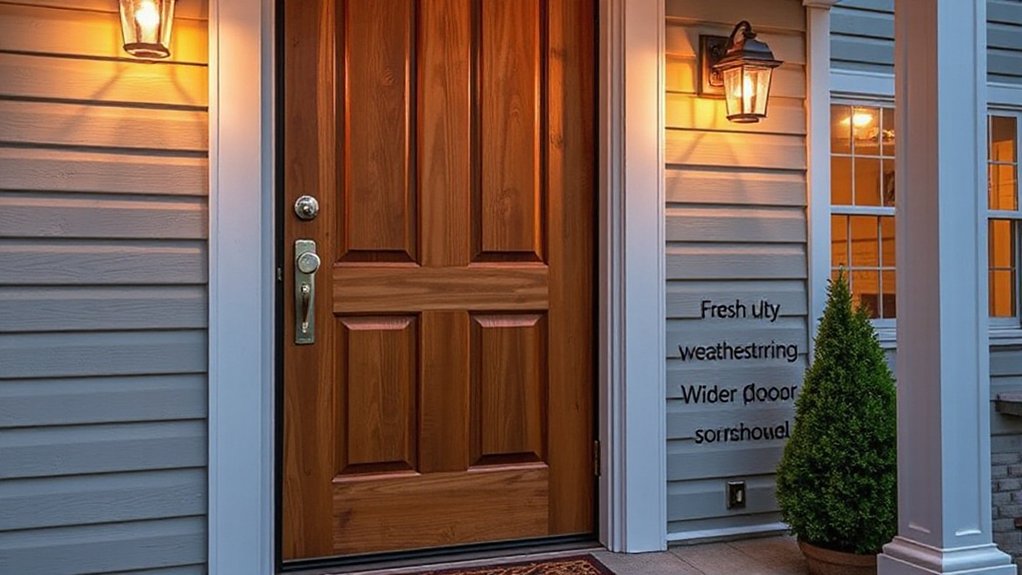
Start by hardening your exterior doors where forced entry usually succeeds: the lock, the strike, and the hinge side.
You’ll get the biggest gain by upgrading your deadbolt and cylinder, then reinforcing the strike plate and door jamb with longer screws and stronger hardware.
If your hinges are exposed, you should secure them with hinge pins or security studs so a removed pin can’t defeat the door.
Upgrade Deadbolts And Cylinders
Although a solid door helps, your lockset usually decides whether a forced entry takes seconds or takes sustained effort, so upgrading the deadbolt and cylinder is one of the highest‑impact hardening steps you can take.
Choose a Grade 1 or strong Grade 2 deadbolt with a 1-inch throw and a hardened steel bolt.
Replace worn knobs with a deadbolt-only setup so you don’t rely on a spring latch.
Upgrade to a drill- and pick-resistant cylinder, and confirm cylinder compatibility with your existing bore size, backset, and keyway.
If you want Smart lock integration, pick a deadbolt that supports retrofit modules without weakening the exterior.
Rekey all exterior locks after moving in, and keep key control tight.
Reinforce Strikes And Jambs
A strong deadbolt won’t buy you much time if the strike plate and jamb let the bolt tear out under a kick.
Start with strike reinforcement: replace the short screws with 3-inch hardened screws that bite into the wall stud, not just the trim. Upgrade to a heavy-duty strike box or extended strike plate that spreads force across more wood.
If your door has a split jamb or soft pine, do jamb strengthening before you rely on the lock—add a metal jamb shield or reinforcement channel and repair cracks with wood epoxy.
Check alignment: the bolt should throw fully into the strike without rubbing, or impact will shear screws. Afterward, re-test by closing the door and pulling hard on it.
Secure Hinges With Pins
Why worry about hinges when you’ve already upgraded the lock? Because if your door swings outward or the hinge barrels sit outside, an intruder can attack the hinge side and pull the door free.
Start with hinge pin replacement: swap standard pins for non-removable, security-style pins or set-screw pins.
If you can’t replace the hinges, add hinge bolts (security studs) so the door stays captured even if pins are driven out.
Use long, hardened screws into the framing, not just the jamb, on every hinge leaf.
Check for loose knuckles, worn holes, and misalignment that lets pins walk up.
Finish by testing: close the door and push near hinges; it shouldn’t flex or shift.
Secure Windows: Locks, Film, and Sensors
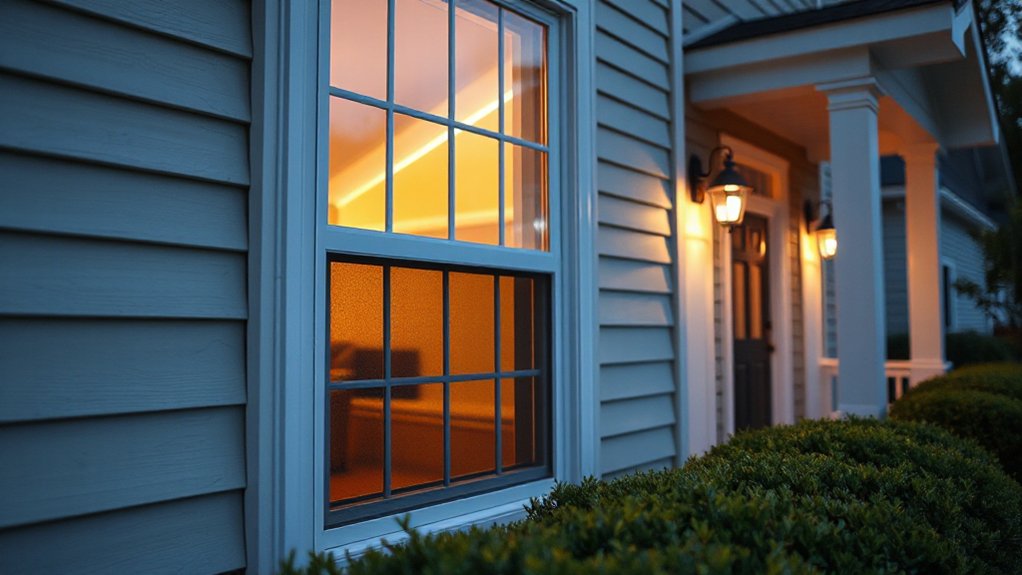
Since windows often give intruders the quickest, quietest entry point, you should secure them with layered defenses that address both forced opening and glass breakage.
For Window security, start with quality keyed sash locks or pin locks on double-hung windows, and add secondary sliding-window bars or track locks to limit travel. Check that latches fully engage and that screws bite into framing, not just trim.
For glass protection, apply security film rated for forced-entry resistance, then anchor it with a compatible frame attachment so the pane can’t peel free. Reinforce vulnerable basement panes first.
Add contact sensors on every operable window and glass-break sensors in rooms with large panes, and test them monthly.
Replace weak screens; they’re not deterrents.
Add Motion Lighting Where Intruders Hide
Walk your property at night and note where someone could wait unseen—behind shrubs, by side gates, near basement wells, or in shadowed corners along the garage.
Choose motion lights with adjustable sensitivity, a wide detection angle, and enough brightness to remove concealment without blinding you or neighbors.
Mount and aim them to cover approach paths and hiding spots with minimal gaps, and test trigger range so you don’t get false alarms from pets or passing traffic.
Identify Common Hiding Spots
Even if your doors and windows are solid, an intruder can still use dark “pause points” around your home to stay out of sight while they test locks or watch for routines. Walk your exterior at night and look for places you can’t see from the street or your main rooms.
Start with Hidden corners along fences, behind sheds, and beside garage returns. Check Concealed entryways like side gates, recessed porch doors, basement stairwells, and back sliders screened by shrubs.
Note overgrown landscaping, tall bins, stacked firewood, or patio furniture that creates cover near windows. Don’t ignore shadowed driveways, carports, or alcoves between additions.
Mark each spot where someone could crouch, approach unseen, or linger without being observed, then prioritize them for attention.
Choose Effective Motion Lights
Once you’ve marked the shadowed “pause points” around your exterior, use motion-activated lighting to take away cover and force movement into view. Choose fixtures with adjustable sensitivity and a timed shutoff so pets, windblown branches, and passing cars don’t trigger constant false alarms that train you to ignore alerts.
Look for bright, neutral-white LEDs with a wide detection range, weather-rated housings, and tamper-resistant mounts. If wiring’s difficult, solar powered options can still work well—just pick models with high-capacity batteries and panels that recharge reliably in your climate.
For smarter control, use smart lighting integration to link lights with cameras, doorbells, or alarms, so you get instant notifications and a recorded clip when the light fires. Test settings at night and recheck seasonally.
Optimize Placement And Coverage
Where do intruders naturally pause before they commit—behind side gates, along fence lines, in recessed doorways, and beside garage corners? Put motion lights in those “pause points” so there’s no dark buffer between the street and your entry. Mount fixtures 8–10 feet high, angled down and slightly outward to cover approaches without blasting windows or triggering glare.
Walk your perimeter at night and note blind spots created by shrubs, sheds, or parked cars. Adjust landscape design by trimming plants below window height and thinning dense hedges that block property visibility. Overlap detection zones: one light should catch movement before another area goes dark. Aim for continuous coverage from driveway to door, and test sensitivity so pets and branches don’t set it off.
Use Cameras and Video Doorbells (Placement Tips)
Although cameras and video doorbells can’t stop a break-in by themselves, smart placement makes them far more useful for identifying faces, capturing license plates, and documenting what happened.
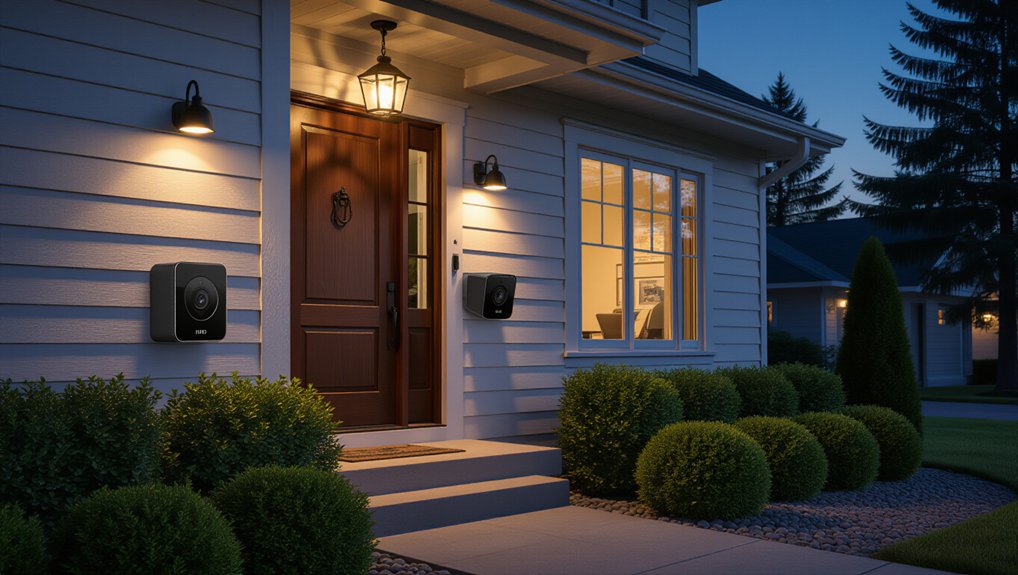
Start with Camera placement: mount exterior cameras 8–10 feet high, angled slightly downward, and cover every approach to doors, the driveway, and any side gate line. Avoid pointing at bright streetlights or reflective windows that wash out footage.
For Video doorbell positioning, install it at chest height (about 48 inches) or use an angled wedge so visitors’ faces fill the frame, not the sky.
Enable motion zones to reduce false alerts and set pre-roll if available.
Test at night: confirm IR doesn’t bounce off nearby walls, and verify audio captures clear speech.
Check privacy rules and notify guests.
Use Landscaping to Remove Hiding Spots
Since most burglars look for cover and quick escape routes, you should treat your yard as part of your security plan and remove places someone could crouch unseen.
Trim shrubs below window height and thin dense hedges so sightlines stay clear from street to entry points. Choose low, open plantings near walkways and doors, and keep tree canopies lifted to eliminate dark pockets.
Add gravel or hardscape strips under windows to reduce loitering and create noise without harming landscaping aesthetics.
Place motion-activated lighting to wash corners, and angle it to avoid glare that blinds you.
In your garden design, separate tall ornamentals from paths, and maintain clear borders along fences and alleys.
Schedule seasonal pruning and remove debris piles promptly.
Lock Down Garages, Gates, and Sheds
Even if your front door’s solid, an unsecured garage, side gate, or shed can give a burglar a quieter entry point and access to tools.
Start with hardware: install a heavy-duty hasp and padlock on gates, use long screws in strike plates, and add hinge bolts where pins are exposed.
On garage doors, secure the emergency release with a zip tie you can cut in a fire, and keep the service door locked with a deadbolt.
Improve Garage organization by storing ladders, pry bars, and power tools in locked cabinets, not by doors or windows.
For Shed security, upgrade to a shrouded lock, reinforce the door frame, and anchor large equipment to the floor.
Check latches monthly.
Add Cheap Deterrents: Signs, Timers, Gravel
If you want to raise the risk for a would-be intruder without spending much, layer a few cheap deterrents that make your home look watched and sound “loud.” Start with affordable signage: a security system decal, “Cameras in Use,” or “Dog on Premises.” Place it where they decide—front walk, side gate, and driveway—and keep it clean and visible.
Next, put interior lamps and a radio on plug-in timers; stagger schedules so lights don’t click on at the same minute every night. Use dusk-to-dawn bulbs near entries to remove dark hiding spots.
Finally, add gravel pathways along windows and gates; the crunch forces noise and slows movement. Keep gravel 2–3 inches deep and wide enough to step on.
Frequently Asked Questions
How Do Exterior Security Upgrades Affect Homeowner’s Insurance Premiums?
Exterior security upgrades can lower your premiums if your insurer credits reduced risk; you may qualify for Home insurance discounts. You’ll boost burglary deterrence, but you must document devices, meet standards, and update your policy.
What Permits or HOA Approvals Are Needed for Exterior Cameras and Lights?
You’ll usually need no permit for cameras, but exterior wiring, new circuits, or pole lights may trigger Permit requirements. As dusk falls, check HOA approvals for placement, visibility, and neighbor privacy, then document everything.
How Can Renters Improve Exterior Security Without Violating Lease Rules?
You can boost exterior security by using non-permanent outdoor lighting, battery cameras, and removable door/window sensors, plus landscaping enhancements like trimmed shrubs. You’ll check lease/HOA rules, avoid drilling, and document any approvals.
What Are the Best Options for Securing Homes During Extended Vacations?
Better safe than sorry: you’ll lock down entry points with Smart locks, set Motion sensors, pause deliveries, use timed lights, ask a neighbor to check in, and stop social posts. You’ll also test alarms.
How Do I Balance Exterior Security Upgrades With Curb Appeal and Resale Value?
You balance security and curb appeal by choosing tasteful outdoor lighting and subtle landscaping enhancements that improve visibility. You’ll prioritize quality hardware, match finishes to your home, avoid fortress vibes, and document upgrades for buyers.
Conclusion
When you tighten up your home’s exterior, you’re turning soft targets into hard edges. Start with doors and windows, then layer in motion lights, cameras, and trimmed landscaping so shadows don’t have places to hide. Lock down garages, gates, and sheds, and add simple deterrents like signs, timers, and crunchy gravel that broadcasts footsteps. You’re not chasing perfection—you’re stacking small, smart barriers that make intruders move on.