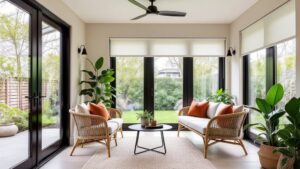
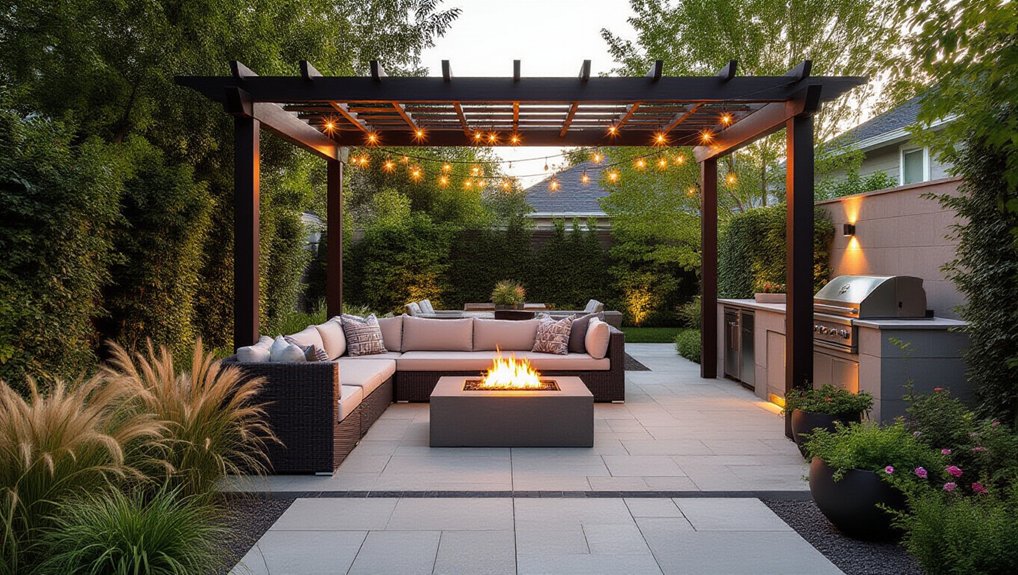
You’ll get a better outdoor living space when you plan it like a series of zones, not a leftover patio. Start by mapping where you eat, lounge, and move, then factor in sun, wind, and drainage before you buy anything. Choose seating that fits how you actually host, add shade that reduces heat load, and layer plants for privacy and cooling. Then you’ll need materials that last—and a few upgrades that change everything…
Map Your Outdoor Space by Function and Budget
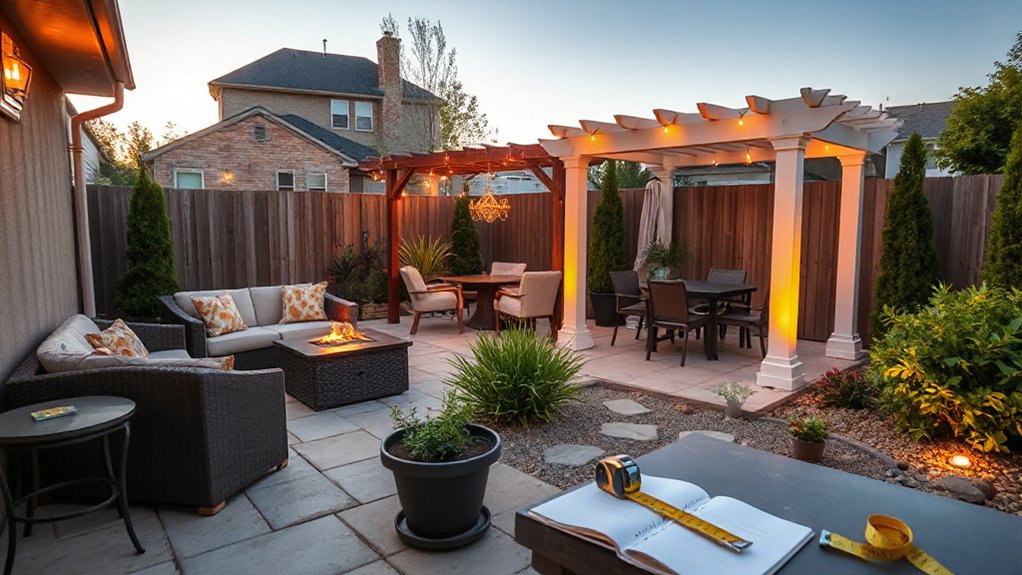
Before you buy a single paver or patio chair, map your outdoor space by function and budget so every square foot earns its keep. Walk the site at different times of day and note sun, shade, wind, drainage, views, and privacy gaps.
Then zone the yard: circulation paths, dining/cooking, play, gardening, storage, and a quiet retreat. Use simple space planning tools—graph paper, stakes, or painter’s tape—to test clearances and pathways before you build.
Next, practice budget prioritization: fund grading, drainage, and durable hardscape first, then add lighting, planting, and upgrades in phases.
Choose permeable surfaces, native plants, and reclaimed materials to cut runoff, irrigation, and waste while creating a cohesive, low-impact layout.
Choose Seating That Matches How You Host or Relax
Choose seating based on how you actually use the site—lively entertaining calls for upright dining and conversation groupings, while quiet lounging works best with deeper, lower pieces.
You’ll get more mileage from a flexible layout, like modular sections, stackable chairs, and movable side tables that shift with the guest count and sun angle.
Prioritize durable, repairable, responsibly sourced materials so your seating holds up to weather and keeps replacements out of the waste stream.
Entertaining Versus Lounging Needs
Whether you host lively dinners or prefer quiet mornings with a book, your seating plan should match the way you actually use the space—because the best outdoor setups support both flow and comfort without wasting square footage or materials.
If you entertain, prioritize upright, conversational seating with durable surfaces that handle spills and frequent traffic. Place dining-height chairs where shade, lighting, and access to the kitchen reduce back-and-forth.
For lounging, choose deeper seats, supportive cushions, and materials that stay cool and dry in your microclimate. Anchor relaxation around a fire pit with noncombustible bases and low-maintenance textiles.
If you’ll set up outdoor games, keep a clear, resilient zone and select seats that tolerate dirt and quick moves.
Pick FSC-certified wood or recycled-content frames for lower impact.
Seating Layout And Flexibility
How do you want people to move through your patio—circling a dining table, clustering around a fire pit, or stretching out in a quiet corner? Start with circulation: keep main paths clear, then anchor seating to the view, shade, or heat source.
If you host dinners, align chairs for easy pull-backs and add a bench that tucks under the table. If you lounge, face sectionals toward conversation, not the house.
Modular arrangements let you split pieces for parties, then recombine them for solo reading. Prioritize furniture flexibility with lightweight, stackable chairs and ottomans that double as side tables.
Choose durable, repairable materials—FSC wood, recycled aluminum, washable covers—so your layout adapts without waste. Add a storage box for cushions, too.
Add Shade With Umbrellas, Pergolas, or Sails
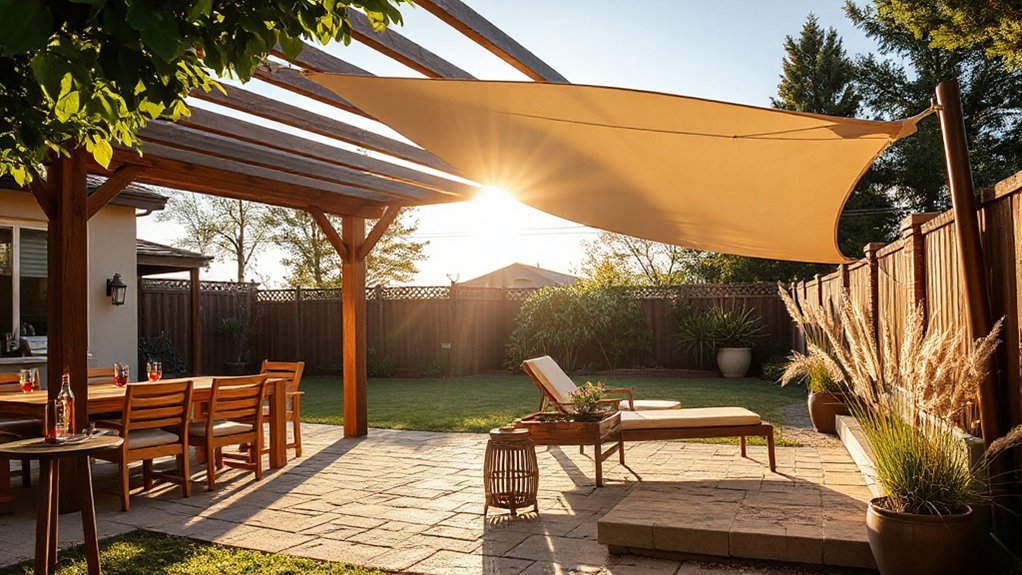
Because strong sun can shrink how long you’ll actually use your patio, adding shade with an umbrella, pergola, or sail instantly makes the space more comfortable and design-forward.
Start by mapping sun angles and prevailing winds so your shade options deliver reliable outdoor coverage where you dine, lounge, or cook.
A cantilever umbrella suits small footprints and moves with your seating plan; choose solution-dyed, UV-stable fabric and a weighted base.
A pergola creates an architectural ceiling—use FSC-certified wood or powder-coated aluminum, and consider a slatted top or retractable canopy for seasonal control.
Shade sails work best when you can anchor to posts or structure; tension them properly, angle for runoff, and select recyclable HDPE for a lighter, breathable look.
Light Your Patio for Ambiance and Safe Walkways
Shade helps you stay outside longer, and the right lighting keeps the patio inviting after sunset while making paths and steps safer to navigate. Start with a simple lighting plan that layers task, ambient, and accent light where you actually walk and gather.
Line walkways with low-glare solar powered lights, spacing them evenly to avoid harsh hotspots and dark gaps. Add warm LEDs under railings, stair treads, and bench edges so passage reads clearly.
For atmosphere, use dimmable string lights overhead and aim wall sconces downward to reduce skyglow. Dial in lantern placement by grouping a few on tables and setting one at entry points to signal arrival.
Choose weather-rated fixtures, efficient bulbs, and timers for low-energy, low-maintenance nights.
Create Privacy With Screens, Fencing, and Curtains
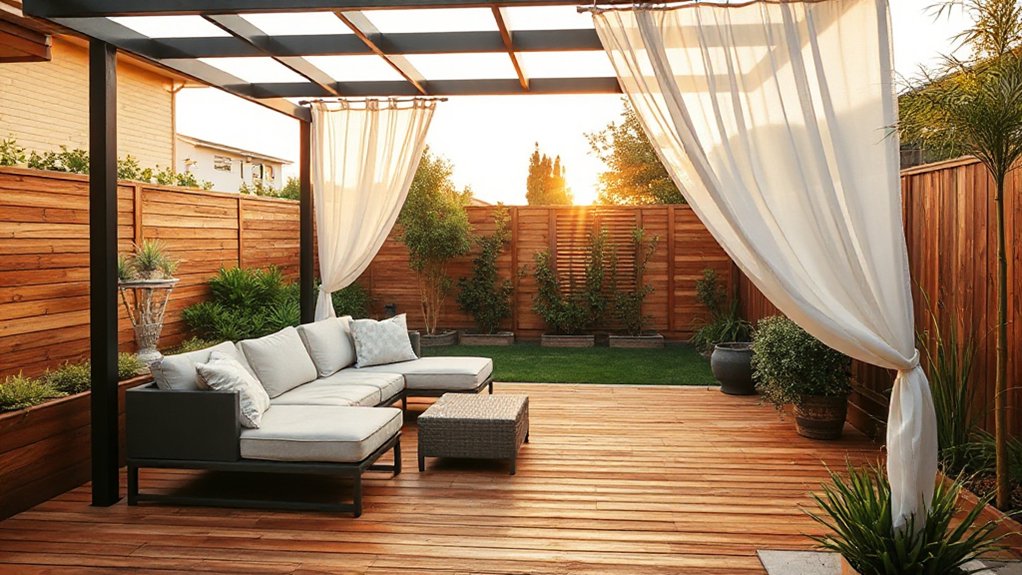
You can define your outdoor room by choosing stylish privacy screens that shape views, soften edges, and align with your patio’s layout. Install outdoor curtains or fencing to block sightlines and wind while keeping circulation and access points clear.
Choose durable, low-VOC, responsibly sourced materials so your privacy upgrades look intentional and hold up season after season.
Choose Stylish Privacy Screens
Whether you’re carving out a quiet corner on a balcony or defining zones in a backyard, stylish privacy screens let you control sightlines without closing off the outdoors. Start by mapping sun, wind, and neighbor views, then place screens where they’ll block glare and create comfort, not just hide clutter.
Choose Decorative lattice for a light, architectural layer that supports climbing plants and keeps airflow moving. For a warmer, eco-forward look, pick bamboo panels sourced from fast-growing material; they add texture, soften hard edges, and pair well with stone and metal.
Keep proportions in scale with railings and furniture, and repeat finishes already on-site so the screen feels built-in. Prioritize modular designs you can reposition as seasons and uses change.
Install Outdoor Curtains Or Fencing
As soon as you need privacy that flexes with weather and use, outdoor curtains or well-placed fencing can shape the space without making it feel boxed in. Hang panels on a stainless cable under your pergola to soften glare, cut wind, and define a dining nook without blocking breezes. Choose outdoor curtain options made from solution-dyed acrylic or recycled polyester; they resist fading, dry fast, and reduce replacement waste.
For structure, treat fencing like architecture: align it with sightlines, frame views, and leave gaps for airflow. Prioritize fencing material choices such as FSC-certified cedar, reclaimed wood, or powder-coated aluminum for durability with a lighter footprint.
Add a trellis zone for vines, and you’ll get living screening that cools your patio. Install simple, repairable hardware to extend life.
Soften the Space With Planters, Trees, and Texture
Even if the hardscape looks clean and intentional, too much stone and straight-line geometry can leave an outdoor room feeling stark. You’ll soften it fast by adding planters, small trees, and purposeful Texture layering that responds to your site’s sun, wind, and views.
Start with Plant combinations that do real work: a canopy tree for shade, mid-height shrubs to screen neighbors, and low grasses to blur edges and catch light. Choose native or climate-adapted species so you’ll water less and support pollinators.
Use varied pot sizes and grouped containers to create rhythm, then repeat a few materials to keep the composition disciplined. Add rough, fine, and airy foliage in the same palette for depth, and tuck herbs near seating so scent becomes part of the design.
Use Weatherproof Flooring, Fabrics, and Hardware
Because your outdoor room lives in sun, rain, and temperature swings, you’ll get a cleaner look and longer lifespan by choosing weatherproof flooring, fabrics, and hardware that match your site’s exposure.
On windy, gritty sites, pick dense pavers, sealed concrete, or slip-resistant porcelain that won’t pit or stain. In shaded zones, choose decking with proven mold resistance and low-VOC finishes.
Detail edges with proper drainage gaps so water sheds fast and surfaces dry evenly.
Specify weatherproof fabrics with solution-dyed acrylic or recycled performance yarns, then use removable covers so you can clean and repair instead of replacing.
Prioritize hardware durability: marine-grade stainless or powder-coated aluminum, capped fasteners, and non-corrosive hinges. You’ll reduce rust streaks, avoid warping, and keep your palette consistent year after year.
Add Cooking, Storage, and Heat for Longer Seasons
Weatherproof finishes keep your outdoor room looking sharp, but cooking, storage, and heat make it work harder across more months. Plan outdoor cooking around wind and traffic: tuck a grill or induction hob near the kitchen door, add a noncombustible prep surface, and specify task lighting for safe nights. Choose energy-smart appliances and right-size them so you don’t waste fuel or power.
Build storage solutions into your layout: sealed base cabinets, a slim pantry, and a bench with lift-up lids keep tools, cushions, and serveware dry and organized. Then extend the season with efficient warmth—an infrared heater under a covered ceiling, a well-vented fire table, or a small masonry hearth placed away from trees.
Add a thermometer and timer to curb run time.
Frequently Asked Questions
What Permits or HOA Rules Apply to Outdoor Structures Like Pergolas or Fences?
You’ll need HOA approval plus local permits that follow building codes and zoning regulations for height, setbacks, and materials. Check easements and utility clearances. Choose durable, low-impact finishes and compliant layouts to avoid redesigns.
How Can I Keep Mosquitoes and Pests Away Without Harsh Chemicals?
Channel Odysseus: you’ll outsmart mosquitoes by layering Natural repellents—fans, citronella, neem—and choosing Pest proof plants like lavender and basil. You’ll reduce breeding with standing-water audits, fine mesh screens, and warm-toned lighting.
What Outdoor Speaker or Sound System Options Won’T Bother Neighbors?
Choose directional Wireless speakers, low-watt amps, and near-field patio sets you aim inward; you’ll keep volume tight and reduce bleed. Add volume limits, schedule quiet hours, and pick solar-chargeable Sound system options for greener listening.
How Do I Protect Outdoor Furniture From Theft or High Winds?
An ounce of prevention’s worth a pound of cure: you’ll anchor furniture with Slip resistant mats, wind straps, and weighted bases, lock pieces together, add Security cameras, and store cushions. Choose durable recycled materials and low-profile layouts.
What’s the Best Way to Manage Rainwater Drainage Around a Patio?
You’ll manage patio drainage best by grading the surface 1–2% away from your home and routing Rainwater runoff into a gravel trench, channel drain, or rain garden. You’ll choose permeable pavers for sustainable Drainage solutions.
Conclusion
Now you’ve got a clear path to an outdoor space that works as hard as you do. Map zones by function and budget, then layer seating, shade, lighting, privacy, and plants for comfort and cohesion. Choose weatherproof, repairable materials and efficient fixtures so your design lasts and wastes less. Add smart storage, a compact cooking setup, and season-stretching heat, and your patio becomes a million-times more livable—beautiful, durable, and ready year-round.