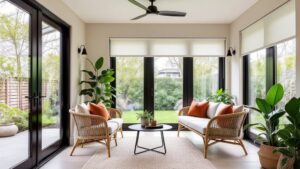
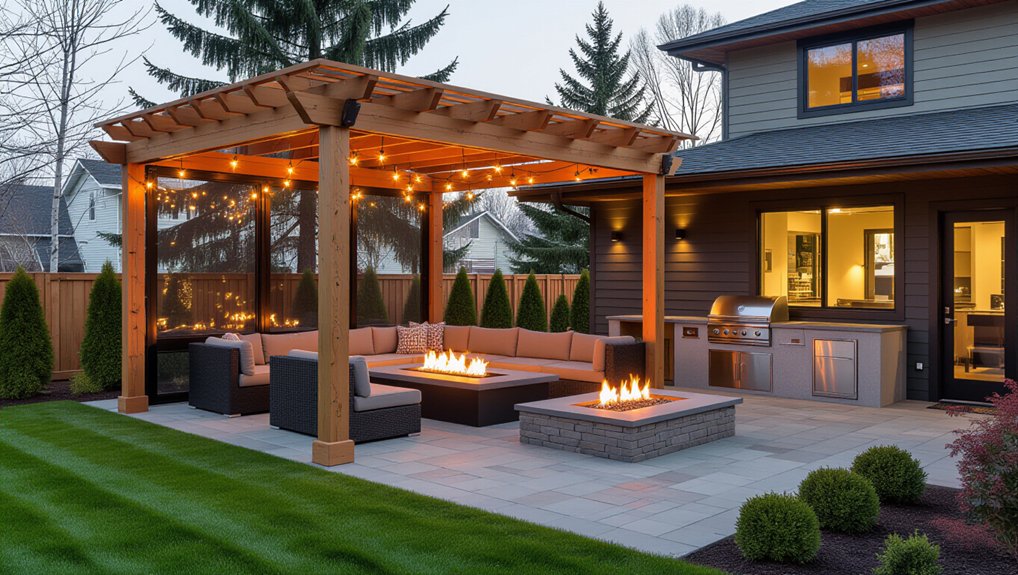
Like a well-planned courtyard in a classic villa, your yard can work in every season if you design it for real weather, not just a perfect afternoon. You can add a roofline with a pergola, awning, or covered patio, then choose durable, low-impact materials that handle sun and rain. Layer in heat and shield wind, and you’ll keep evenings usable longer. The next step changes how the whole space feels…
Add a Roof: Pergolas, Awnings, Covered Patios
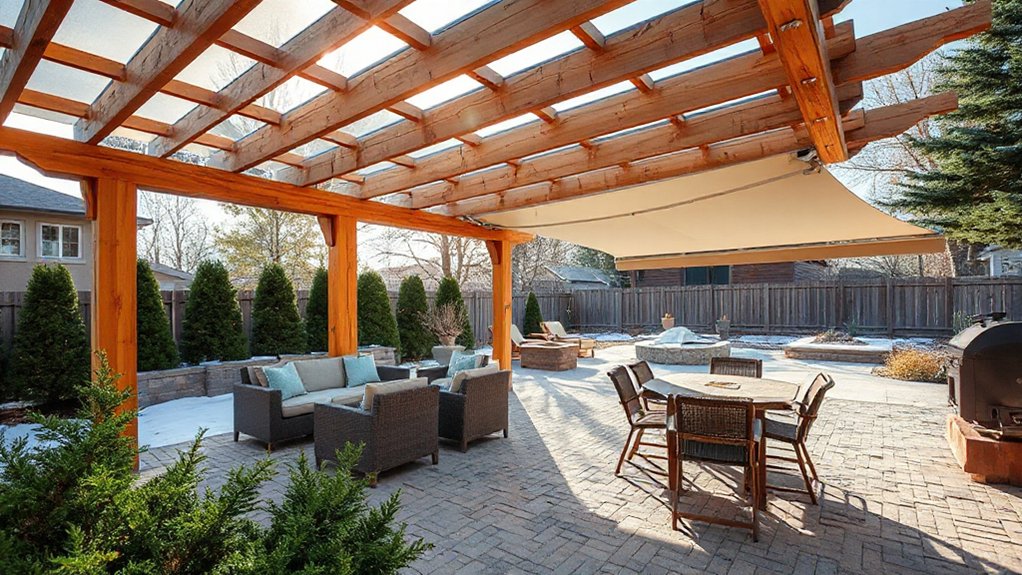
Whether you’re carving out shade on a blazing south-facing deck or creating a dry passage from house to garden, adding a “roof” instantly makes your outdoor space more usable and more intentional.
Start by reading your site: track sun angles, prevailing breezes, and views you don’t want to block. A pergola can frame the landscape while casting dappled light; add Decorative lattice on the hot edge to cut glare without closing things in.
If flexibility matters, choose retractable covers that open for winter light and close for midday heat.
Extend the roofline into a covered patio to create an outdoor room, then align posts and beams with doors and circulation so it feels built-in. Size it to reduce cooling load indoors.
Pick All-Weather Materials for Sun, Wind, Rain
Because your site dishes out sun, wind, and rain in different doses, choose exterior materials that match those stresses instead of fighting them. Track exposure by zone: south-facing decks need UV-stable composites or FSC-certified hardwoods with low-VOC all season coatings.
While windy corners benefit from heavier pavers, reinforced railings, and corrosion-resistant fasteners. Specify powder-coated aluminum or stainless steel for furniture frames, and pick quick-dry foam and weather-resistant fabrics for cushions so you’re not constantly storing or replacing them.
In rainy pockets, detail sloped surfaces, open joints, and breathable stains to shed water and prevent mildew. Keep the palette cohesive by repeating textures—matte metal, oiled wood, woven textiles—so durability reads as intentional design, not compromise.
Choose repairable parts to cut waste over time.
Add Heat: Fire Pits, Patio Heaters, Wind Screens
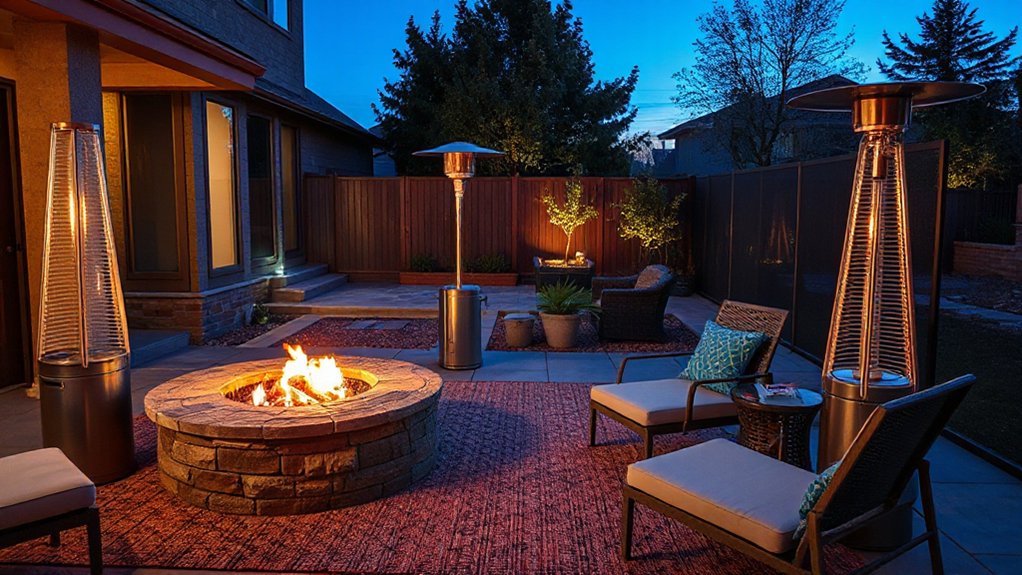
As temperatures drop, you can stretch patio season by adding heat exactly where your site loses it—along windy edges, in shaded corners, and near seating zones that people actually use.
Anchor the layout with a low-smoke, gas or ethanol fire pit, sized to your gathering circle and set on noncombustible surfacing with clearances that prioritize fire pit safety.
For flexible warmth, choose efficient infrared units and treat patio heater placement like furniture: aim heat across benches, not into open air, and keep tanks and cords out of walk paths.
Add wind screens—slatted wood, tempered glass, or dense evergreens—to block prevailing gusts while preserving views.
Specify durable, repairable parts and zone controls so you only heat occupied areas.
Upgrade Outdoor Lighting for Paths, Steps, Security
After the sun drops, good lighting turns circulation into a deliberate, safe experience instead of a guessing game. Map your routes first: driveway to entry, gate to patio, steps to doors. Then layer fixtures to match the site.
Use low-glare bollards or shielded downlights for pathway illumination, and add step lights at consistent riser spacing so edges read clearly. Aim beams across hazards, not into eyes or neighbor windows.
Choose warm LEDs (2700–3000K) for comfort, and run them on timers, dimmers, or motion sensors to cut energy use.
For security lighting, concentrate brighter output at entries and blind corners, with controlled optics and camera-friendly placement. You’ll get a cohesive nightscape that feels intentional year-round.
Low-Maintenance Landscaping That Looks Good Year-Round
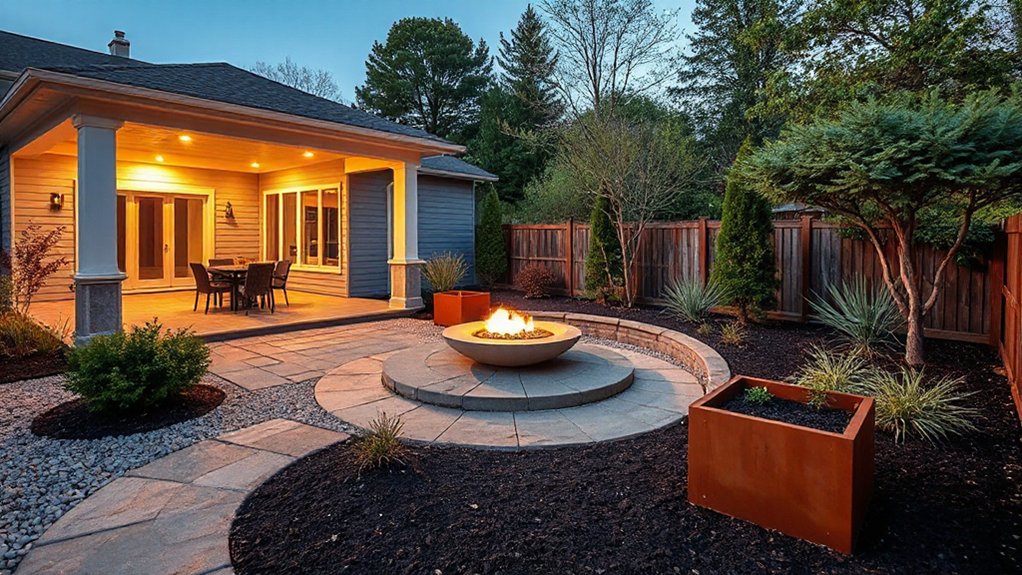
Even if you don’t love yard work, you can design a landscape that stays crisp in every season by matching plants and materials to your site’s sun, soil, wind, and water.
Start with a simple structure: evergreen shrubs for winter backbone, ornamental grasses for movement, and perennials with staggered bloom times for reliable color.
Choose Drought tolerant plants that suit your microclimates, so you’ll water less and lose fewer plantings.
Replace high-input lawn in tough areas with Mulch and ground covers to suppress weeds, cool soil, and reduce erosion.
Use stone edging and permeable paths to define beds and handle runoff.
Group plants by water needs, and install drip irrigation where it counts.
You’ll get a tidy, resilient yard without constant work.
Frequently Asked Questions
Do I Need a Permit for a Pergola, Awning, or Covered Patio?
You’ll often need a permit—check local codes. Pergola permits and Awning regulations vary by size, attachment, setbacks, and wind loads. Design to your site, choose durable materials, and manage shade and rain sustainably.
How Can I Reduce Mosquitoes and Other Pests in Outdoor Living Areas?
You’ll banish mosquitoes like you’ve hired a tiny SWAT team: layer Mosquito control with fans, screened zones, and low-glare lighting. For pest prevention, drain water, choose native plants, add bat boxes, and manage mulch.
Will Outdoor Upgrades Increase My Property Value or Affect Insurance Premiums?
Yes, you’ll often boost value, but premiums may rise if you add higher-risk features. Choose Landscaping enhancements and Outdoor lighting options that fit your site, reduce energy use, and improve safety—insurers may reward that.
What Maintenance Schedule Keeps Outdoor Features Looking New Year-Round?
You’ll keep outdoor features looking new with weekly inspections, monthly touch-ups, and quarterly refreshes: prune and mulch (landscaping tips), wash hardscapes (seasonal cleaning), seal wood annually, clear drains, and compost debris to suit your site sustainably.
How Do I Protect Outdoor Furniture and Cushions From Mold and Mildew?
Choose quick-dry, solution-dyed fabrics, and keep pieces ventilated in shade. Practice Mold prevention by wiping frames, drying after rain, and using Cushion storage in breathable bins. You’ll extend color, comfort, and materials sustainably.
Conclusion
You don’t need a massive budget or a full backyard remodel to enjoy your space year-round. Start site-smart: add a pergola, awning, or covered patio where sun and rain hit hardest, then choose durable, repairable finishes that age well. Bring shoulder seasons back with a fire pit, heater, and simple wind screening. Layer in low-glare path lighting for safety. Finish with drought-tolerant evergreens to keep color while saving water and upkeep.