Table of Contents
Most people buying a garden shed don’t spend long thinking about planning. They find the size they want, they order it, and they find somewhere in the garden to put it. And in the majority of cases, that’s entirely fine — most sheds in most back gardens in England don’t require planning permission. But “most” isn’t “all,” and the conditions under which a shed falls outside permitted development are specific enough that it’s worth understanding them before the shed arrives rather than after.
The planning question for sheds sits within the same permitted development framework that governs garden rooms, extensions, and other outbuildings. The rules are the same regardless of what you call the structure — shed, summerhouse, workshop, garden office — because planning law classifies all of them as outbuildings. What matters is what the building is, where it sits, how tall it is, and how it’s used.
This guide covers exactly when planning permission is and isn’t required for a shed in England, what the specific rules are, and what other legal considerations apply even when planning permission isn’t needed.
The Short Answer
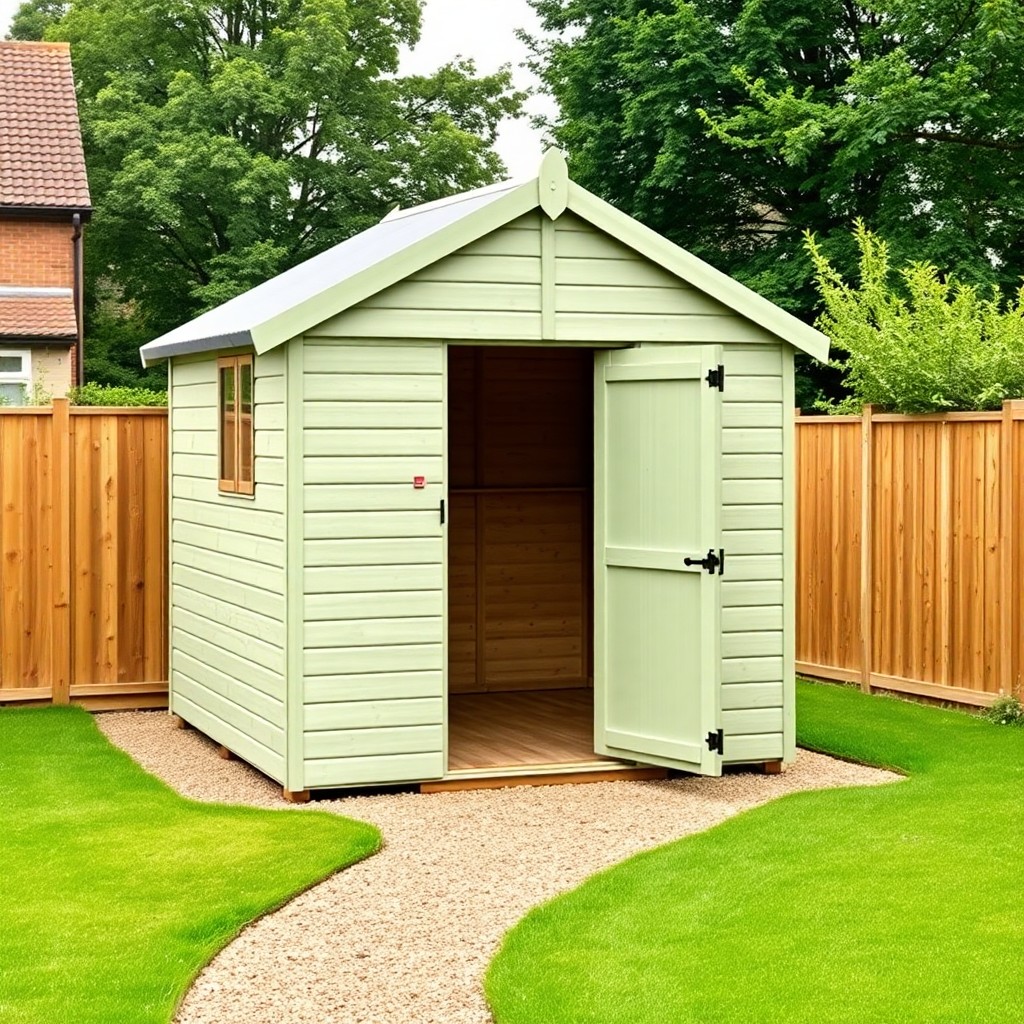
Do you need planning permission for a shed? In most cases in England — no. Garden sheds fall within Class E of Schedule 2, Part 1 of the Town and Country Planning (General Permitted Development) (England) Order 2015, which grants automatic permitted development rights for outbuildings that are incidental to the enjoyment of a dwelling house. Provided the shed meets the conditions set out below, no planning application is required.
The Planning Portal at www.planningportal.co.uk is the government’s authoritative reference for permitted development rules in England and provides tools to check the position for specific types of outbuilding. If you want to go beyond the summary here and check the rules in detail for your specific situation, that’s the right place to start.
The Permitted Development Rules for Sheds
For a shed to fall within permitted development in England, it must satisfy all of the following conditions. Each one matters — fail any single condition and planning permission is likely required.
Single storey only. The shed must be a single-storey structure. Any shed with an upper level, mezzanine, or sleeping accommodation above ground level falls outside permitted development for outbuildings.
Height limits. This is the rule that catches the most people out, particularly for larger sheds positioned close to a fence or wall.
Where any part of the shed is within 2 metres of a property boundary, the maximum overall height is 2.5 metres — regardless of roof type. This is a hard limit, and it applies to the total height including the roof peak, not just the eaves. A fairly modest apex shed can exceed 2.5 metres at the ridge if the pitch is steep, so it’s worth checking the actual height before assuming it’s within this limit.
Where the shed is more than 2 metres from any boundary, the maximum overall height increases: 4 metres for a dual-pitched roof, 3 metres for any other roof type including flat, mono-pitch, or pent. The eaves height — where the roof meets the top of the walls — must in all cases not exceed 2.5 metres.
Coverage limit. The total footprint of all outbuildings, extensions, and other structures on the plot — not just the shed — must not cover more than 50 percent of the garden area. This is measured against the original garden area when the house was first built, not the current garden if any parts of it have been built on since. Existing outbuildings and extensions count toward the 50 percent limit, so if there’s already a large garage or extension on the plot, the remaining allowance for a shed may be more limited than it appears.
Not in front of the principal elevation. The shed must not be positioned in front of the wall that forms the principal elevation of the house — typically the front wall facing the street. A shed in the front garden always requires planning permission. Sheds to the side of the house are usually within permitted development if they’re set behind the front wall, but rules are tighter for side positions in some circumstances, particularly in conservation areas and designated areas.
Domestic use only — no sleeping accommodation. The shed must be used for purposes incidental to the enjoyment of the dwelling — storage, a workshop, a hobby room, garden equipment, bicycles. It cannot function as sleeping accommodation, as a self-contained annexe, or as a separate dwelling. If the shed includes a bedroom, bathroom, or any arrangement that makes it function as independent living space, it falls outside permitted development and requires full planning permission.
No verandas or raised platforms above 300mm. A shed with a veranda, balcony, or raised platform that sits more than 300mm above the surrounding ground level falls outside permitted development. A simple step up to the shed door is fine; an elevated deck is not.
Incidental use, not business use. A shed used as a home office for occasional remote working — the normal pattern for the vast majority of garden office users — is generally fine under permitted development. A shed being used as business premises in a way that generates significant visitor numbers, deliveries, or activity that alters the character of the residential property may require planning permission for change of use. The line isn’t always obvious, but a reasonable working-from-home use is unlikely to be a problem.
The 10 Square Metre Rule in Designated Areas
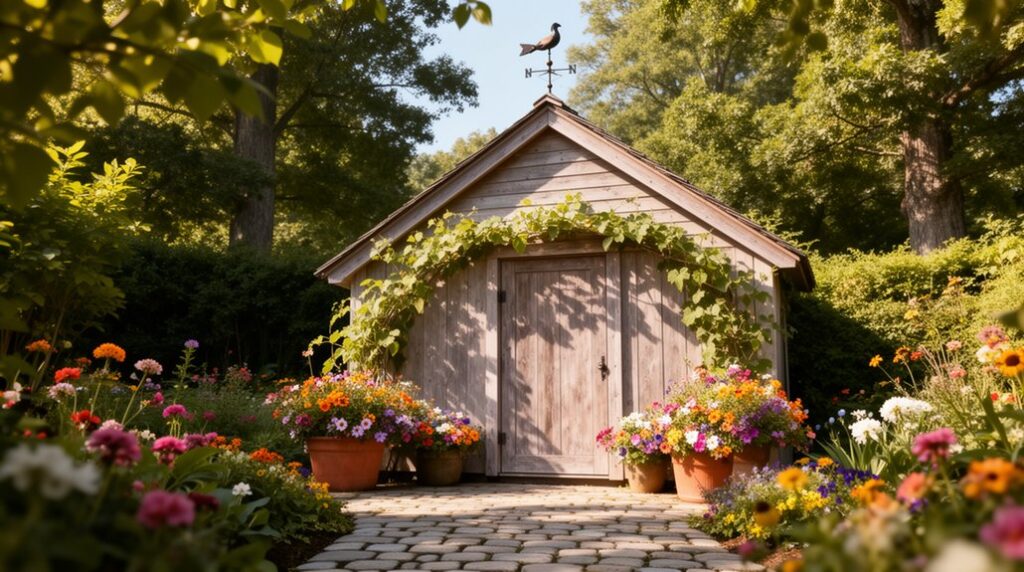
An important additional restriction applies to sheds in National Parks, Areas of Outstanding Natural Beauty, conservation areas, World Heritage Sites, and the Broads.
In these designated areas, an outbuilding situated more than 20 metres from any wall of the house must not exceed 10 square metres in total area. This is a significant constraint — it effectively limits outbuildings at the far end of larger gardens in these areas to quite modest structures. Sheds within 20 metres of the house wall are not subject to this additional size limit, but the standard permitted development rules still apply.
If your property is in a conservation area, it’s also worth checking whether the local planning authority has applied an Article 4 Direction removing permitted development rights more broadly. Some authorities have done this in conservation areas where the cumulative impact of outbuildings on the character of the area has been judged to be significant. Check with your local planning authority before assuming permitted development applies.
Listed Buildings
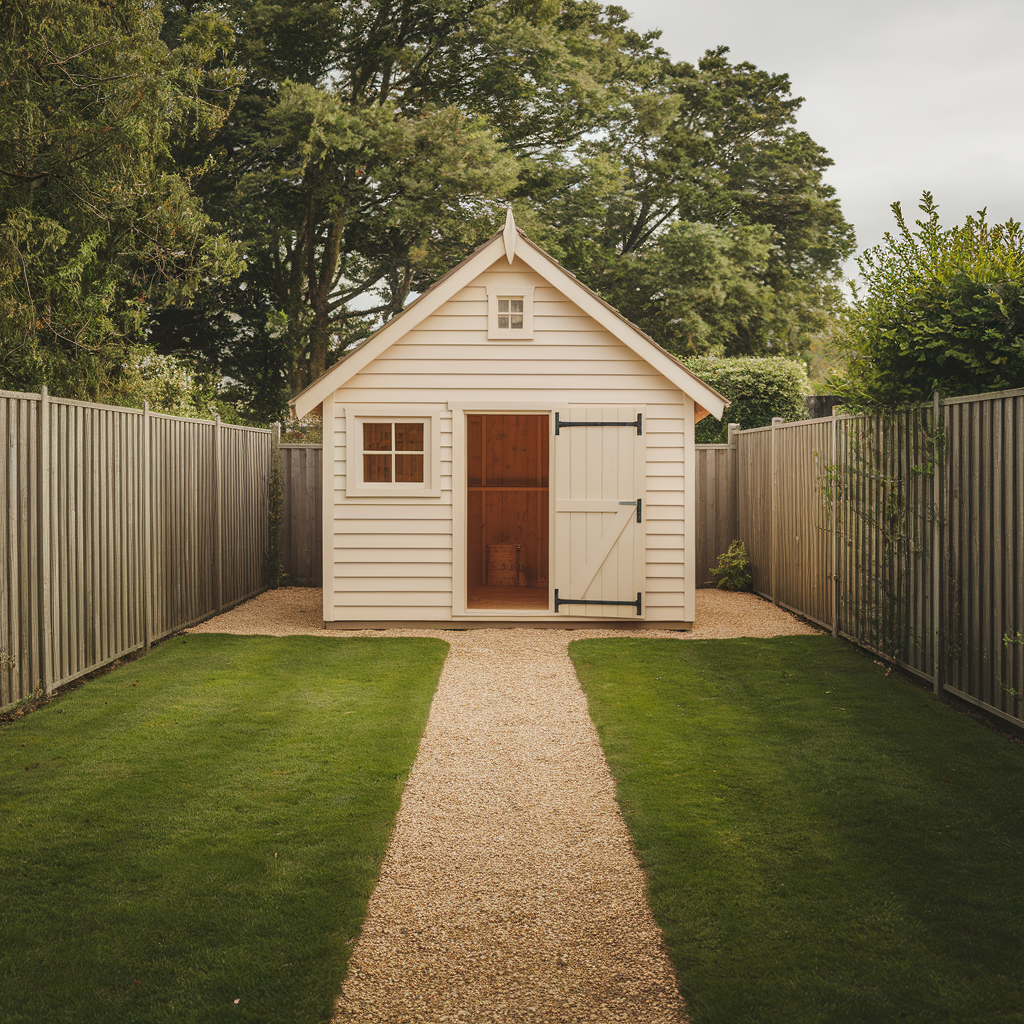
If your property is listed, the position is different. Permitted development rights do not apply to listed buildings, and any outbuilding — including a small garden shed — on the curtilage of a listed building may require both planning permission and Listed Building Consent.
This is a frequently misunderstood point. People assume that because they’re adding a modest shed at the bottom of the garden, away from the listed building itself, the listing is irrelevant. In fact, the curtilage of a listed building — the land immediately associated with it — is part of the listed structure for consent purposes, and buildings within that curtilage can require consent. The extent of the curtilage, and whether a particular outbuilding falls within it, is sometimes a matter of judgement and is worth clarifying with your local planning authority’s conservation officer before proceeding.
Historic England’s guidance on owning a listed property, including the consent requirements for changes to listed buildings and their curtilage, is at historicengland.org.uk/advice/your-home/owning-historic-property.
Flats, Maisonettes, and Leasehold Properties
Permitted development rights for outbuildings apply to houses — specifically, properties classified as a single dwelling house. They don’t apply to flats or maisonettes. If you live in a flat with a private garden, any shed or outbuilding in that garden is likely to require planning permission, regardless of size.
Leasehold properties add a further layer. Even where planning permission isn’t required, your lease may restrict the erection of outbuildings in the garden. Check your lease and any head lease documentation before proceeding.
Building Regulations: A Separate Consideration
Planning permission and Building Regulations are separate things, as we cover in more detail in our Ultimate Guide to UK Planning Permissions.
For most sheds — timber structures under 15 square metres — Building Regulations don’t apply. Sheds between 15 and 30 square metres are exempt from Building Regulations provided they’re positioned more than 1 metre from any boundary and are not used for sleeping. Sheds over 30 square metres may require Building Regulations approval depending on their construction and use.
The exception is electrical installation. If the shed has mains electrical wiring — lighting, sockets, any permanent electrical supply — the work must comply with Part P of the Building Regulations regardless of the size of the shed or its planning status. This means the electrical installation must either be carried out by a registered competent person who can self-certify, or notified to Building Control for inspection. Running an extension lead from the house doesn’t trigger this requirement; a permanent wired installation does.
What About a Shed Converted Into a Living Space?
A garden shed that’s subsequently converted into a bedroom, bathroom, or self-contained annexe changes its planning status at the point of conversion, regardless of what permission (or lack of it) applied when it was first erected. The change of use from an incidental outbuilding to sleeping or residential accommodation is a material change of use that requires planning permission.
This matters because the pattern of erecting a structure as a “shed” and then converting it to residential use without permission is well understood by planning authorities. Enforcement of planning conditions and requirements in this area is active in many authorities, particularly where pressure on housing land is significant.
If the intention from the outset is to create habitable accommodation in the garden — a granny annexe, a teenager’s room, a guest suite — the right approach is to apply for planning permission for that use from the start, rather than to install an outbuilding under permitted development and convert it later.
The Lawful Development Certificate Option
For people who want certainty — particularly those planning a significant structure at the upper end of the permitted development limits — a Lawful Development Certificate provides formal confirmation from the local planning authority that the proposed shed is lawful. It’s not mandatory, but it’s useful documentation to have, particularly when selling the property.
Applications are made through the Planning Portal. The fee is modest — roughly half the equivalent planning permission fee. For a shed that’s clearly well within the permitted development limits, it’s probably not worth the time and cost. For a structure that sits close to the limits, or in a property where the planning history is complex, it provides worthwhile protection.
The Practical Summary
The vast majority of garden sheds erected in residential back gardens in England don’t require planning permission. The conditions that matter most in practice are the height rules — particularly the 2.5 metre all-heights limit for anything within 2 metres of a boundary — and the 50 percent coverage limit for the whole plot.
Measure the shed before it arrives. Check the boundary distances. Know whether any previous outbuildings or extensions on the plot have already eaten into the 50 percent allowance. And if the property is listed, in a conservation area, or in a National Park or AONB, give the planning position specific attention rather than assuming the general rules apply.
Those checks take ten minutes and can save a significant amount of trouble.