
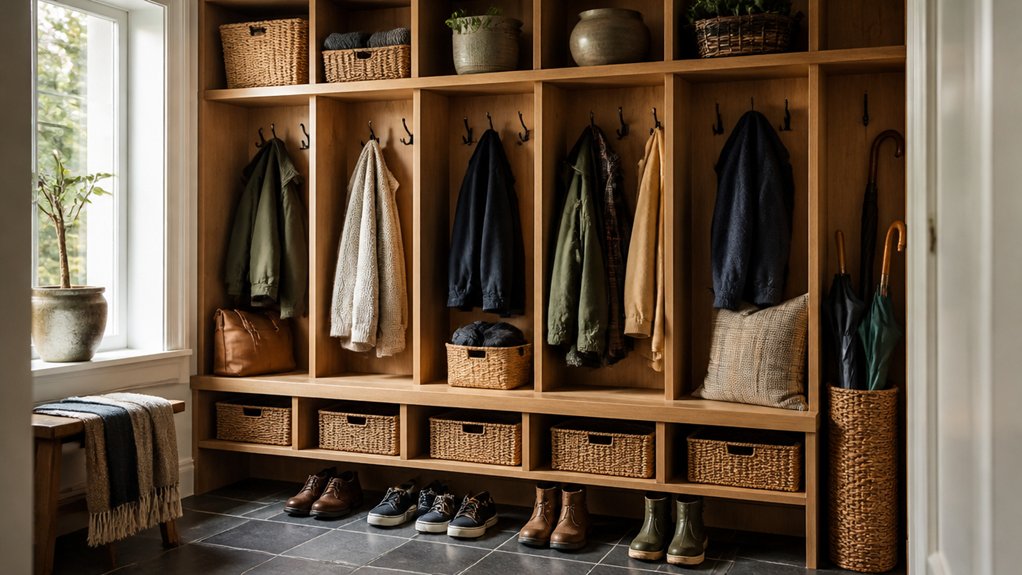
Does a well-designed mud room really keep a busy home organised? It can, if you plan clear routes, place storage where you need it, and give everyday items a reliable home. Start by mapping your space and identifying where shoes, coats, bags, and keys tend to collect. The right layout can make even a small entry feel calmer—but one often-overlooked detail can undo the whole setup.
Key Takeaways
- Measure the room, door swings, and walking routes before planning storage, then test the layout with painter’s tape.
- Give shoes, coats, and bags dedicated spots with open cubbies, washable trays, sturdy hooks, and labeled baskets.
- Add a bench with storage and a family-specific drop zone for keys, mail, wallets, and phones.
- Choose durable, easy-clean flooring and finishes, such as textured tile, sealed grout, and washable paint.
- Make small spaces work with a narrow storage bench, varied-height hooks, shallow shelves, and wall-mounted shoe racks.
Plan a Mud Room Layout That Fits Your Space
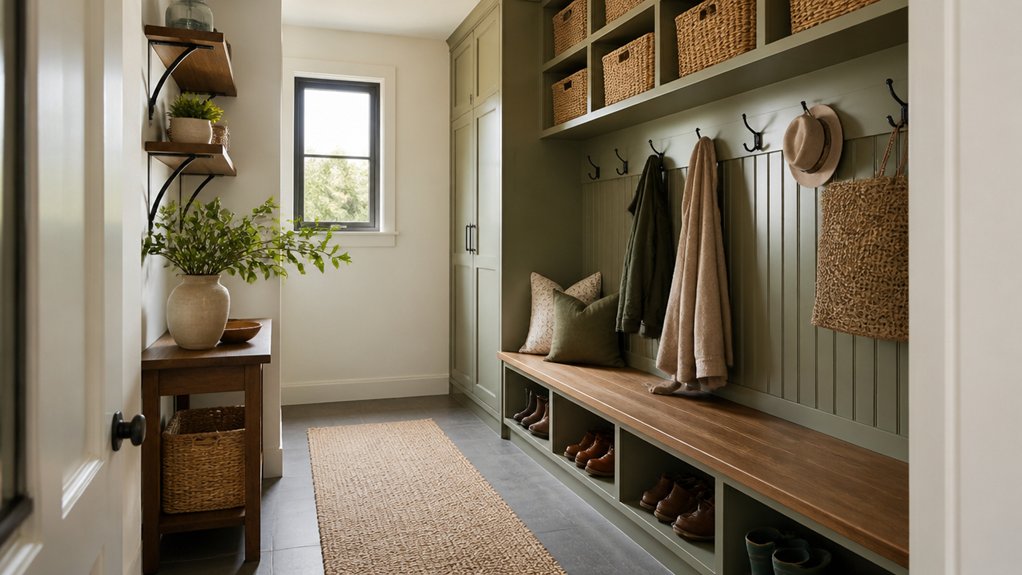
Start by measuring your available space, noting door swings, walkways, and nearby outlets or vents. Sketch the room’s dimensions, including alcoves and changes in floor level, so you can plan around fixed features. Then map the routes you use most, from the entrance to the kitchen, garage, or laundry area. Keep these paths clear and allow doors to open fully without hitting furniture.
Use layout optimization to make a narrow room feel workable: place functional zones along one wall, or use opposing walls only if the passage stays comfortable. In a larger entry, space zoning can separate arrival, transition, and exit areas without blocking sightlines. Mark proposed dimensions on the floor with painter’s tape, then walk through your plan. Adjust anything that feels cramped before choosing finishes or fixtures. This simple test helps you avoid costly layout changes later.
Add Mud Room Storage for Shoes, Coats, and Bags
Give shoes, coats, and bags a dedicated place near the door so they don’t collect on the floor or spill into walkways. Choose storage that matches your household’s routines and the room’s dimensions. Open cubbies make shoe organization easy because you can see pairs at a glance; assign each person a section, and add washable trays to catch mud and water.
For coat storage, install sturdy hooks at different heights so adults and children can hang outerwear without crowding. A narrow rail or wall-mounted rack can work where floor space is limited. Place a shelf above the hooks for hats and gloves, and use labeled baskets for smaller accessories. Keep frequently used items within easy reach, while storing seasonal gear higher up or in a closed cabinet to reduce visual clutter.
Add a Bench and a Drop Zone for Daily Essentials
A bench gives you a comfortable place to sit while putting on or taking off shoes, and a nearby drop zone keeps daily essentials easy to find. Choose bench seating that fits your household’s routines: a sturdy, appropriately sized seat lets children manage footwear independently and gives adults room to pause.
If space allows, add a lift-up lid or baskets beneath the bench for frequently used items, such as slippers or shoehorns.
Keep the drop zone within easy reach of the door, using a small shelf, tray, or wall hooks for keys, wallets, sunglasses, and mail.
Assign each family member a specific spot so belongings don’t pile up or go missing.
A charging station can keep phones ready for the next outing.
Leave enough clear surface area to sort incoming essentials without crowding the entry.
Choose Easy-Clean Mud Room Floors and Finishes
Once the bench and drop zone have their places, choose floors and finishes that can handle wet shoes, muddy paws, and frequent cleaning. Porcelain or ceramic tile resists water and scratches, while textured surfaces help reduce slips. If you prefer vinyl, choose a quality sheet or plank product with sealed seams to keep moisture from reaching the subfloor. For natural stone, seal it regularly and wipe spills promptly to prevent stains.
Choose grout in a mid-tone shade, then seal it to make routine cleaning easier. On walls, use washable paint with a satin or semi-gloss sheen; it stands up to scuffs better than flat paint. Add durable finishes, such as a clear protective coating on wood trim, and keep a microfiber cloth and mild cleaner nearby. These easy clean choices help your entry stay fresh without demanding special care.
Make a Small Mud Room Work Harder
How can a compact mud room handle more without feeling crowded? Start by measuring the wall, door swing, and walking path, then choose storage that fits those limits. A narrow bench with lift-up storage gives you a place to sit and hide shoes. Add hooks at different heights so adults and children can reach their own coats and bags.
Use vertical space to maximize efficiency: install shallow shelves above the hooks for hats, gloves, and baskets. Label each basket to make organizing daily essentials straightforward. Keep the floor clear with wall-mounted shoe racks or a slim boot tray tucked beneath the bench. Choose one container for incoming mail or small items, rather than letting them spread across surfaces. Rotate seasonal gear into another closet, and leave only what your household uses regularly within easy reach.
Frequently Asked Questions
How Can I Keep a Mud Room Smelling Fresh?
Keep your mud room smelling fresh by removing damp shoes, washing mats, and emptying bins regularly. Try freshening strategies like ventilation and baking soda, then use scent layering with subtle, pet-safe fragrances.
What Lighting Works Best in a Mud Room?
Use lighting layers: combine bright, even overhead fixtures with task lighting near benches and hooks. Choose damp-rated fixtures and a 3000–4000K color temperature, so you’ll see dirt clearly without making your mud room feel harsh.
How Can I Make a Mud Room Safer for Children?
Improve safety for kids by securing tall storage to walls, adding nonslip flooring, and keeping sharp tools, cleaners, and medications locked away. For childproofing mud room, cover outlets, soften corners, and hang hooks within children’s reach.
Should a Mud Room Include a Utility Sink?
Yes, add a utility sink if you regularly rinse muddy boots, wash pets, or clean gear. You’ll contain mess, protect nearby surfaces, and improve mud room safety with a stable faucet and childproof supplies.
How Can I Organise a Mud Room for Pets?
Organise your mud room for pets by placing leashes, treats, and towels in labelled pets storage near the door. Add washable mats, a sturdy hook, and a nearby bin to simplify cleaning routines after walks.
Conclusion
When you map your mud room, give each task a clear zone: shoes below, coats and bags on adjustable hooks, and keys and mail by the door. Add a bench with lift-up storage, vertical shelves, and easy-clean flooring to keep clutter manageable. Even a narrow entry can work hard with slim shoe racks and seasonal rotation. You may find that the hook you install for one backpack also keeps tomorrow’s coat ready—an everyday coincidence that makes busy mornings feel smoother.