Table of Contents
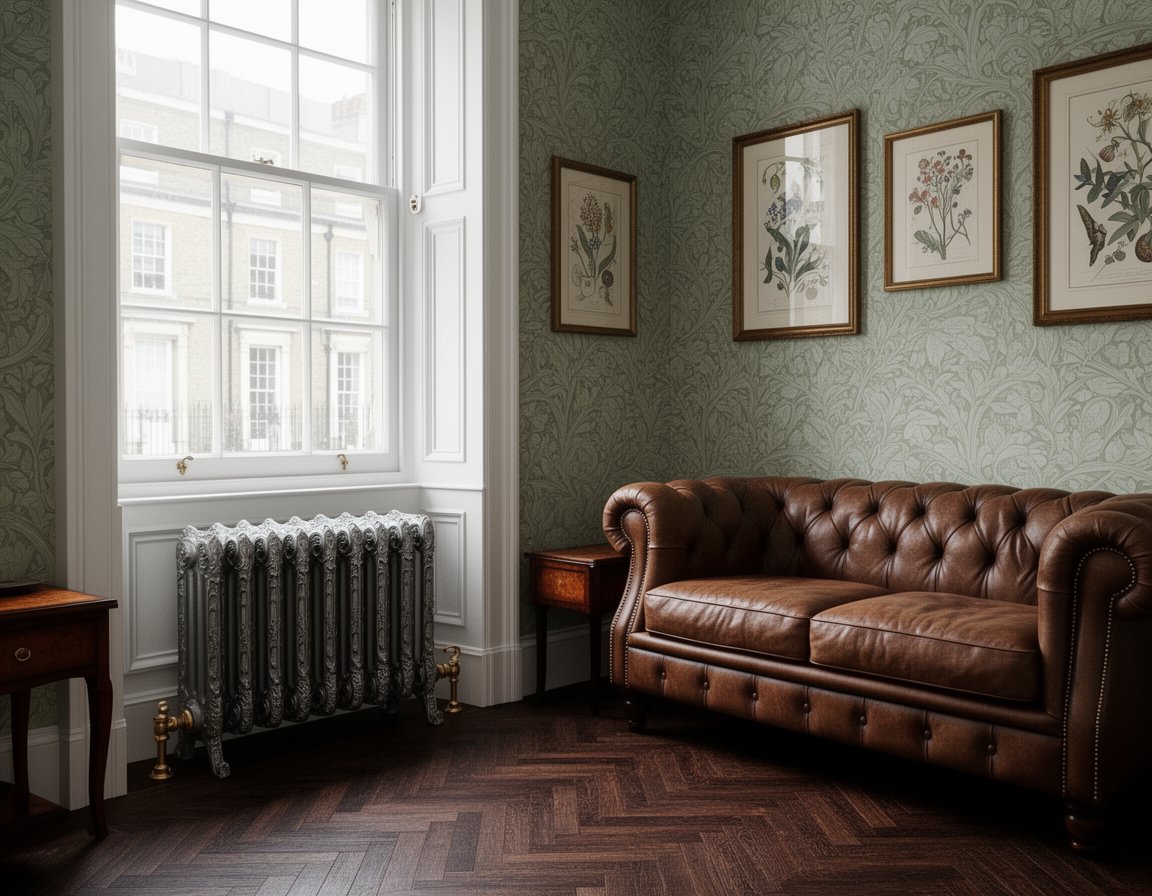
Is it true that a cast iron radiator gives your period living room more character than any modern panel ever could? You’ll notice its deep columns echo sash window proportions, cornice lines, and the familiar rhythm of skirting and architraves. Set it beneath the window and you’re not just heating the space; you’re restoring a proper visual balance. But the effect depends on style, finish, and placement—and that’s where things start to matter.
Why Cast Iron Radiators Suit Period Living Rooms
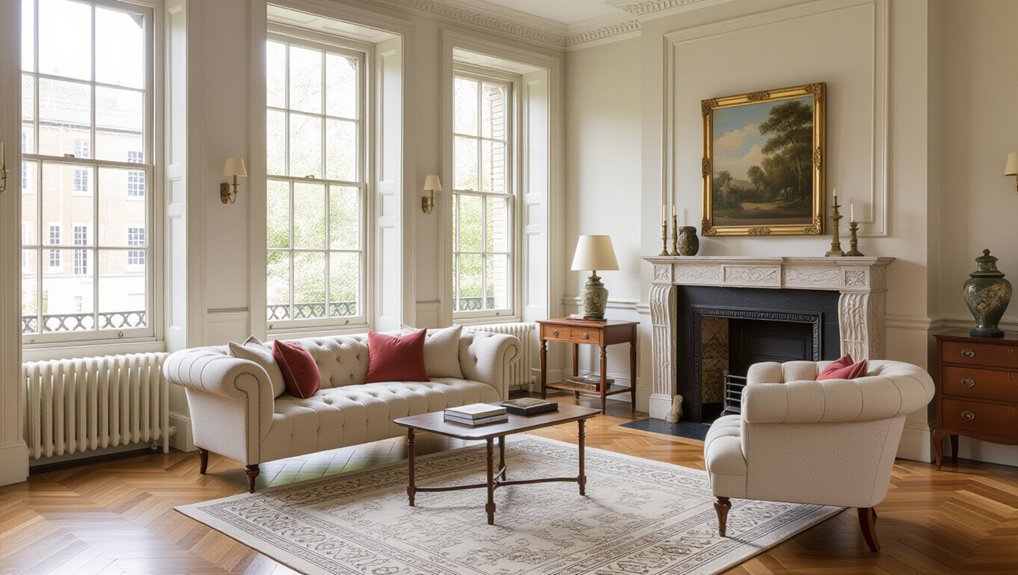
Although modern heating can feel intrusive in an older home, cast iron radiators belong in a period living room because they match its materials, proportions, and intent. You read their deep sections like turned balusters or heavy skirting: honest mass, crisp edges, and repeatable bays that echo sash windows and cornice rhythms.
Set beneath a window, they respect the room’s original focus and keep walls clear for pictures, bookcases, and fire surrounds. You can restore them without erasing history—strip, re-gasket, and repaint in linen, stone, or oxblood so they sit comfortably beside aged plaster and timber.
With Modern energy efficiency upgrades to your system, they still deliver steady, radiant warmth, even within contemporary design constraints today.
Start With Heat Loss: Sizing for Real Comfort
You’ll start with the room’s heat loss—measuring windows, exterior walls, ceiling height, and the draughts that old sash and lath can’t quite hide.
With that figure in hand, you can match a cast iron radiator’s output to the space instead of guessing by looks alone.
Size it to the load and you’ll get steady, even warmth that respects the fabric of the house.
Calculate Room Heat Loss
How do you know a cast iron radiator will truly warm a room—rather than merely look the part? You begin with heat-loss calculation, as any careful steward of an old house should.
Measure the room’s length, width, and ceiling height to find cubic footage, then note every exterior surface: walls, sash windows, doors, and any uninsulated floors over cellars.
Record construction details—solid brick, lath-and-plaster, or studwork—and the state of weatherstripping.
Choose your design indoor temperature and consult your local winter outdoor design temperature.
From these facts, estimate heat loss by transmission and by air leakage.
This method respects Modern efficiency without harming original fabric, and it supports Sustainability practices by curbing wasteful over-heating.
Match Output To Space
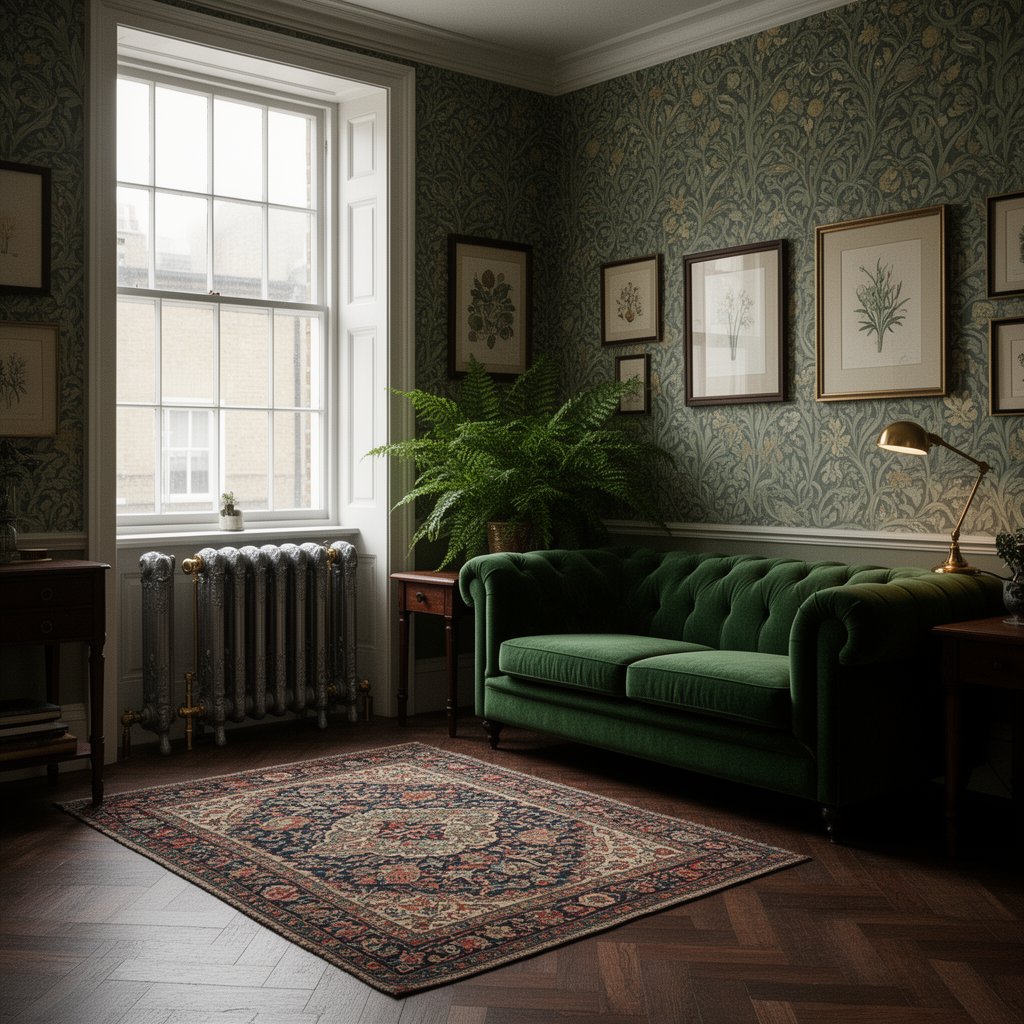
Once you’ve tallied the room’s heat loss, match that number to radiator output so the space reaches temperature briskly and holds it without waste. Use the maker’s BTU or EDR tables, and size to the design day, not a mild afternoon.
In a tall-ceilinged parlour, you’ll often need more surface area than you expect; choose additional sections or a longer, low-profile pattern that suits the skirting and window bays.
Keep the proportions honest to the period: place radiators beneath sash windows to temper downdraughts and protect plasterwork from condensation.
Pairing heritage iron with Modern heating controls—TRVs and a properly balanced system—lets you trim output room by room for energy efficiency without sacrificing character.
Avoid over-sizing; it short-cycles boilers.
Match Radiator Column Styles to Your Home’s Era
Whether you’re restoring a Victorian rowhouse or refining a mid-century update, the radiator’s column profile should read as native to the architecture rather than a modern add-on.
In high-ceilinged late-19th-century rooms, you’ll want deeper, ornate columns with pronounced fluting and scrollwork that echo plaster cornices and carved casings.
For Edwardian and Arts-and-Crafts interiors, choose simpler, sturdier sections—less fuss, more honest mass—so the radiator sits quietly under a sash window.
In streamlined 1930s to 1950s schemes, flatter, tighter column spacing and squared shoulders feel correct beside banded trim and plain skirting.
You can still integrate modern heating without visual discord, and you’ll keep energy efficiency by selecting period-appropriate forms sized to your system.
Choose a Finish: Paint, Polish, or Antique Effect
Once you’ve matched the proper column style, you’ll choose a finish that suits the room’s original character and protects the iron.
You can keep to period practice with a painted coat in sober enamel tones, brighten the work with a polished metal shine on caps and fittings, or set a quieter note with an antique patina effect.
Each choice changes how the radiator reads against plaster, woodwork, and light, so you’ll want a finish that looks right and wears well.
Painted Finishes For Periods
Because a period room reads every surface as part of its history, a properly painted finish on a cast iron radiator should look intentional—not newly “made over.” Choose a paint system that respects the metal: strip back failing layers, neutralize any rust, and prime with a heat-tolerant, corrosion-inhibiting coat before you lay on a traditional satin or soft gloss topcoat in a historically plausible tone (cream, stone, oxblood, deep green, or black).
Work with your room’s Color palettes: echo skirting, architraves, or fireplace trim so the radiator settles in. For modern integration, match contemporary wall colours but keep the sheen restrained and the moulded details crisp.
Brush in fine sections to avoid runs, then cure fully before firing the system, so you don’t blister the finish.
Polished Metal Shine Options
Although a cast iron radiator can wear a high shine with real conviction, you’ll get the most convincing result by choosing the right approach at the outset: paint for a controlled, historically sympathetic sheen; polish for a bare-metal, workshop-fresh gleam (only where the surface and setting truly suit it); or an antique effect for the softened, time-earned look that flatters moulded ribs and ornate scrollwork without pretending the radiator’s newly made.
If you paint, specify heat-rated metalwork enamel and keep colour tones consistent with your skirtings and cornice.
If you polish, strip back carefully, then seal with a clear, heat-tolerant lacquer, much as you’d protect Vintage cookware, so fingerprints don’t bloom.
For a gentler shine, choose a low-sheen topcoat that echoes worn brass on ornate door handles and suits gaslight-era rooms.
Antique Patina Effect Styles
If you want a cast iron radiator to look as though it’s belonged to the room for generations, choose an antique patina effect rather than a bright polish or a fully opaque enamel. You’ll keep the casting’s crisp edges visible while softening them with age-toned shading.
Start with a deep base—oxblood, bottle green, lamp black, or muted stone—drawn from Vintage color palettes common to late Victorian and Edwardian interiors. Then you’ll glaze and wipe back bronzed highs on scrollwork and column ribs, echoing historical design influences found in gilt frames and worn door furniture.
Ask for a sealed, low-sheen topcoat so the finish stays breathable, touch-up friendly, and easy to dust without losing its mellow depth.
Plan the Best Placement for Looks and Heat
When you plan where a cast iron radiator will live, you’re balancing handsome room proportions with the steady, even heat these old workhorses deliver. Set it on an exterior wall to temper drafts, and keep a clear path for convected air; a modest stand-off from skirting boards protects paint and allows cleaning.
Align the height with dado rails or window stools so it reads as deliberate joinery, not an afterthought. You’ll preserve original cornices and picture rails by avoiding tall, fussy pipe runs; route flow and return neatly along floor lines with period-appropriate collars.
For Modern energy efficiency, fit a thermostatic valve and don’t smother the sections with heavy curtains or deep cabinetry.
For contemporary design integration, echo the radiator’s lines in simple brackets and restrained colours throughout.
Fireplaces and Alcoves: The Classic Layout Done Right
Because the fireplace already anchors the room’s original symmetry, you’ll get the most convincing result by treating a pair of cast iron radiators in the flanking alcoves as part of that architectural composition rather than as add-ons.
Choose heights that sit below the mantel shelf line, so the chimney breast reads uninterrupted and the hearth remains dominant. Keep clear of picture rails and skirting returns, and align the radiator’s top edge with built-in shelving if it survives.
In deeper recesses, set the sections forward slightly so heat isn’t trapped against cold external walls. You can still benefit from modern technology: specify carefully sized outputs and responsive controls to raise energy efficiency while keeping the room’s Victorian or Edwardian proportions intact and visually balanced.
Add Traditional Radiator Valves and Pipework
Once you’ve settled the radiator’s position within the alcoves, the valves and pipework must look as though they’ve always belonged to the room’s joinery and plaster lines. Choose traditional wheelhead or lockshield valves in aged brass, nickel, or blackened iron, and keep profiles compact so they don’t jar against skirting and architraves.
Run pipework in straight, deliberate lines: rise tight to the wall, turn with neat swept bends, and align centres to the radiator’s sections. If you’re lifting boards, notch minimally and protect edges; if you’re surface-running, use slim pipe collars and paint to match the wall or skirting for quiet discretion.
Treat visible details as Vintage accessories, while you hide Modern integrations—TRVs, balancing, and isolation—behind consistent finishes and careful placement.
Should You Buy Restored or New Cast Iron?
Although both routes can heat a room beautifully, you’ll choose between restored and new cast iron by weighing historical fidelity against lead time, warranty, and the realities of your pipe centres.
Restored radiators suit a faithful scheme: you can match Victorian column proportions, retain crisp mouldings, and specify traditional finishes. Yet, you should insist on pressure-testing, new gaskets, and a sound primer beneath hand-applied paint.
New cast iron gives you predictable output tables, tighter tolerances, and warranties, plus shorter ordering if stock exists; some ranges even blend period profiles with Modern efficiency through improved waterway design.
For cost comparison, price the whole package: restoration labour, blasting, testing, and repainting versus new supply, delivery, and finish.
Choose the option that preserves character without gambling on unseen corrosion.
Installing in Older Homes: Weight, Pipework, Walls
If you’re fitting cast iron radiators into an older house, treat the job as joinery and plumbing together: you must account for weight, respect existing pipe centres, and make the wall and floor do their share without damaging historic fabric.
Measure every section; a long, water-filled column can punish weak boards and crumbly lath. Spread loads with timber pattresses under floorboards, and use proper wall plugs only where masonry is sound; otherwise add discreet floor legs.
Keep pipework sympathetic: reuse original runs where possible, but add isolation valves and a bypass so Modern heating balances quietly. Don’t force misaligned tails—use eccentric valves or lift boards to re-centre.
Seal penetrations, bleed fully, and you’ll keep draughts down and improve energy efficiency.
At the end of the day, good quality cast iron radiators look stunning.