
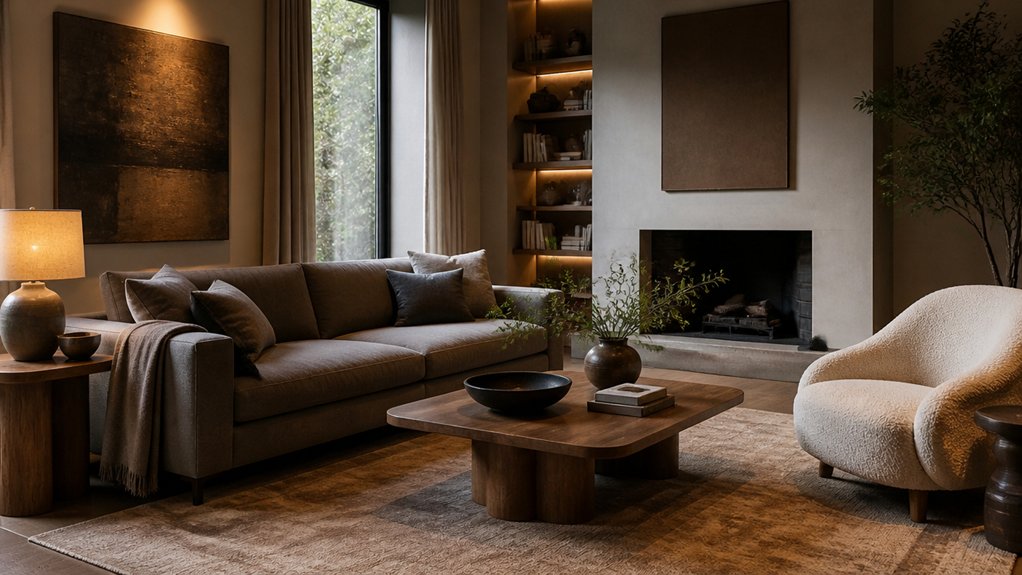
A living room can look polished yet feel awkward if the layout blocks traffic or the furniture doesn’t suit your routine. Start by mapping entrances, walkways, and focal points, then choose seating that fits the room and keeps sightlines open. A restrained palette, layered textures, practical storage, and thoughtful lighting can bring comfort and style together. Small choices matter—but one common layout mistake can undo them all.
Key Takeaways
- Measure the room and sketch a layout that preserves clear walkways, access to storage, and natural light.
- Arrange seating around a focal point, checking sightlines and leaving space for doors, drawers, and recliners to open.
- Choose furniture scaled to the room and your habits, prioritizing supportive, comfortable seating over appearance alone.
- Create a cohesive palette of two or three colors, repeating accents across rugs, cushions, and artwork.
- Add contrasting textures and practical decor, while editing clutter and keeping surfaces clear.
Plan Your Living Room Layout and Design
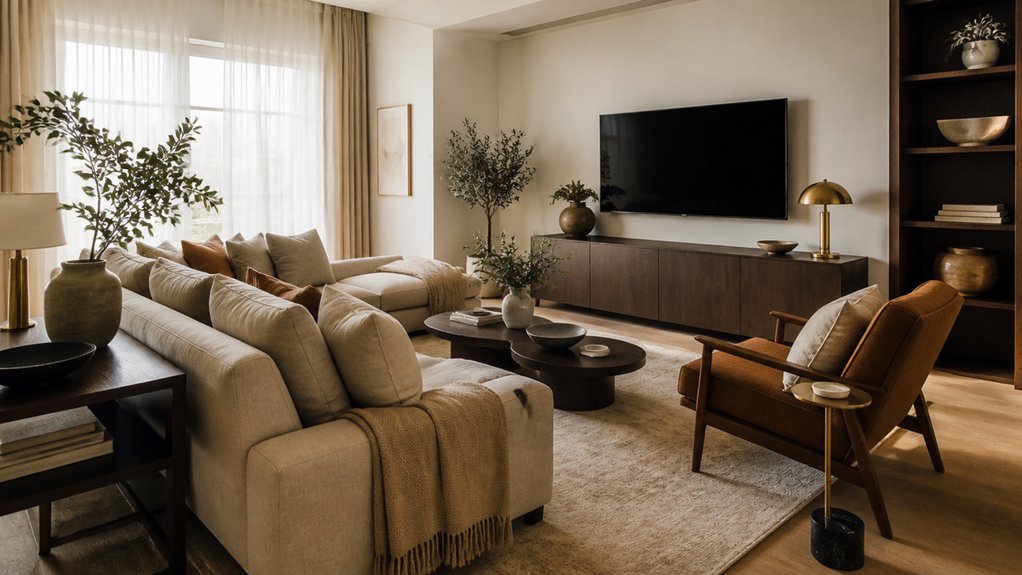
Start by measuring the room, noting doors, windows, outlets, and walkways so your layout works with the space rather than against it.
Measure your room and note fixed features first, so your furniture layout fits the space and preserves clear walkways.
Sketch the room to scale, then mark fixed features and test furniture arrangements before moving anything.
Keep clear paths between entrances and key areas, and avoid blocking natural light or access to storage.
Choose a focal point, such as a fireplace, window, or media wall, and arrange the room to support conversation and daily activities.
Use rugs, lighting, and artwork to define zones without crowding the floor.
Repeat finishes and accents to create cohesive color palettes, and plan for scalable seating that can adapt when guests arrive.
Check sightlines from each seat, and leave enough room to open doors, drawers, and cabinets comfortably.
Adjust the plan as your needs change.
Choose Comfortable Furniture That Fits Your Room
Once your layout is set, choose furniture that suits both the room’s dimensions and the way you use it. Measure doorways, walkways, and the area around each piece before you buy. This helps you avoid blocking circulation or crowding the room. For comfortable seating, test sofas and chairs in person when possible. Check seat depth, back support, cushion firmness, and whether your feet rest comfortably on the floor.
Match each piece to your habits: a deep sofa suits lounging, while a firmer chair may work better for reading. Consider room scale, too. A large sectional can overwhelm a compact space, while small furniture may feel lost in a spacious one. Choose pieces with useful proportions, and leave enough clearance for drawers, recliners, and side tables to function easily. Don’t sacrifice everyday comfort for appearance.
Mix Colors, Textures, and Decor That Feel Cohesive
Choose a simple color palette to give the living room a cohesive feel. Start with two or three colors, then use color theory to balance warm and cool tones. For example, pair a warm neutral with muted blue and a small accent of rust. Repeat each color in several places, such as cushions, artwork, and a rug, so the scheme feels intentional rather than scattered.
Build depth through texture pairing. Combine smooth surfaces, like a leather chair or ceramic vase, with tactile materials such as wool, linen, or woven baskets. Vary texture while keeping colors related; this creates contrast without visual clutter. Choose decor that suits your room’s scale and reflects your taste, then edit out pieces that compete. Leave some surfaces clear, and group smaller objects in odd numbers to create balanced, collected arrangements. Ensure patterns share at least one color.
Layer Living Room Lighting for Comfort and Style
Layering light makes a living room more comfortable and adaptable. Start with ambient lighting, such as a ceiling fixture or recessed lights, to brighten the whole room. Add task lighting where you read, work, or play games: position a floor lamp beside your chair and a table lamp near the sofa. Choose bulbs with a warm color temperature for a warm ambience, and use dimmers to adjust brightness throughout the day.
Finish with accent lights that highlight artwork, shelves, or architectural details. This layered illumination adds depth while giving you control over mood creation. Aim for soft lighting in the evening, but keep task areas bright enough for clear, comfortable use. Match fixture finishes to your decor, and place switches within easy reach. With several light sources, you can adapt the room without relying on one harsh overhead fixture.
Frequently Asked Questions
How Can I Make a Living Room Safer for Toddlers and Pets?
Secure heavy furniture and TVs to walls, cover outlets, and use childproofing corners on tables. Choose pet safe materials, hide cords, store medications and cleaners locked away, and keep small choking hazards off floors.
What Are the Best Ways to Reduce Noise in a Living Room?
Reduce living-room noise by adding sound absorbing curtains over windows, using thoughtful rug placement beneath seating, and filling bare walls with bookshelves or upholstered panels. You’ll also cut echoes by sealing door gaps and softening hard surfaces.
How Do I Keep My Living Room Comfortable for Guests With Allergies?
Keep your living room comfortable for guests with allergies by vacuuming with a HEPA filter, washing soft textiles, and choosing allergy friendly fabrics. Use quiet layouts and noise reduction measures to create a calm, welcoming space.
How Can I Make a Small Living Room Feel More Private?
You can ease privacy concerns with a folding screen, tall bookcase, or strategically placed curtains. Choose compact furniture, layer soft lighting, and label candles clearly; scent labeling helps guests avoid fragrances that may trigger sensitivities.
What Maintenance Helps Living Room Furnishings Last Longer?
Stay ahead of the game: vacuum upholstery weekly, rotate cushions monthly, and dust wood often. Follow a maintenance schedule for inspections and tightening. Apply fabric protection, address spills promptly, and keep furnishings away from direct sunlight.
Conclusion
A well-balanced living room feels as good as it looks. Keep walkways open, arrange seating around your focal point, and choose furniture that fits without crowding the room. Repeat a few colors through cushions, art, and rugs, then add texture for warmth. Layer soft lamps with useful task lighting, and give everyday essentials a convenient home. When each choice serves a purpose, your room welcomes you in—ready for quiet evenings, lively conversations, and everything between.