
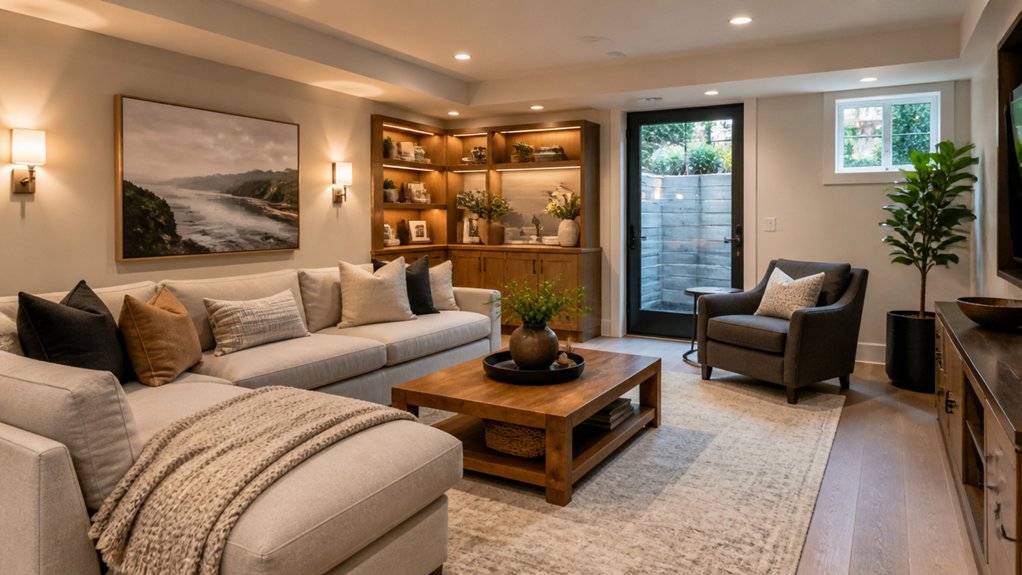
Basement renovation ideas can turn unused square footage into a family room, home office, guest suite, or hobby space. Start by checking for leaks and managing moisture before choosing flooring, finishes, or furniture. Then plan storage, lighting, and clear walkways around how you’ll use the room. A few practical choices can make the space more comfortable—but some upgrades need attention before the finishing work begins.
Key Takeaways
- Create a welcoming family room with conversation-friendly seating, clear walkways, durable upholstery, and layered, dimmable lighting.
- Control leaks and dampness before renovating; consider a dehumidifier, basement-suitable flooring, and washable rugs.
- Add accessible storage with labeled containers and shelving that keeps belongings off the floor.
- Set up a comfortable home office with moisture-resistant finishes, furniture away from foundation walls, and adjustable task lighting.
- Build a guest suite only after checking egress, ceiling-height, and permit requirements; plan ventilation, plumbing, and guest comforts.
Turn Your Basement Into a Family Room
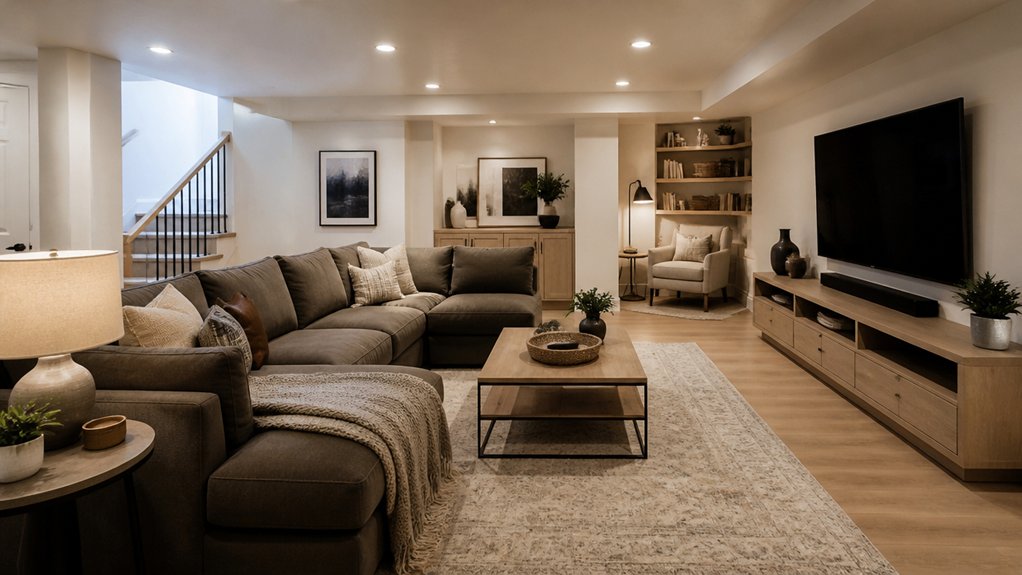
Want a comfortable spot where everyone can unwind? Turn your basement into a family room by planning around how you’ll use it. Arrange cozy seating to support conversation, movie nights, or games, and leave clear paths between furniture. Choose durable, easy-to-clean upholstery that can handle everyday spills. Add layered lighting with dimmable overhead fixtures and task lamps so you can adjust the mood without relying on harsh ceiling lights.
Before decorating, check for leaks, musty odors, and damp walls. Effective moisture control protects finishes and helps keep the room comfortable; use a dehumidifier if needed, and address water problems before installing flooring or furniture. Select basement-friendly flooring, such as luxury vinyl plank, and use washable rugs for warmth. Finish with storage for blankets, toys, and games, keeping essentials accessible while reducing clutter.
Create a Basement Home Office or Study
A basement can also make a quiet, focused home office or study.
Before you set up your desk, check for dampness, leaks, and musty odors. Good moisture management protects your flooring, electronics, and paperwork; use a dehumidifier if needed, and fix water entry at its source.
Choose durable, moisture-resistant finishes, and keep furniture slightly away from foundation walls.
Plan lighting for long work sessions. Combine bright overhead fixtures with an adjustable task lamp, and use light-colored surfaces to reflect illumination.
Add outlets where you’ll need them, and arrange cords to prevent tripping.
Consider basement acoustics, too: insulation, rugs, and soft furnishings can reduce echoes and help block household noise.
A door or room divider can create separation, while shelves keep supplies organized and your work area clear.
Add a Basement Guest Suite for Visitors
A basement guest suite can give visitors privacy and a comfortable place to stay. Before you begin, check local building codes for bedroom egress, ceiling height, and permits. Add a properly sized window or exterior door so guests can exit safely in an emergency. If the suite includes a bathroom, plan plumbing, ventilation, and waterproofing before finishing the walls.
Choose durable flooring, layered lighting, and a quiet heating and cooling system to make the room welcoming year-round. Include guest comforts such as a bedside table, accessible outlets, closet space, and a luggage rack. Thoughtful accessibility design can make the suite easier to use: provide a clear route, lever-style handles, and a curbless shower where feasible. Keep controls easy to reach, and add smoke and carbon monoxide alarms near sleeping areas.
Make Room for a Basement Playroom or Hobby Space
Turning an unfinished basement into a playroom or hobby space gives you room to spread out without disrupting the rest of the home. Plan your playroom layout around how your family uses the space. Set aside an open area for active games, then place a table nearby for puzzles, crafts, or board games. Choose durable flooring that can handle spills and frequent use, and secure heavy furniture to the walls. If you’re creating a hobby zone, define a work surface suited to your projects, such as a sturdy bench for model building or a desk for sewing. Add hobby storage that keeps supplies accessible without taking over the room; labeled bins, drawers, and shelving can help you sort materials by activity. Leave clear paths between zones so everyone can move comfortably and safely.
Make Your Basement Brighter, Drier, and More Organized
How can you make a basement feel more inviting? Start by layering light: combine recessed ceiling fixtures with task lamps and wall sconces to brighten basement lighting in corners and work areas. Choose warm, high-output LED bulbs, and use light paint or reflective finishes to help distribute illumination. If you have small windows, keep them clear and add mirrors nearby.
Next, tackle moisture before finishing walls or storing belongings. Check for leaks, seal foundation cracks, clean gutters, and direct downspouts away from the house. Run a dehumidifier to improve basement humidity, and monitor levels with a hygrometer; aim for 30 to 50 percent relative humidity. Add shelving to keep boxes off the floor, label containers, and group seasonal items together. A clear layout makes cleaning easier and helps you spot dampness early. Keep pathways open for safe access.
Frequently Asked Questions
Do I Need a Permit to Renovate My Basement?
You may need basement permits, depending on your location and project scope. Check with your local building department before starting; structural changes, new plumbing, electrical work, or bedrooms often require permits and must meet building codes.
How Much Does a Typical Basement Renovation Cost?
A typical basement renovation costs $30,000–$75,000, depending on size, finishes, and plumbing. You’ll spend less on cosmetic updates; adding bathrooms or kitchens costs more. Budget for moisture control and creative lighting to prevent costly surprises.
How Long Does a Basement Renovation Usually Take?
You’ll usually need six to 12 weeks for a basement renovation, depending on size, permits, and complexity. Basement timing improves when you finalize plans early; Renovation scheduling should account for inspections, material delays, and contractor availability.
Should I Hire a Contractor or Renovate the Basement Myself?
If wiring, plumbing, or structural work looms like a maze, hire a contractor; your contractor decision depends on scope, skills, and permits. DIY feasibility improves for painting, flooring, and simple finishes when you’ve got time.
Does Finishing a Basement Increase My Home’s Resale Value?
Yes, finishing your basement can boost basement resale, but the value impact depends on local demand, workmanship, permits, and usable space. You’ll likely recoup some costs, not necessarily all, so prioritize durable finishes and proper moisture control.
Conclusion
As you finish your basement, you may notice the family gathering downstairs just as a guest arrives, while your office stays quiet and the playroom holds everyone’s projects. That happy coincidence shows how thoughtful planning makes one space serve many needs. Keep walkways clear, choose durable finishes, control moisture, and add layered lighting. With organized storage, proper egress, and comfortable temperatures, you’ll turn an overlooked basement into useful, welcoming living space your household can enjoy every day.